Monday, October 21, 2024

Addressing Concerns About ScienceFather Awards: Our Commitment to Transparency and Integrity

At ScienceFather, we pride ourselves on maintaining the highest standards of transparency, credibility, and integrity in all our activities. Our awards, including the Best Researcher Award, are built on a rigorous selection process that evaluates the quality of research, innovation, and contributions across a wide range of fields.

We understand that there may be concerns or misinformation circulating online about our organization. We take these concerns seriously and are actively working to clarify any misunderstandings. It is essential to address the misconceptions and provide an accurate picture of what ScienceFather stands for.

Award Legitimacy: A Globally Recognized Honor

The Best Researcher Award is a distinguished honor recognized around the world, with recipients from over 112 countries. Our selection process is based solely on the quality of research. There are no costs associated with the review or selection process, ensuring that the recognition is purely merit-based. Financial contributions or sponsorships do not influence our decision-making, which ensures that only deserving researchers are honored with our awards.

We value the trust that past awardees have placed in us, and we remain committed to preserving the value of their achievements.


Understanding the Fee Structure: What It Covers

There is a fee of $5,688 associated with the award, but it is important to understand what this fee entails. The amount is charged solely for certification and administrative costs, which include:

  • Certification: This covers professional design and the provision of immediate access to your award certificate. We strive to ensure that our awardees receive a professionally designed certificate that reflects the prestige of their achievement.

  • Administrative Costs: The fee also helps cover the costs of maintaining databases, ensuring smooth communication, and managing logistics. These elements are crucial for providing a seamless experience for our awardees, from the announcement to the delivery of the recognition materials.

We believe in being transparent about these costs, which support the essential services related to your recognition as an awardee.

Our Commitment to Awardees

We greatly appreciate the trust of those who have previously received the Best Researcher Award and other honors from ScienceFather. We remain committed to upholding the value and credibility of these achievements. If you have any questions or require further clarification, please do not hesitate to reach out to us directly. We are always here to provide support and ensure that our community feels confident in the recognition they have earned.

ScienceFather continues to stand as a platform dedicated to celebrating excellence in research and innovation. We are dedicated to creating opportunities for researchers around the world, ensuring their work is recognized and celebrated at an international level.


25th Edition of International Research Awards on Science, Health and Engineering | 29-30 October 2024 | Paris, France

Nomination Link 👉 https://shen.sciencefather.com/award-nomination/?ecategory=Awards&rcategory=Awardee Visit Our Website 🌐 sciencefather.com Contact Us 📧 shenquery@sciencefather.com Connect with Us:

Tuesday, July 2, 2024

Life Science


What are Life Sciences?

The simplest way to define life sciences is the study of living organisms and life processes.

At NCBiotech, we see it as science involving cells and their components, products and processes. Biology, medicine and agriculture are the most obvious examples of the discipline. However, in recent years, a convergence is underway that requires a multi-discipline approach. For example, biologists, chemists, and robotics and automation engineers will work together to develop new solutions.

What is Biotechnology?

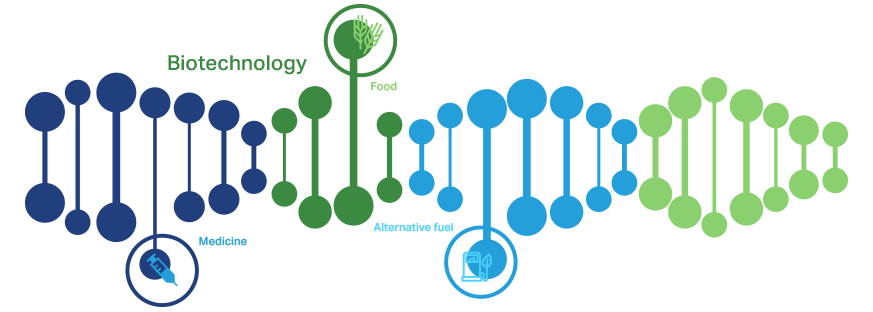
Biotechnology, the most prominent component of the life sciences, is a toolbox that leverages our understanding of the natural sciences to create solutions for our world's problems. We use biotechnology to grow food to feed families and to make medicines and vaccines to fight diseases. We even turn to biotechnology for new innovations, such as leveraging plants to manufacture medicines and create alternative fuels. 

Biotech


How Biotechnology Works

Biotechnology is grounded in the pure biological sciences of genetics, microbiology, animal cell cultures, molecular biology, embryology and cell biology. Biotechnology discoveries are intimately entwined in the life sciences industry sectors for development in agricultural biotechnologybiomanufacturinghuman healthprecision medicine and medical devices and diagnostics. For example, biomedical researchers use their understanding of genes, cells and proteins to pinpoint the differences between diseased and healthy cells. Once they discover how diseased cells are altered, researchers can more easily develop new medical diagnostics, devices and therapies to treat diseases and chronic conditions.

History of Biotech

Biotech has led us to the greatest innovations. Since 1984, North Carolina has nurtured its life sciences assets, firmly establishing itself as a leading U.S. life sciences hub characterized by steady growth of companies and talent statewide. Diverse, specialized subsectors, serve a variety of needs globally. The state pivoted from its deep roots in agriculture and furniture manufacturing to focus on biotechnology. 

In the early 2000s, as more biotech products gained regulatory approval, companies expanded production capacity. This led to the state's growing demand for skilled biopharmaceutical manufacturing workers. Workforce development programs continue to fuel our state's talent pool. This talent pool, in turn, helps to recruit new life sciences companies and supports local company growth.

The Future of Biotech

Today, North Carolina is home to more than 830 life sciences companies, a talent pool of 75,000 skilled workers and an additional 2,500 companies that support the sector. According to the 2022 TEConomy Report, despite the COVID-19 pandemic and economic challenges, the state's life sciences growth has outpaced national growth, placing itself among the top-tier life sciences hubs. 

North Carolina has long invested in scientific infrastructure to fuel innovation. With three top-tier research universities, scientific innovations are seeding new spinouts and advancing technologies to the next level.  

Through our strengths in research and development, talent, training and scientific infrastructure, North Carolina will remain at the forefront of biotechnology and life sciences.


International Research Awards on Science, Health and Engineering | 25-26 July 2024 | New Delhi, India

Award Nomination: x-i.me/sheawd.

Visit: researchawards.net

For Enquiries: contact@researchawards.net

#Science #Health #Engineering #STEM #Technology #Innovation #Research #DataScience #AI#MachineLearning #Robotics #Biotechnology #EnvironmentalScience #SpaceExploration #RenewableEnergy #Nanotechnology #Genetics#HealthTech #Bioengineering #Chemistry #Physics #Biology #Mathematics #MedTech #Neuroscience #AerospaceEngineering #CivilEngineering #MechanicalEngineering #ElectricalEngineering #ChemicalEngineering #MaterialsScience #ClimateScience #PublicHealth #Epidemiology #HealthcareInnovation #DigitalHealth #EngineeringDesign #ScienceCommunication #STEMeducation #ResearchImpact

Friday, June 21, 2024

Use of social media

 The use of social media has grown exponentially over the past decade, transforming the way individuals, businesses, and societies communicate. Here are some key aspects and implications of social media use:


1. Communication and Connectivity

  • Global Connectivity: Social media platforms like Facebook, Twitter, and Instagram allow people to connect with others across the globe, breaking down geographical barriers.
  • Instant Communication: Users can share updates, photos, and videos instantly, fostering real-time interactions and discussions.

2. Information Sharing

  • News and Information: Social media is a major source of news and information. Platforms like Twitter and Facebook often disseminate news faster than traditional media.
  • Misinformation and Fake News: The rapid spread of information can also lead to the dissemination of false or misleading information.

3. Business and Marketing

  • Brand Awareness: Companies use social media to promote their products and services, engage with customers, and build brand loyalty.
  • Targeted Advertising: Social media platforms offer sophisticated tools for targeting ads based on user demographics, interests, and behaviors.

4. Entertainment

  • Content Consumption: Platforms like YouTube, TikTok, and Instagram provide endless entertainment through videos, memes, and stories.
  • User-Generated Content: Social media empowers users to create and share their own content, leading to the rise of influencers and content creators.

5. Social and Political Movements

  • Activism and Advocacy: Social media has been instrumental in organizing social and political movements, such as the Arab Spring, #MeToo, and Black Lives Matter.
  • Public Discourse: It provides a platform for public debate and discourse, allowing diverse voices to be heard.

6. Personal and Professional Networking

  • Professional Networking: LinkedIn and similar platforms help professionals network, find job opportunities, and share industry insights.
  • Personal Relationships: Social media helps maintain personal relationships and reconnect with old friends or family members.

7. Mental Health and Well-Being

  • Positive Impact: Social media can provide support networks, foster connections, and offer a sense of community.
  • Negative Impact: It can also contribute to anxiety, depression, and feelings of inadequacy due to social comparison and cyberbullying.

8. Privacy and Security

  • Data Privacy: Users often share personal information, which can be exploited if not protected properly. Concerns over data breaches and misuse of personal data are prevalent.
  • Security Risks: Social media can be a vector for cyber attacks, phishing scams, and identity theft.

9. Educational Use

  • Learning and Development: Educational content and resources are widely available on platforms like YouTube, LinkedIn Learning, and educational forums.
  • Collaborative Learning: Social media facilitates collaborative learning through groups, discussions, and resource sharing.

10. Economic Impact

  • Job Creation: The rise of social media has created new job roles and industries, such as social media management, digital marketing, and influencer marketing.
  • Market Influence: Social media trends can significantly influence market trends and consumer behavior.

Conclusion

The use of social media is a double-edged sword, offering numerous benefits while also presenting significant challenges. It has transformed communication, information dissemination, marketing, and social interactions. As social media continues to evolve, users and policymakers must navigate its complexities to maximize its positive impact while mitigating its drawbacks.

International Research Awards on Science, Health and Engineering | 25-26 July 2024 | New Delhi, India

Award Nomination: x-i.me/sheawd.

Visit: researchawards.net

For Enquiries: contact@researchawards.net

#Science #Health #Engineering #STEM #Technology #Innovation #Research #DataScience #AI#MachineLearning #Robotics #Biotechnology #EnvironmentalScience #SpaceExploration #RenewableEnergy #Nanotechnology #Genetics#HealthTech #Bioengineering #Chemistry #Physics #Biology #Mathematics #MedTech #Neuroscience #AerospaceEngineering #CivilEngineering #MechanicalEngineering #ElectricalEngineering #ChemicalEngineering #MaterialsScience #ClimateScience #PublicHealth #Epidemiology #HealthcareInnovation #DigitalHealth #EngineeringDesign #ScienceCommunication #STEMeducation #ResearchImpact

Thursday, June 20, 2024

Human Tree


It's Not Easy to Become a Tree

Many of us have favorite trees to which we are inexplicably drawn. Or, we remember that one tree that stood at the center of our childhood experience. In our sometimes stress-filled, chaotic lives, trees stand as graceful portraits of stability, flexibility, and inspire us to embrace life’s challenges with serenity and composure. Current research agrees that a restorative walk in a green space boosts well-being and cognitive function by reducing the stress hormone cortisol and calming the parasympathetic division of the central nervous system.


But if not intellectually, then intuitively we know that our physical and emotional needs are intimately and holistically linked to the delicate health of our biosphere and all of the unique living and breathing organisms therein. Organizations such as the Association of Nature and Forest Therapy are dedicated to building and nurturing a “relational practice” of spending more time in forests and other natural places to not only improve our physical and mental health, but also our relationships with one another, the places we call home, and with our selves.


So, indeed, it is a splendid dream to want your body to become a tree after it dies. Your body would live on in this magnificent stately form of elegance and beauty that symbolically represents life itself. For many people, the images of Capsula Mundi helped to popularize the idea of becoming a tree after death. This conceptual form of full-body disposition was developed in Italy by Anna Citelli and Raoul Bretzel. As of now, Capsula Mundi is an intriguing work of art perhaps, but not a viable, realistic form of burial. The article “How to Become a Tree When You Die—Debunked” published by TalkDeath helps to break down the difficulties associated with becoming a tree, but I will touch upon some of these challenges here.

To begin, I don’t know of any funeral home or natural burial ground at this time that would be willing to wrap a dead body into a fetal position and place it into a biodegradable egg-shaped pod. In addition, the burial process, which would include digging a deep vertical grave to accommodate the pod, sounds logistically unrealistic for all involved in the burial.


Here’s what the science tells us: after the root ball of the tree would be placed over the burial pod, a lot of water would need to be added to the grave in order to help the tree take root. If a dead body is consistently surrounded by too much water, the anaerobic environment may result in the formation of adipocere, a waxy substance around the body which prevents it from properly decomposing into soil.


Simply put, a dead body needs oxygen to decompose. According to TalkDeath, “adding water to an environment lowers the temperature of the soil and disrupts the body’s decomposition process. Additionally, young root growth could be disrupted by the presence of the body or could push remains toward the surface as the tree grows."

International Research Awards on Science, Health and Engineering | June 20-21 2024 | Dubai, United Arab Emirates

Award Nomination: x-i.me/sheawd.

Visit: researchawards.net

For Enquiries: contact@researchawards.net

#Science #Health #Engineering #STEM #Technology #Innovation #Research #DataScience #AI#MachineLearning #Robotics #Biotechnology #EnvironmentalScience #SpaceExploration #RenewableEnergy #Nanotechnology #Genetics#HealthTech #Bioengineering #Chemistry #Physics #Biology #Mathematics #MedTech #Neuroscience #AerospaceEngineering #CivilEngineering #MechanicalEngineering #ElectricalEngineering #ChemicalEngineering #MaterialsScience #ClimateScience #PublicHealth #Epidemiology #HealthcareInnovation #DigitalHealth #EngineeringDesign #ScienceCommunication #STEMeducation #ResearchImpact

Saturday, June 8, 2024

Engineering

 Engineering is the application of science and mathematics to solve problems. Engineers figure out how things work and find practical uses for scientific discoveries. Scientists and inventors often get the credit for innovations that advance the human condition, but it is engineers who are instrumental in making those innovations available to the world.


In his book, "Disturbing the Universe" (Sloan Foundation, 1981), physicist Freeman Dyson wrote, "A good scientist is a person with original ideas. A good engineer is a person who makes a design that works with as few original ideas as possible. There are no prima donnas in engineering."

The history of engineering is part and parcel of the history of human civilization. The Pyramids of Giza, Stonehenge, the Parthenon and the Eiffel Tower stand today as monuments to our heritage of engineering. Today's engineers not only build huge structures, such as the International Space Station (ISS), but they are also building maps to the human genome and better, smaller computer chips.

Engineering is one of the cornerstones of STEAM education (formerly known as STEM education), an interdisciplinary curriculum designed to motivate students to learn about science, technology, engineering, the arts and mathematics. 

Mechanical engineering involves the design, manufacturing, inspection and maintenance of machinery, equipment and components as well as control systems and instruments for monitoring their status and performance. This includes vehicles, construction and farm machinery, industrial installations and a wide variety of tools and devices.

Electrical engineering involves the design, testing, manufacturing, construction, control, monitoring and inspection of electrical and electronic devices, machinery and systems. These systems vary in scale from microscopic circuits to national power generation and transmission systems.


International Research Awards on Science, Health and Engineering | June 20-21 2024 | Dubai, United Arab Emirates

Award Nomination: x-i.me/sheawd.

Visit: researchawards.net

For Enquiries: contact@researchawards.net

#Science #Health #Engineering #STEM #Technology #Innovation #Research #DataScience #AI#MachineLearning #Robotics #Biotechnology #EnvironmentalScience #SpaceExploration #RenewableEnergy #Nanotechnology #Genetics#HealthTech #Bioengineering #Chemistry #Physics #Biology #Mathematics #MedTech #Neuroscience #AerospaceEngineering #CivilEngineering #MechanicalEngineering #ElectricalEngineering #ChemicalEngineering #MaterialsScience #ClimateScience #PublicHealth #Epidemiology #HealthcareInnovation #DigitalHealth #EngineeringDesign #ScienceCommunication #STEMeducation #ResearchImpact

Wednesday, May 29, 2024

How Important Is Technology In Education?

Summary: Technology provides students with easy-to-access information, accelerated learning, and fun opportunities to practice what they learn.

Importance Of Technology In Education

In Sanskrit. the word for education is "shiksha." The meaning of "shiksha" is the sense of learning and acquiring knowledge.
The Meaning Of Education


Knowledge, learning, and information: the word "education" is used in the English language, and is derived from the Latin word "educatum" which means "teaching work." Some great scholars have attributed its origin to "educare" which means "to raise."
1. Narrow Meaning

This is the education given to the child in the school. The place, duration, curriculum, etc. of such education is fixed. In this sense, the person's school life is their education. Mackenzie has written: "In a narrow sense, education refers to the conscious efforts made for the development and promotion of our powers."

2. Broader Meaning

In this sense, education is a lifelong process by which a person develops their overall personality and their ability to adjust to their environment.
The Meaning Of Technology

The use of scientific inventions, rules, principles, and processes in different aspects of life comes under the use of technology. Many types of technologies exist, including educational technology. In other words, the application of scientific principles to different areas of life is called technology. Therefore, the meaning of technology is "the art of science." Therefore, when scientific, orderly, and well-organized knowledge is used to do daily work, then it is given the name of technology. The word "technology" is usually associated with machines, but it is not necessary that machines should always be used.
The Meaning Of Educational Technology

When scientific, technical, and psychological principles and methods are properly used to make the teaching/learning process easy, simple, efficient, and effective, it comes under the umbrella of educational technology. As new discoveries are made, there is also a change in its meaning, definition, and form. Today, scientific and technological inventions have affected every aspect of human life. Education, teaching, and learning have also been greatly affected by them. In the field of education, as a result of the latest research, discoveries, and investigations, such techniques (i.e., skills) have been developed, which are helping in achieving all the objectives of education. These competencies and skills, which are especially based on science, are given the name of educational technology.
Features Of Educational TechnologyEducational technology affects both the science of education and the art of teaching.
It fully reflects the influence of science and technology.
The practical side of learning is given more importance in educational technology. Educational technology affects the student, teacher, administrator, and the entire school environment.
It simplifies and empowers the teaching/learning process. Educational technology proves helpful in the spread of education, and is a continuously developing subject.
It mainly emphasizes achieving the objectives of education. It is capable of bringing necessary changes in the learning situation to fulfill the educational objectives. It is related to cognitive, affective, and psychomotor objectives.
As science progresses, so does the development of educational technology. The various rules and inventions of science are the basis of educational technology.
Functions Of Educational Technology And The Need For It

Just as there is a need in our life to use science and technology to get the maximum benefits in the least time, using less energy, in the same way educational technology is needed in the field of education. The need for educational technology in education is due to the following reasons:

It gives positive emphasis to the development of the latest methods for effective education.
Educational technology makes the teaching process scientific, objective, clear, simple, easy, interesting, and effective.

Educational technology gives proper guidance to solve teaching problems.

It provides proper guidance to make the teaching/learning process effective, such as setting teaching goals, examining the initial behavior of students, selecting and organizing appropriate curricula, appropriate teaching methods and strategies, and supporting materials.

It offers effective means of communication between teachers and learners to engage in the exchange of ideas.

It includes the use of all types of arts, methods, materials, skills, principles, and instruments of science, psychology, and technology.

It can be used to arrange and control the learning conditions required to achieve educational technical objectives.

Just as science and technology help us to do more work with less energy and effort in our daily life, in the same way educational technology controls the waste of energy and time in the teaching process.

It also lays emphasis on the development of appropriate evaluation methods for measuring behavior change and for checking the results of the teaching process.
After the evaluation process, by examining the final behavior of the students, emphasis is also given to providing the expected reinforcement and support required.


International Research Awards on Science, Health and Engineering | May 29-30 2024 |  Paris, France


Award Nomination: x-i.me/sheawd.

Visit: researchawards.net

For Enquiries: contact@researchawards.net

#Science #Health #Engineering #STEM #Technology #Innovation #Research #DataScience #AI#MachineLearning #Robotics #Biotechnology #EnvironmentalScience #SpaceExploration #RenewableEnergy #Nanotechnology #Genetics#HealthTech #Bioengineering #Chemistry #Physics #Biology #Mathematics #MedTech #Neuroscience #AerospaceEngineering #CivilEngineering #MechanicalEngineering #ElectricalEngineering #ChemicalEngineering #MaterialsScience #ClimateScience #PublicHealth #Epidemiology #HealthcareInnovation #DigitalHealth #EngineeringDesign #ScienceCommunication #STEMeducation #ResearchImpact

Monday, May 27, 2024

Biomaterials Science

 Biomaterials Science is an international high impact journal exploring the science of biomaterials and their translation towards clinical use. Its scope encompasses new concepts in biomaterials design, studies into the interaction of biomaterials with the body, and the use of materials to answer fundamental biological questions.


Papers do not necessarily need to report a new biomaterial but should provide novel insight into the biological applications of the biomaterial. Articles that primarily focus on demonstrating novel materials chemistry and bring a molecular picture to bear on a given material’s suitability as a biomaterial are more suited to our companion journal, Journal of Materials Chemistry B.

Biomaterials Science publishes primary research and review-type articles in the following areas:molecular design of biomaterials, including translation of emerging chemistries to biomaterials
science of cells and materials at the nanoscale and microscale
materials as model systems for stem cell and human biology
materials for tissue engineering and regenerative medicine
(Nano)materials and (nano)systems for therapeutic delivery
interactions at the biointerface
biologically inspired and biomimetic materials, including bio-inspired self-assembly systems and cell-inspired synthetic tools
next-generation biomaterials tools and methods


International Research Awards on Science, Health and Engineering | April 24-25 2024 | Berlin, Germany


Abstract Submission: x-i.me/confshen1

Award Nomination: x-i.me/veershen

Member Nomination: x-i.me/shemem

Visit: shen.sciencefather.com

For Enquiries: shenawards@sciencefather.com


#Science #Health #Engineering #STEM #Technology #Innovation #Research #DataScience #AI#MachineLearning #Robotics #Biotechnology #EnvironmentalScience #SpaceExploration #RenewableEnergy #Nanotechnology #Genetics#HealthTech #Bioengineering #Chemistry #Physics #Biology #Mathematics #MedTech #Neuroscience #AerospaceEngineering #CivilEngineering #MechanicalEngineering #ElectricalEngineering #ChemicalEngineering #MaterialsScience #ClimateScience #PublicHealth #Epidemiology #HealthcareInnovation #DigitalHealth #EngineeringDesign #ScienceCommunication #STEMeducation #ResearchImpact


48th Edition of World Science Awards 2026 – Celebrating Global Research Excellence

  48th Edition of World Science Awards 2026 – Celebrating Global Research Excellence The 48th Edition of World Science Awards 2026 is set ...