The first edition of Ian Fleming’s novel Casino Royale (inset) was published 70 years ago on 13 April 1953. Daniel Craig (pictured) portrayed James Bond in the 2006 film adaptation of the book. James Bond remains the property of Eon Productions and Ian Fleming Publications.
On the 70th anniversary of the publication of Ian Fleming’s first James Bond novel, Casino Royale, we ask the question: Why does James Bond have such a large footprint in scholarly literature? Our analysis reveals that Bond, James Bond, is about more than just espionage, vodka martinis and cinema studies.
Every so often a fictional character is so well drawn that even though they often embody the ideals or sensibilities of a non-contemporary era, with all the challenges that can present, they transcend their original zeitgeist to be constantly reinvented, renewed and, to use a modern term, rebooted for new generations.
In science fiction and fantasy, this is a familiar trope, with Doctor Who, Superman and Spider-Man all being prime examples of characters who receive frequent updates for contemporary audiences. Outside science fiction, you will be hard put to call to mind a character with the same enduring appeal and knack for self-reinvention.
The almost sole example of such a character is one Commander James Bond of the British Secret Service – a character who so thoroughly embodies Britishness (even Englishness) of a certain style and period that it is almost at odds with his seeming longevity. And yet, this month he celebrates 70 years since first jumping off the page of Casino Royale, Ian Fleming’s 1953 novel that introduced the world to the suave sophistication of Cold War international espionage.
This first novel introduced readers to Bond’s car, a 1930 Blower Bentley (it was not until Fleming’s 1959 novel Goldfinger that Bond gets an Aston Martin DB Mark III), the .25 Beretta (the Walther PPK was introduced in the novel Dr No in 1958), and the Vesper Martini (a vodka martini of the shaken rather than stirred variety that Fleming invented and named for Bond’s love interest Vesper Lynd).
Despite the challenges of Bond’s originally written misogyny, and references to race that the publisher says are being revised, he has become much loved around the world, and lays claim to one the most successful film franchises in the history of cinema. A major cultural export for the UK, Bond films have featured and established icons of the British music scene including singer Dame Shirley Bassey and composer John Barry. In addition, the films highlighted both British and non-British brands while pioneering brand positioning in movies while, at the same time, making Q (no, not the one from Star Trek) a household name.
Bond has come to embody a certain brand of Britishness, a fact clearly acknowledged as Daniel Craig was chosen to appear as Bond to escort Her Majesty the Queen to the London Olympics in a short film prepared for the 2012 opening ceremony. And, as life sometimes imitates art, (and perhaps also gives an insight into the wry sense of humour of a particular member of the Royal family), a decade later Daniel Craig was awarded a CMG (the Most Distinguished Order of St Michael and St George) in recognition of his services to theatre and cinema in the Queen’s 2022 Birthday Honours – the same honour given to the fictional Bond by Fleming in 1957’s book, From Russia with Love.
Thousands of scholarly articles have been written about James Bond since his inception – but how do we know this, and what are they about?
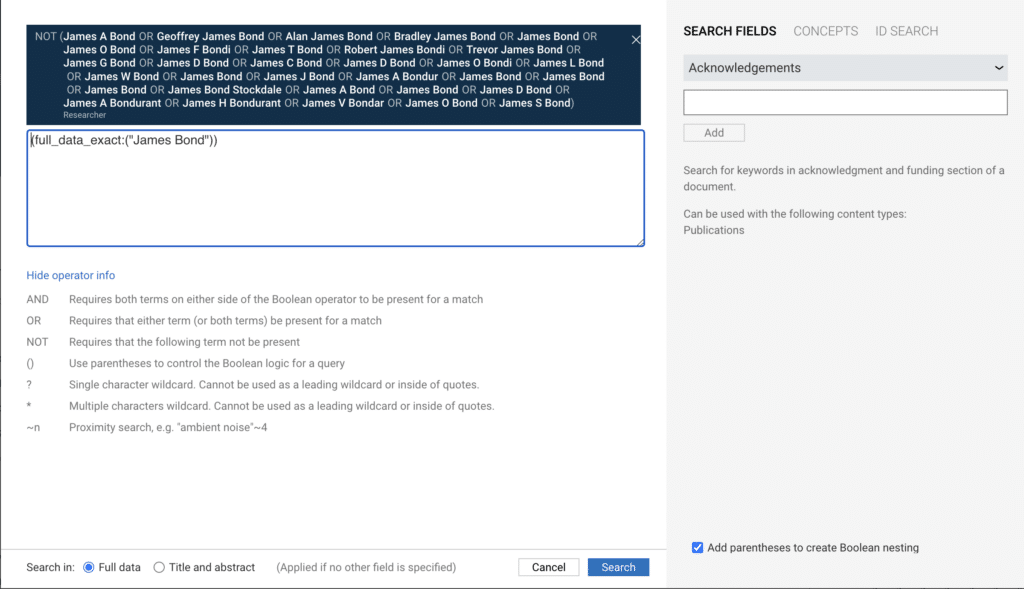
Figure 1: Advanced search in Dimensions to locate an exact phrase in the Dimensions full-text catalog (including more than 80 million articles at the time of writing). Note the 32 authors that need to be removed as a result of their name containing the string “James Bond”.
Using Dimensions’ advanced searching capabilities, we quickly find that James Bond’s impact on research discourse is much larger than this apparently meagre 600 articles from the basic search above. If we broaden the search to use Dimensions’ Exact Search (one of the advanced search tools that allows more powerful, fine-grained searches of the full-text corpus behind Dimensions), then we can identify more than 28,000 articles that mention James Bond. Of course, this more advanced search includes full text, and hence we need to be more careful with our methodology. In this case, the query needs to be modified to remove all 32 authors who are fortunate (or indeed unfortunate) enough to have the name James Bond contained within their names.
In this expanded dataset, references to Bond can be more tangential – for example, as a cultural reference: Bond as a relatable example, a gateway or a framing for a set of ideas, or to quickly orient the reader to a specific era, or a set of values. Indeed, in this expanded dataset, ANZSRC FoR code 36 – Creative Arts and Writing – is no longer the dominant category, with code 47 – Language, Communication and Culture – taking the top spot.
However, even this new dominant category only occupies 12% of the “Bondverse”, with a much greater diversity of topics playing a role, including FoR 44 – Human Society with 7.7%, 43 – History, Heritage and Archaeology 4.0%, 35 – Commerce, Management, Tourism and Services 3.7%, and 46 – Information and Computing Sciences at 3.5%. Indeed, articles in the Bondverse have been written on Gender Studies, Built Environment and Design, Political Science, Philosophy and Religion, Psychology, Marketing, Biomedical Sciences and Law, all of which are able to use James Bond as a gateway to help people relate to their topic.
The brand of Bond is so powerful that it is often mentioned through other affiliations, such as those with particular artists as in “Man vs the machine: The Struggle for Effective Text Anonymisation in the Age of Large Language Models”, where singer/songwriter Adele is the principal focus of the commentary, but where Bond receives a collateral mention; or where Bond’s connection to those wonderful gadgets and cars from the long-suffering Q means that he is a natural point of reference as in Automated Driving in Its Social, Historical and Cultural Contexts. Each year, a consistent 1000 or so articles refer to James Bond (approximately the output of a medium-sized research institution). Outlets that regularly publish articles referring to James Bond include SSRN, the Journal of Cold War Studies (MIT Press Direct), Lecture Notes in Computer Science (Springer Nature), The Historian (Taylor & Francis Online) and Nature. It is perhaps of little (Quantum of?) solace to the Journal of British Cinema and Television and Film Quarterly that they are some way down the list.
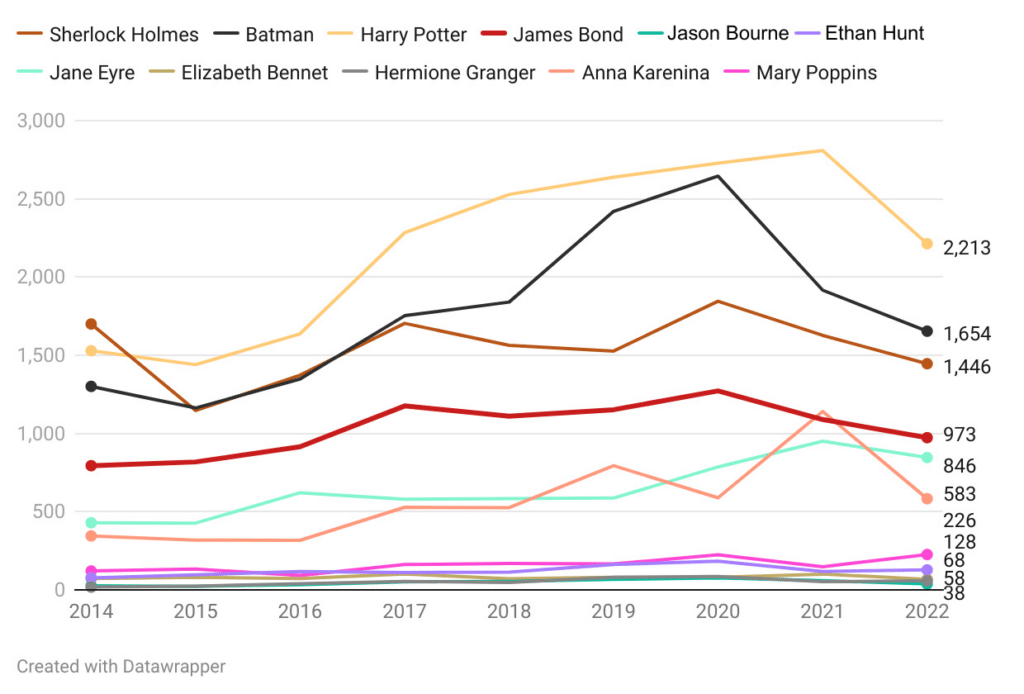
Figure 2: References in the research literature to well-known fictional characters. Source: Dimensions.
Of course, Bond is not alone as a fictional figure who has made his mark in the research literature, there are other prominent fictional characters that we use as a shorthand for cultural references. James Bond fares well in these stakes, beating most recent characters such as Ethan Hunt from the Mission: Impossible franchise, and Jason Bourne. But he has not yet attained the same level of cultural embeddedness as more established figures such as Sherlock Holmes (who even has his own adjectival form, “Holmesian”), Batman (for which our analysis, perhaps unfairly, also includes mentions of Bruce Wayne, but does remove authors with the name Bruce Wayne as well as publications from Batman University in Turkey), or indeed Mary Poppins. The one modern fictional character who seems to defy all the rules is Harry Potter, but that is for another article and a different anniversary.
Figure 2 begs another question that goes beyond Bond: Despite possessing either cult status or serious literary impact, it seems that women are not getting their due as cultural gateways to support narratives in research literature. Searches for Elizabeth Bennet (from Jane Austin’s Pride and Prejudice) produced a mere 1,687 research outputs and Jane Eyre does a little better, being mentioned in almost 12,000 outputs, but Hermione Granger, a significant source of inspiration for many up-and-coming researchers, is mentioned in a mere 562 publications, not yet receiving the same level of success as her literary school friend Harry, despite being the one who does all the research in the books! Anna Karenina has given her name to an “effect”, “bias” or “principle” depending on the field, all of which have made the translation of her brand to the research environment successful.
This lack of reference to female characters from fiction in the research literature is not a surprise. Female characters are just as well drawn as male ones, often more relatable, and hence better suited to performing these key roles in research narrative to help render research itself more relatable. This is a complex sociological issue that deserves more research. At a high level, a simple explanation may be that the male-dominated media of the past is responsible for establishing male characters in the zeitgeist and that a male-dominated research ecosystem (also of the past) is more apt to use male characters to make their points. However, the fact that these practices endure today is something that requires more analysis and attention, at least in the opinion of this author.
Whether or not this is “No time to die” for Bond is not in question from the perspective of research literature. It is, however, clear that references to Bond serve not only narrative or contextual use cases, but invite us instead to ask more challenging questions. In the final analysis, whether he will ultimately die another day or whether he will only live twice are questions only James Bond can answer.
About Dimensions
Part of Digital Science, Dimensions is the largest linked research database and data infrastructure provider, re-imagining research discovery with access to grants, publications, clinical trials, patents and policy documents all in one place. www.dimensions.ai
Daniel Hook is CEO of Digital Science, co-founder of Symplectic, a research information management provider, and of the Research on Research Institute (RoRI). A theoretical physicist by training, he continues to do research in his spare time, with visiting positions at Imperial College London and Washington University in St Louis. Daniel could be called the M of Digital Science, but he would like to be the Q – by his own admission, he is definitely no 007.
INDIANAPOLIS — The Solar Eclipse will be visible in Indiana one year from today. This event marks the first total solar eclipse in the United States since August of 2017 and the first one in Indy since the year 1205. Aside from Austin and Dallas, Indy is the largest city with a direct hit in the path of totality. The 'Eclipse Capital of the Midwest' is expected to have an influx of more that 1 million visitors to witness the phenomenon. To prepare, NASA and the Indianapolis Motor Speedway have teamed up for an exciting day of programming and celebration. On April 8, 2024, NASA will broadcast live from the IMS and be on hand to answer questions and guide viewers through the experience. IMS is one of only three broadcast locations across the country to partner with NASA for the event, according a NASA announcement. In addition, over 100 events will take place over the Solar Eclipse weekend in Indy. Some of the events include: Total Eclipse of the Art festival at The Indianapolis Museum of Art at Newfields A viewing celebration at the Indianapolis Motor Speedway A food truck festival at White River State Park Eclipse Extravaganza at The Children’s Museum of Indianapolis Space-themed documentaries and Hollywood hits on the big screen at the IMAX Theatre Space-themed cocktails and bites at Indy’s best bars and restaurants More information on all the festivities, tips and tricks for viewing and best hotel rates can be found here. #experience#event#art#food#events#programming#solar#broadcast#restaurants#hotel
In the final of our series to celebrate Women’s History Month, we look at the remarkable career of Elsie Widdowson. Born in 1906, she was one of the first women to graduate from Imperial College, London, and went on to earn her first PhD from there. Following an early research interest in plants, she became an expert in human diets, going on to provide invaluable input into the UK’s rationing project after World War II.
In this short series of blogs, Digital Science is using modern tools to assess three women and their research legacies to amplify their achievements during Women’s History Month. We saw earlier this month the major contributions made by Marie Maynard Daly and Rita Levi-Montalcini, and in the final part we review the impact made by Dr Elsie Widdowson in her long career.
The first remarkable thing to note about Dr Widdowson is the change in disciplines she covered in her early work. At first she was interested in plants, and her first PhD at Imperial College involved long-term experimentation on carbohydrates in apples. But following that she switched from plants to humans, and in particular the biochemistry of our bodies. Firstly she looked at the functioning of kidneys, and then moved on to the relatively new field of dietetics. It appears that these changes were in part due to difficulties in securing a long-term position in what would have been a male-dominated era.
The second thing to note here is that, working with co-researcher Dr Robert McCance, their publications on nutrition quickly became the seminal text for those studying the area in the post-war period. Recognising her expertise, she helped the UK government formulate a plan to increase vitamin intake into people’s diets which were restricted due to rationing. Much of her work focused on the health of the fetus and babies according to the milk they drank, and this work was not just restricted to people. Gestation and growth patterns and how they were related to nutrition were studied in everything from elephants to blackbirds to pigs. However, the relative health of people in that period will still be felt today by those still living and the families they were able to bring up.
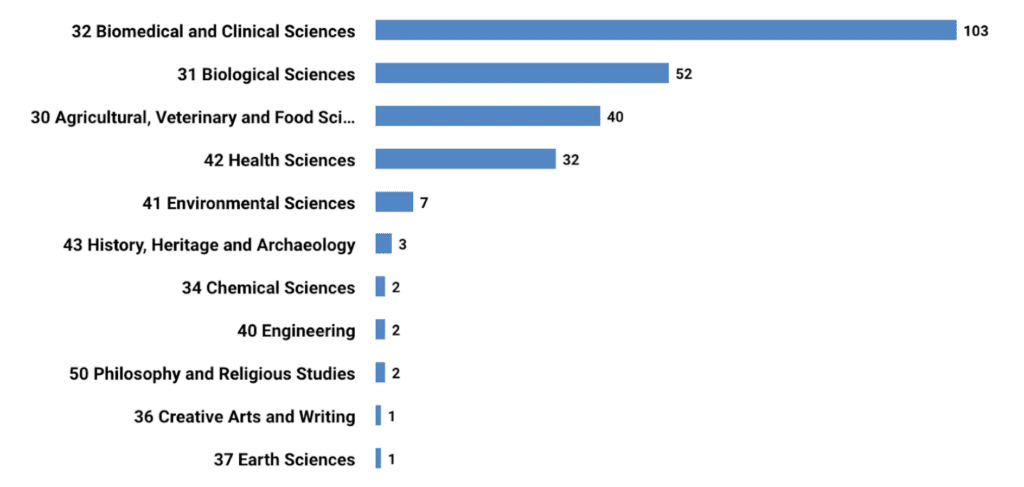
The third impressive aspect of her career is not only her productivity over such a long period, but the number of major contributions across so many different fields. Recently the Dimensions database was upgraded to include the updated Fields of Research (FoR) categorisations used in Australia and New Zealand. In the course of her career, Dr Widdowson published 159 articles – 63 of them with her long-time collaborator Dr McCance – and around two thirds of these were in her core area of Biomedical and Clinical Sciences (see chart). One might expect most authors to then have a few papers here and there in adjacent FoRs, but Dr Widdowson has 40 papers in Agricultural, Veterinary and Food Science, 32 in Health Sciences and seven in Environmental Sciences. She also has a handful of papers in other areas, but they are in no way adjacent, publishing articles in areas such as Engineering and History, Heritage and Archaeology.
Field of Research (FoR) codes and the number of publications by Dr Elsie Widdowson, demonstrating the wide range of fields in which she published. Source: Dimensions.
Later in her career, Dr Widdowson retired from work in one lab only to take up a position at another lab in Cambridge to further her research career. It is perhaps fitting that when she published her final article – some 64 years after her first when she was well into her 90s – it was a dedication to her co-author Dr McCance after he died following a similarly long and distinguished career.
Simon Linacre
About the Author
Simon Linacre, Head of Content, Brand & Press | Digital Science
Simon has 20 years’ experience in scholarly communications. He has lectured and published on the topics of bibliometrics, publication ethics and research impact, and has recently authored a book on predatory publishing. Simon is also a COPE Trustee and ALPSP tutor, and holds Masters degrees in Philosophy and International Business.
Over the last few years, many things were put on hold only to come back bigger and better; the Academy Awards, COP26, and of course Liverpool FC’s eventual triumph over the rest of the Premier League. However, none have been so hotly anticipated as #FuturePub – Return of the Research Tech Innovation Social!
We’re really excited to announce that #FuturePub is BACK! We’ll be at the Royal Institution (the Ri to its friends) on May the 4th (be with you) for everything you know and love and SO MUCH MORE.
Don’t worry, the sky isn’t really spinning – you’re just experiencing the excitement of #FuturePub!
Join us for food, drinks, lightning talks from cutting-edge innovators in research tech, networking with a bunch of like-minded people, and even explore the historic building that is hosting us.
Hosted by Digital Science, the evenings are designed to be fun and informal – we aim to give opportunities to those working on new ideas and innovations a chance to present and get feedback on their ideas. There’s also free food!
In case you’re wondering how it all works, here’s a breakdown of how the night will look:
Doors will open at 6:00 pm when you can grab some food, a drink, and meet fellow attendees. You can also explore the historic home of science communication and innovation with a walk through the Faraday Museum at the Ri.
At around 6:30 pm there will be some quick-fire lightning talks covering a range of new and exciting developments in research technology. These will fit into an hour, to keep the evening fast-paced and fun!
The rest of the evening is then open for discussions and conversations over drinks and any remaining food – we expect a great mixture of attendees from the research, publishing and start-up communities.
From about 9:00 pm those who would like to continue conversations can start to wander over to the King’s Head pub down the road where we’ve reserved a space.
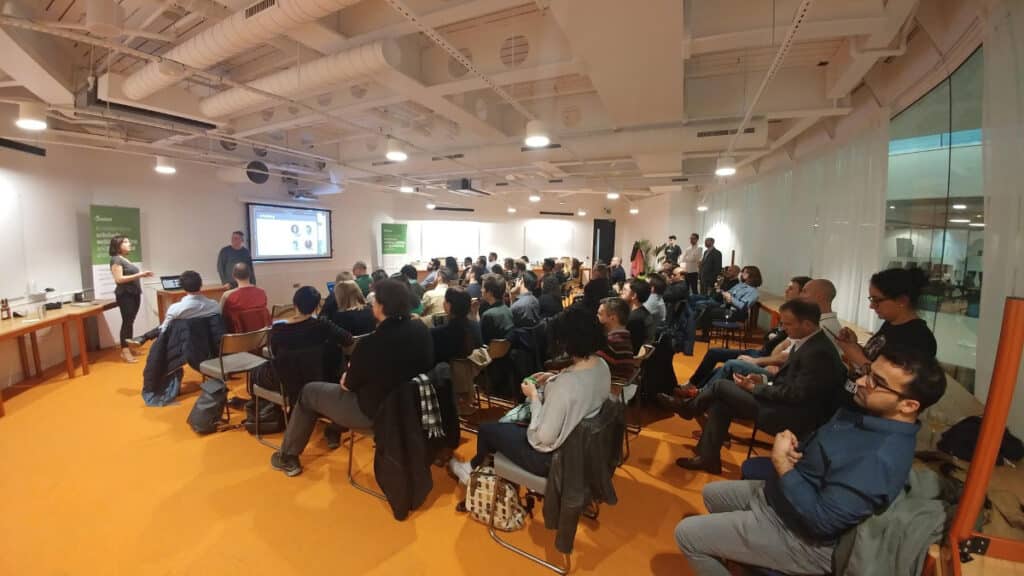
#FuturePub event in 2019.
We’ll have a great selection of speakers lined up and will be announcing the first two shortly, with further announcements as we approach the event. Register now to be the first to hear the speaker announcements as they go out!
We also still have a couple of speaking slots left, so if you’d like to speak at this event (or one in the future), please register your interest via this form.
And if you just want to turn up and enjoy the event, sign up here! Tickets are FREE, but limited, so grab yours NOW. We can’t wait to see you at #FuturePub!
WHEN: Thursday, May the 4th, 2023 from 6:00 pm to 9:30 pm (BST)
WHERE: The Royal Institution of Great Britain, 21 Albemarle St, London W1S 4BS
Doors open at 6:00 pm and the talks will kick off at 6:30 pm. Space at the venue is limited, so please register for your free tickets now to reserve your place!
About the Author
Suze Kundu is Director of Researcher and Community Engagement at Digital Science.
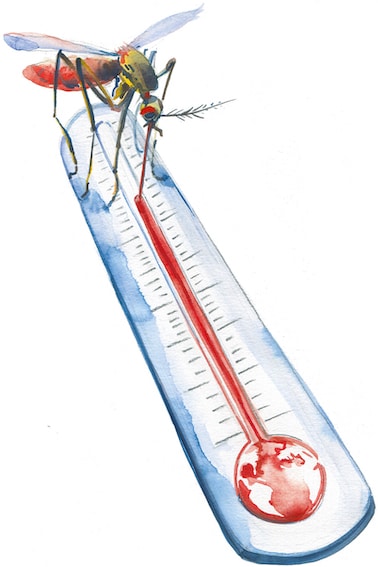
This blog addresses the impact of climate change on infectious diseases, in particular infectious diseases with the potential to transmit from animals to humans, also known as zoonotic diseases. To set the scene for this, we first consider the wider context of how global warming has far-reaching consequences for humans and the planet. The global changes that we are currently experiencing have never happened before, with climate change representing one of the principal environmental and health challenges. We use Dimensions to explore published research, research funding, policy documents and citation data. To help us perform a deeper analysis of the data, we access the Dimensions data through its Google BigQuery (GBQ) provision. This allows us to integrate data from Dimensions with one of the publicly available World Bank datasets on GBQ.
We also look at the research in conjunction with two United Nations (UN) Sustainable Development Goals (SDGs) – SDG3 Good Health and Well-being and SDG13 Climate Action – and assess how they add to the narrative. Many of the health impacts associated with climate change are a particular threat to the poorest people in low- and middle-income countries where the burden of climate sensitive diseases is the greatest. This also suggests that the impact in these regions, based on the UN SDGs, may reach beyond climate (SDG13) and health (SDG3) to affect those who live in extreme poverty (SDG1) and/or those who experience food insecurity (SDG2).
Climate change has far-reaching implications for human health in the 21st century, with significant increases in temperature extremes, heavy precipitation, and severe droughts.1 It directly impacts health through long-term changes in rainfall and temperature, climatic extremes (heatwaves, hurricanes, and flash floods), air quality, sea-level rise in low-land coastal regions, and many different influences on food production systems and water resources.2
In terms of human health, climate change has an important impact on the transmission of vector-borne diseases (human illnesses caused by parasites), in particular zoonotic infectious diseases (infections transmitted from animal to humans by the bite of infected arthropod species, such as mosquitoes and bats), and has a particular relevance due to the most recent COVID-19 and Zika virus outbreaks. Arthropods are of major significance due to their abundance, adaptability, and coevolution to different kinds of pathogens.3
Zoonotic infectious diseases are a global threat because they can become pandemics, as we have seen in the case of COVID-19, and are currently considered one of the most important threats for public health globally. The COVID pathogen spread worldwide, recording 255,324,963 cases with 5,127,696 deaths as of November 2021.4
One reason for this turnaround could be related to the widespread adoption of the United Nations Sustainable Development Goals (SDGs), and in particular SDG6, which sets out to “ensure availability and sustainable management of water and sanitation for all”.9 The achievement of this Goal, even if partially, would greatly benefit people and the planet, given the importance of clean water for socio-economic development and quality of life, including health and environmental protection. SDG6 considers improvement of water quality by reducing by half the amount of wastewater that is not treated by 2030.
The changes in climatic conditions have forced many pathogens and vectors to develop adaptation mechanisms. For example, in the case of African Ebola, climate change is a factor in the rise in cases over the past two decades, with bats and other animal hosts of the virus being driven into new areas when temperatures change, potentially bringing them into closer contact with humans.
Examples highlighting how the acceleration of zoonotic pathogens is attributable to changes in climate and ecology due to human impact are common. According to the Center for Disease Control (CDC), almost six out of every 10 infectious diseases can be spread from animals to humans; three out of every four emerging infectious diseases in humans originate from animals.5 Zoonotic diseases, such as those spread by mosquitoes and other related vectors, have increased in recent years. This is because the rise in global temperatures has created favourable conditions for breeding specific pathogens, especially in poorly developed countries predominantly in the Global South.6 Further, climate change is causing people’s general health to deteriorate, making it easier for zoonotic infections to spread, as seen with the Zika and dengue viruses.7
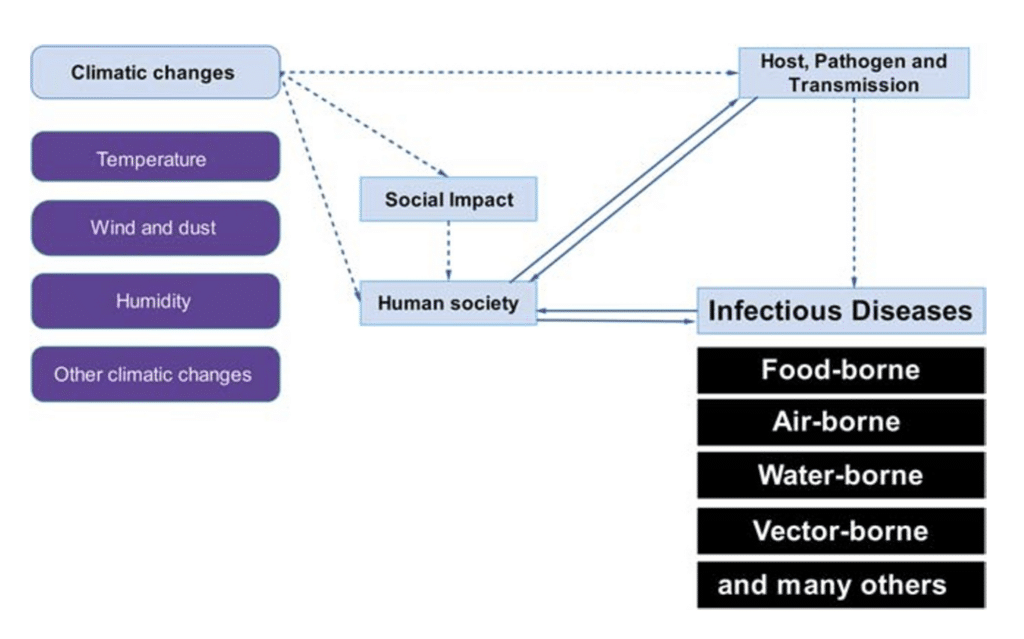
The changes in climatic conditions have forced pathogens and vectors to develop adaptation mechanisms. Such development has resulted in these diseases becoming resistant to conventional treatments due to their augmented resilience and survival techniques, thus further favouring the spread of infection.
Figure 1: Effect of climatic changes on infectious diseases.8
2. Exploring links between climate change and zoonotic diseases as evidenced by mentions in policy documents
Developments in policy are generally rooted in academic research. Applying research to policy relevant questions is increasingly important to address potential problems and can often identify what has been successful or not successful elsewhere. Citations to the research that underpins policy documents is known to be an important (proxy) indicator of the quality of the research carried out. Awareness and the course of action taken by governments, NGOs and other health-focused institutions is evident by their activity in this area. For example, in the UK the government has recently allocated £200 million to fight zoonotic diseases.9 Actions that are taken relevant to this are communicated by, for example, relevant policy documents which mention the research influencing public policy decision making in this area. Policy documents provide us with a different perspective for analysis, allowing a closer proximity to ‘real world’, society-facing issues.
3. The SDG3 and SDG13 crossover: research outputs associated with zoonotic diseases and climate change
The UN launched the 2030 Agenda for Sustainable Development to address an ongoing crisis: human pressure leading to unprecedented environmental degradation, climatic change, social inequality, and other negative planet-wide consequences.10 There is growing evidence that environmental change and infectious disease emergence are causally linked and there is an increased recognition that SDGs are linked to one another. Thus, understanding their dynamics is central to achieving the vision of the UN 2030 Agenda. But environmental change also has direct human health outcomes via infectious disease emergence, and this link is not customarily integrated into planning for sustainable development.11
Two of the 17 UN SDGs of most relevance to zoonotic diseases and climate change are SDG3 and SDG13.
Looking specifically at SDG3, reducing global infectious disease risk is one of the targets for the Goal (Target 3.3), alongside strengthening prevention strategies to identify early warning signals (Target 3.d).12 Given the direct connection between environmental change and infectious disease risk, actions taken to achieve other SDGs also have an impact on the achievement of SDG3. Moreover, strengthening resilience and adaptive capacity to climate-related hazards and natural disasters is one of the targets for SDG13 (Target 13.1).13 The two SDGs perhaps highlight two sides of the same coin – SDG3 focusing on preventing and reducing disease risks and SDG13 focusing on strengthening resilience of climate-related hazards (infectious disease being an obvious hazard).
Exploring the crossover between SDG3 and SDG13 using Dimensions, reveals interlinkages with other SDGs – SDG1 No Poverty and SDG2 Zero Hunger. We know that living in poverty has negative impacts on health, and in respect of climate change, economic loss attributed to climate-related disasters is now a reality. Experiencing hunger can be a consequence of vulnerable agricultural practices that negatively impact food productivity and production. In 2020, between 720 and 811 million persons worldwide were suffering from hunger, as many as 161 million more than in 2019.14 Moreover, climate change, extreme weather, drought, flooding and other disasters progressively deteriorate land and soil quality, severely affecting the cost of food items.
4. Funding of research associated with SDG3 and SDG13 – increases in SDG research funding
Scientific advances reveal empirical observations of the association between climate change and shifts in infectious diseases. Using Dimensions we can examine the scientific evidence for this by looking at the impact of climate change on zoonotic diseases. We can also track the science, through the lens of research outputs associated with both SDG3 and SDG13.
Being able to assess publishing and funding behaviours by comparing the Global North and Global South countries provides us with an insight into where research is both funded and ultimately published. Moreover, one question we might ask is, given that the Global South is currently hardest hit by the consequences of climate change from an infectious disease perspective, will we see changes in publishing and funding practices in the future?
Being able to assess publishing and funding behaviours by comparing the Global North and Global South countries provides us with an insight into where research is both funded and ultimately published. Moreover, one question we might ask is, given that the Global South is currently hardest hit by the consequences of climate change from an infectious disease perspective, will we see changes in publishing and funding practices in the future? Furthermore, climate change has exacerbated many influencing factors. It has generated habitat loss, pushed wild animals from hotter to cooler climates where they can mix with new animals and more people, and it has lengthened the breeding season and expanded the habitats of disease-spreading mosquitoes, ticks, etc.,15 and so we could potentially see more zoonotic infectious disease spreading to countries in the Global North. Given these factors, and the capability of Dimensions, we can make comparisons over time and geolocation to track where changes are occurring.
Dimensions search strategy and data investigation
i. Search strategies
Research data were retrieved using Digital Science’s Dimensions database and Google BigQuery (GBQ). For initial searches we created a specific search term to identify publications associated with zoonotic/infectious diseases and climate change. Two sets of terms were used to define the searching keywords. The first was made up of keywords associated with zoonotic and infectious diseases, and the second was simply one word, ‘Climate’, as follows:
Zoonoses OR "zoonotic diseases" OR "parasitic diseases" OR "zoonotic pathogens" OR "vector borne diseases" OR "climate-sensitive infectious diseases" OR "infectious disease risk" OR "infectious diseases" AND Climate.
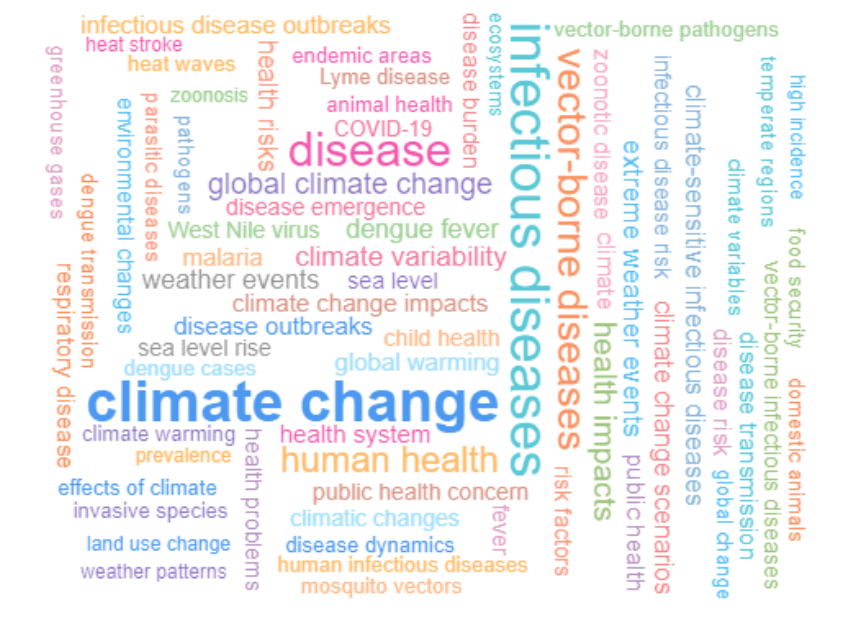
Figure 2: Word cloud illustrating the strength of association of research that includes both climate change and zoonotic (infectious) diseases and their variants.
Dimensions’ inbuilt SDG classification system allowed for the linking of research outputs associated with SDGs both individually and in combination. On this basis we were able to include SDG3 Good Health and Well-being and SDG13 Climate Action to the search, allowing us to include outputs associated with both Goals. The main focus of the search carried out was on peer-reviewed articles and government policy documents between 2010 and 2022. A set of 1,436 research publications were retrieved and entered into further analyses separately. The research outputs retrieved shared a focus on the impact of climate change on pathogen, host and transmission of human zoonotic/infectious diseases.
A dataset based on the research outputs retrieved from Dimensions was created within GBQ. This allowed integration with publicly available datasets from the World Bank to ascertain low and high income countries and regions. The Dimensions GBQ provision also facilitates in-depth targeted analyses. This allowed us to look solely at the publications resulting from our search in order to identify trends in concepts, citations, policy documents and collaborations by geographic region.
ii. Findings
a) Publication timeline trends for research outputs tagged in Dimensions jointly with SDG3 and SDG13 and associated with zoonotic/infectious diseases and climate change were plotted.
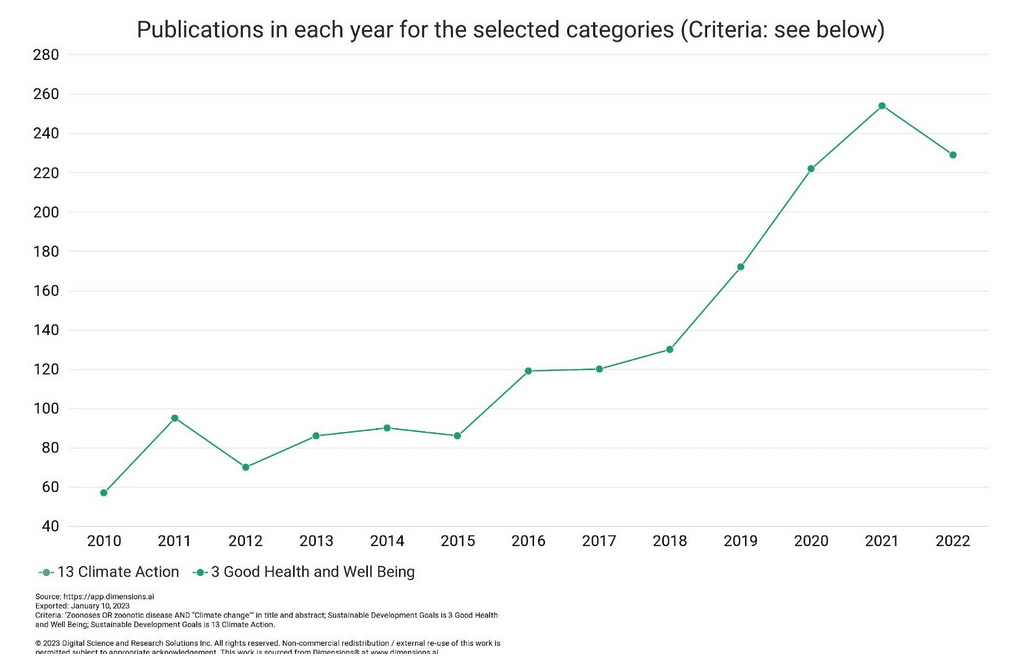
Figure 3: Publications on climate change and zoonotic diseases, and their variants that have been linked to both SDG3 and SDG13 using Dimensions’ SDG classification system
Figure 3 highlights the trajectory over a 13-year time period for publications associated with both SDG3 and SDG13 in Dimensions. Of note, following implementation of the UN SDGs in January 2016, the upward trend in numbers of publications begins to rise sharply until the end of 2021, with a dip in 2022.
b) Co-authorship analysis: Collaboration by geographic region
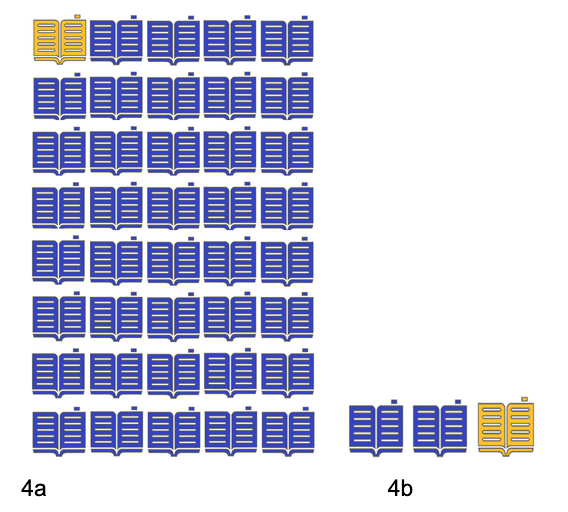
Figure 4: 4a) One in 40 publications from researchers in high-income countries have been co-authored with researchers from a low-income country; 4b) Two in three publications from researchers in low-income countries have been co-authored with researchers from a high-income country.
Figure 4a reveals that for every 40 publications authored in a high-income country, one publication was in collaboration with a low-income country-based researcher. Figure 4b reveals that two in three publications authored by low-income country based researchers have been in collaboration with high-income country based researchers. We conclude from this that it is proportionately more likely for low-income country researchers to collaborate with researchers in the Global North than for researchers in the Global North to collaborate with researchers in the Global South. However, it is important to note here that numbers of research outputs are disproportionate between the global regions (see Table 1 below).
2010-2022
Number and percentage of authors publishing climate change and infectious (zoonotic) diseases research
Number of authors publishing research outputs associated with SDG13
Number of authors publishing research outputs associated with SDG3
Total number of authors publishing in each geographic income region
Global South
Low-income countries
52 (0.11%)
2,818 (6.22%)
26,649 (58.85%)
45,285 (100%)
Lower-middle-income countries
468 (0.03%)
85,931 (6.07%)
409,355 (28.93%)
1,415,019 (100%)
Global North
High-income countries
618 (0.01%)
365,917 (4.73%)
2,337,971 (30.22%)
7,736,160 (100%)
Upper-middle-income countries
2,419 (0.06%)
194,187 (4.56%)
850,954 (19.97%)
4,260,966 (100%)
Table 1: Number and proportion of authors by geographic income region publishing research on climate change and infectious (zoonotic) diseases, and SDG3 and SDG13
Table 1 outlines the combined total number of authors of published research in the Global South and Global North, including the proportion of researchers against the total number of researchers in each of these regions. The figures in the table reveal that proportionally the number of researchers publishing research on zoonotic diseases and climate change is higher than that of higher-income countries. We argue here that this research focus is not necessarily a niche area for Global South countries (even though their number of research outputs and activity is low in real terms). Consideration of the number of authors publishing zoonotic diseases and climate change research papers against numbers of authors publishing in areas associated more generally with SDG3 and SDG13 provides a glimpse of the breadth of sustainable development research of which our topic area is just one component.
Despite the crossover with SDG3 and SDG13 not being high, it shows that the engagement of researchers in low-income countries with zoonotic diseases research is notable and contributes to research progress in this area. However, the research is better represented if we look proportionally. For example, 52 researchers in low-income countries represent 8% of the number of zoonotic disease researchers in high-income countries (618), but the total number of researchers publishing overall in low-income countries (45,285) represents just 0.5% of all researchers in high-income countries (7.7 million) making the proportional contribution by low-income country researchers 40 times greater than high-income country researchers in this research area.
c) Research publications by geographic region
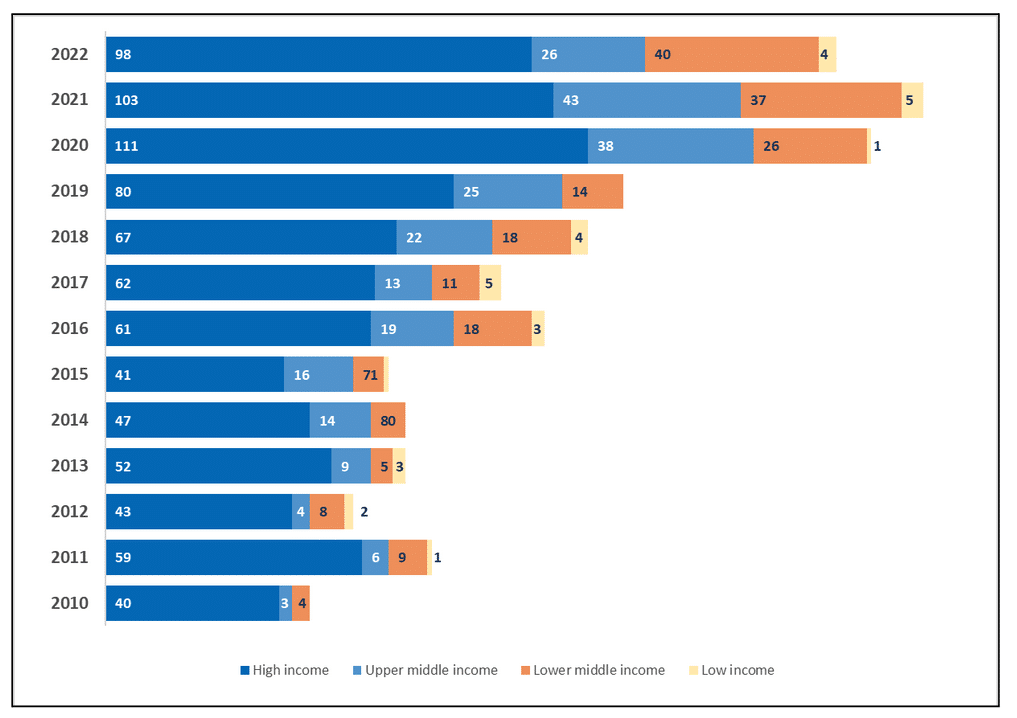
Figure 5: Research outputs by year of publication pre- and post-SDG time period.
Figure 5 above reveals a total of 1,419 research publications pre- and post-SDG period from 2010-2022 by country income group have been captured by Dimensions. The numbers represented in the chart reveal that publications have at least one author in the country income groupings outlined. In order to incorporate collaborations, a publication is included twice if it includes an author within each income group. This only applies for the analysis of country income groups. It allows us to see any increases/decreases in collaborative behaviour. In this respect, we note the contribution (either through collaborating or writing their own publications) from low/low-medium-income (Global South) countries has risen both in number and as a proportion of the outputs from 2010.
d) Citation analysis by geographic regions
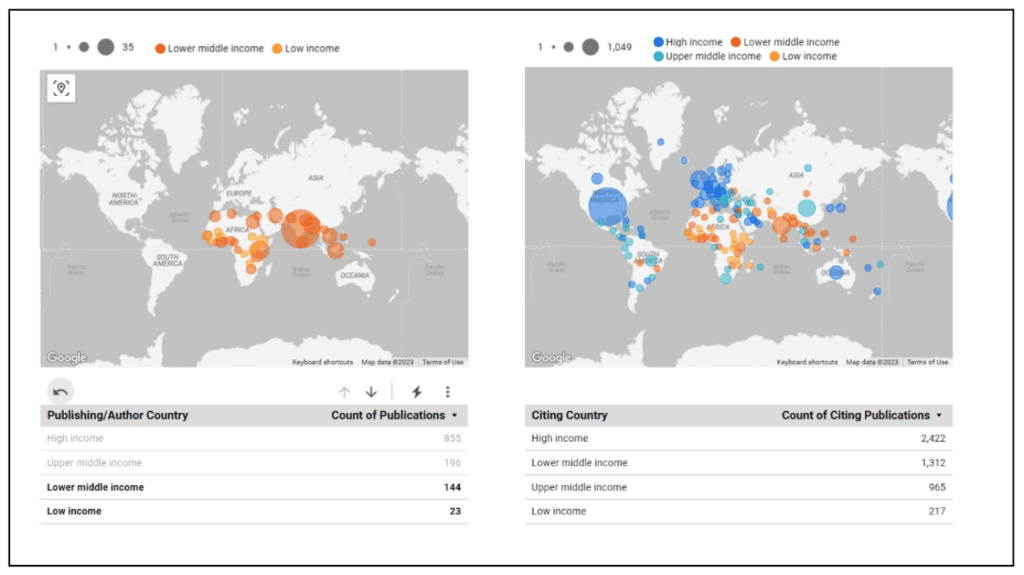
Figure 6a – Number of publications and corresponding citation counts that include authors in low- and low -medium income countries.
Figure 6b Number of publications and corresponding citation counts that include authors in high- and high-medium income countries.
The data in Figure 6a and 6b above reveal that:
1. South-East Asia as a producer of this research is dominant in the Global South (see Fig. 6b).
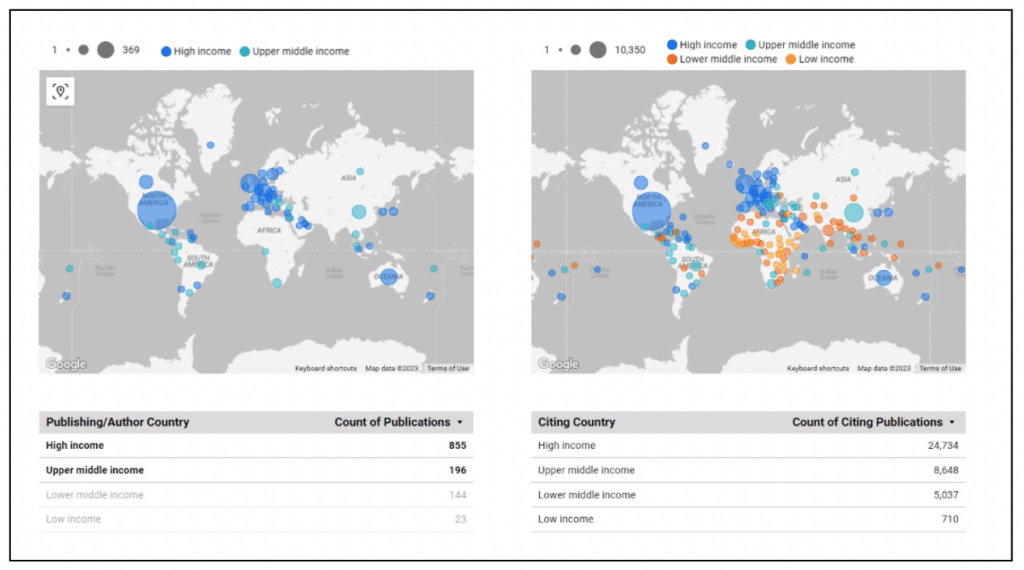
2. In the Global South, South-East Asia both publishes research and favourably cites research from the same region (see Fig. 6a).
3. Research output in South-East Asia is not as highly cited by the Global North (see Fig. 6b). What is notable however, is the overall dominance of the Global North for both research output and citation counts. We conjecture one reason for why this might be the case is that the Global South may not have access to the same level of funding or collaboration opportunities. Moreover, differences in research focus could account for the distinction. Moreover, interest in these areas by high-income country research(ers) may be less pronounced than those research areas elsewhere in the Global South (eg, Africa) where there is more collaboration, or more ‘gain’ for Global North countries (Ebola, Zika etc). For example, if India’s research focus was local to aspects of zoonotic diseases that only affect this country, then it might be less likely that higher income countries would cite the research. This warrants a deeper dive into the data to uncover such findings but is outside the scope of the blog.
In conclusion, it is perhaps the case that areas which are most affected by climate change and zoonotic diseases have become publication ‘hotspots’ which are not yet attractive to researchers in Global North countries.
e) Funding – by income/geography; Funder type
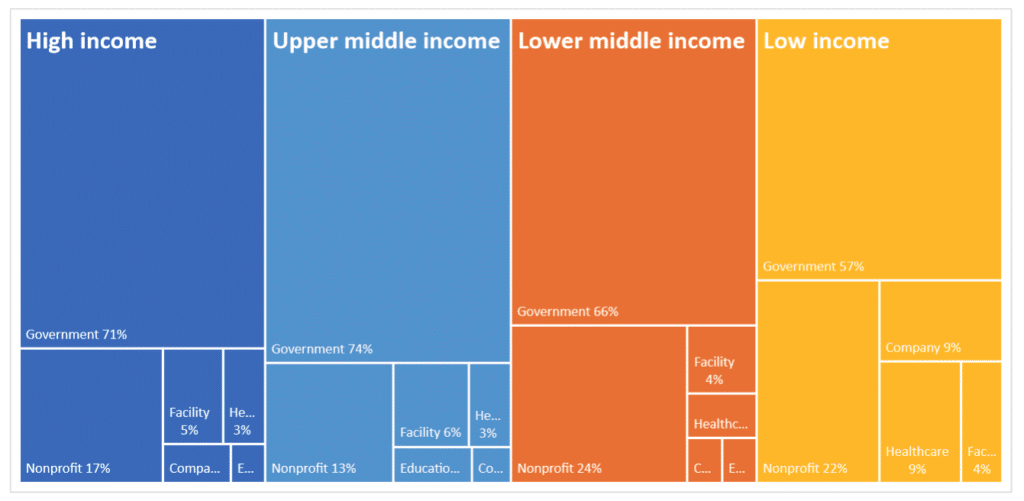
Figure 7: Breakdown of Country groupings by income and type of funding organisation revealed by Dimensions.
The general trend seen in Fig. 7 above reveals government funding to be the major driving force in zoonotic diseases and climate change research in all of the country groupings. What Dimensions reveals in this respect is that governments in the Global North provide 100% of the government funding that is held in the Dimensions database for research on these topics in the Global South. This would explain perhaps why low-income countries in the Global South, where research infrastructure isn’t as well funded, receives less government funding as it is awarded by the Global North. Looking at funding from non-profit sources, which includes organisations such as Bill and Melinda Gates Foundation, the Wellcome Trust and the Science and Technology Development Fund, we note that such organisations provide nearly a quarter of all research funding held in Dimensions, in the Global South. As with government funding, 98% of all non-profit research funding in both regions comes from non-profit organisations in the Global North. It is interesting to note, given the focus of the research, that only a very small proportion of funding is received across all funder types from the healthcare sector. All other funders included in Fig. 7 92.5% of funding comes from the Global North (healthcare funding is included in this figure).16
f) Policy documents and their citing publications
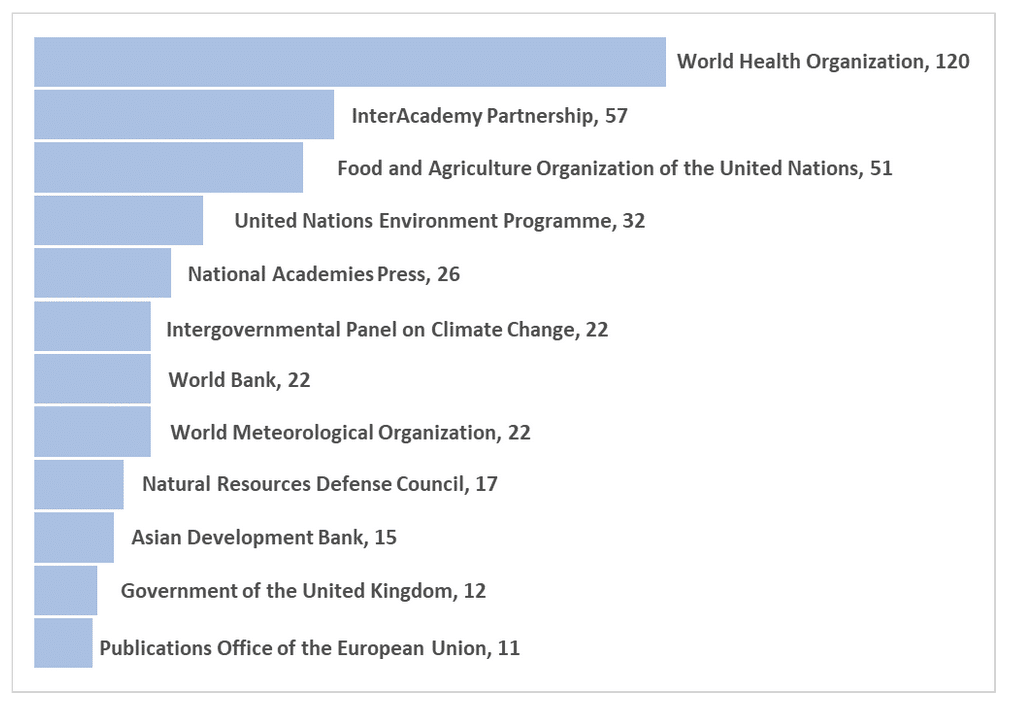
Figure 8: Top 12 publishers of policy documents citing research on climate change and zoonotic diseases (based on our Dimensions search criteria – see above in “Search strategies”).
In Dimensions, policy sources and document types range from government guidelines, reports or white papers; independent policy institute publications; advisory committees on specific topics; research institutes; and international development organisations. The top 12 policy publishers that are outlined in Fig. 8 above represent those publishers of policies citing research outputs associated with climate change and zoonotic diseases. It is perhaps not unexpected that the number of publications cited by the World Health Organization would be high given its global vision to eliminate the disease burden globally and to reverse climate change. Zoonotic diseases are very much on the radar of the global agencies concerned with global health which, given climate change, means that spread of these diseases in the Global North is more likely.
Takeaway findings
Using Dimensions’ capability to take a deep dive into research exploring zoonotic diseases and climate change in the context of SDGs has enabled us to uncover a number of interesting findings that are illuminating in the context of a world view.
Our investigations have revealed several interesting findings, including:
Research publications in this area have increased more than two-fold since the implementation of the SDGs.
Collaboration patterns in the Global North and Global South reveal that researchers in Global South countries are more likely to collaborate with researchers in the Global North than vice versa.
The total number of authors publishing research on zoonotic diseases and climate change in the lowest-income countries represents 8% of the total number of zoonotic disease researchers in high-income countries (see Table 1). Expanding this out across all research publications, the total number of researchers publishing in low-income countries represents just 0.5% of all researchers in high-income countries, making the proportional representation of low-income country researchers 40 times greater than high-income country researchers. Although actual numbers would reveal a different story, we believe that depicting the data in this way provides a balanced representation of the research output.
Research carried out on zoonotic diseases and climate change in the lower income countries is less well cited by higher income countries.
The data in Dimensions highlights that government organisations in the Global North award much of the funding for research in the Global South, and likewise for funding from non-profit agencies. What we might consider here as an explanation is that numerous organisations in the Global North such as Bill and Melinda Gates Foundation, the SCI Foundation, along with governments, are committed to the elimination of zoonotic diseases and in helping reduce carbon emissions to reverse climate change at a global level.
Conclusion
What is apparent is that governments around the world are investing large sums of money as part of the global mission to halt the spread of animal diseases and to protect the public against zoonotic disease outbreaks before they become pandemics that pose a risk globally.
Digital Science’s Dimensions database provided us with enormous opportunities for the interrogation of data to gather insights on zoonotic diseases and climate change (much more than could be included in this blog). The comprehensiveness of the database in terms of its coverage of publications, policy documents, grant funding and SDG-associated output (among others) in the Global North and Global South allows for creating the most value. As a linked research database, the possibilities for generating downstream link- and flow- analyses across geographies means it is an invaluable tool for the widest possible discovery across the research ecosystem.
About Dimensions
Part of Digital Science, Dimensions is a modern, innovative, linked research data infrastructure and tool, re-imagining discovery and access to research: grants, publications, citations, clinical trials, patents and policy documents in one place. www.dimensions.ai
About the Authors
Dr Briony Fane, Director, Researcher Engagement, Data | Digital Science
Dr Briony Fane gained a PhD from City, University of London, and has worked both as a funded researcher and a research manager in the university sector. Briony plays a major role in investigating and contextualising data for clients and stakeholders. She identifies and documents her findings, trends and insights through the curation of customised in-depth reports. Briony has extensive knowledge of the UN Sustainable Development Goals (SDGs) and regularly publishes blogs on the subject, exploring and contextualising data from Dimensions.
Ann Campbell, Product Technical Specialist | Dimensions
Ann Campbell (MPhil) joined Digital Science after almost 16 years working in the university sector where she successfully implemented several information systems used across the student and research lifecycle. Ann has a broad knowledge of data integration and analysis, primarily in the areas of academic research and impact, research assessment, diversity and inclusion and the UN SDGs. With extensive expertise in academic related data, she has played a lead role in data preparation for a number of REF assessments, diversity and inclusion charters and mandatory submissions.
Dr Juergen Wastl, Director of Academic Relations and Consultancy | Digital Science
Dr Juergen Wastl leads on supporting research institutions, funders, governments and other institutions with research capabilities to make better use of data to inform their strategies and decisions. Juergen headed the team that developed the Sustainable Development Goals classification for Dimensions and spearheads investigations and innovative analysis based on the UN SDGs. He is also Associate Director at the Research on Research Institute (RoRI) and he has considerable experience in all matters associated with research evaluation, assessment and interoperability.
2 Field, C.B., V.R. Barros, D.J. Dokken,et al. 2014. Climate Change 2014: Impacts, Adaptation, and Vulnerability. Part A: Global and Sectoral Aspects.Working Group II Contribution to the Fifth Assessment Report of the Intergovernmental Panel on Climate Change. Cambridge, UK and New York,NY: Cambridge University Press.
4 Ajuwon BI, Roper K, Richardson A, Lidbury BA. One Health Approach: A Data-Driven Priority for Mitigating Outbreaks of Emerging and Re-Emerging Zoonotic Infectious Diseases. Trop Med Infect Dis. 2021 Dec 29;7(1):4. doi: 10.3390/tropicalmed7010004. PMID: 35051120; PMCID: PMC8780196











.png)