Thursday, May 26, 2022

Motivations of Bad Actors in Science: The Personal, The Professional, The Political

Scientific publications can serve as key evidence to policymakers, as well as provide possible discussion points to inform public debate. For example, comprehensive, systematic reviews of literature regularly influence recommendations such as medical guidelines when it comes to public health policy around major issues such as the COVID-19 pandemic. The growing number of preprints available should in theory provide a faster, albeit less reviewed mechanism for researchers to share their work during the pandemic. However, what this entails is that the means to meddle with scientific communications are that much more available. But what would motivate a person, group of people, or even an organisation to intentionally game the scientific system? Personal, professional, or political – the motivations exist within people who want fame and fortune to fast-track their ambitions. Whether they use fair means or foul.

Charlatans in science are sadly not new. Persons making grandiose claims about their knowledge and outrageous cures for diseases have peppered medical history for centuries. With charismatic personalities and opportunities to influence, such individuals have professed false cures in the house of Tsar Nicholas (Rasputin) and misled ailing Londoners during an epidemic (Gustavus). Charmers playing by their own rules – gaslighting others.

Dictionary definition of charlatan.
“Charlatans in science are sadly not new.” Stock image.

Even in the least nefarious circumstances, lone actors can emerge to try to falsify science. Immense pressures placed on scientists to conduct research, publish results and have those results cited would tempt anyone to search for shortcuts. Researchers are humans, after all. Implement these requirements in an environment that supports gamifying just about anything, and even the most honest person could fail under the pressure that’s exerted.

In one case where citations were required for someone’s work, a researcher created fictitious authors in plagiarized papers to cite that work. Their work, in fact. Dr Yibin Lin posted six papers and attempted to submit eight more to preprint servers (see one example here). The case of attempting to accelerate promotion resulted in a 10-year ban from scientific research within the US.

In other cases, the motivations can only be understood from the people themselves, for example those individuals who fake being scientists. There is a long history of people outside of science providing advice as if they were experts. Some amazing citizen scientists exist, but the signal-to-noise ratio favours chaos more than substance.

There are parallels with predatory journals and those who publish their articles in them. In her seminal article on the motivations of authors published in such journals, Tove Faber Frandsen identified two main groups – the unaware and the unethical. The former claim to be ignorant of the existence of predatory journals, and innocent in succumbing to the tried and tested tactics of predatory publishers, the latter, on the other hand, exploit their existence to ensure publications – sometimes to ensure they reap the incentives in place for them, sometimes to publish unsubstantiated research. Most clearly, this has occurred during the pandemic with everything from 5G conspiracy theories to the promotion of debunked drugs and therapies appearing in fake journals.

“Even in the least nefarious circumstances, lone actors can emerge to try to falsify science.” Stock image.

As harmless as acting alone may seem in such an expansive scientific ecosystem, the consequences of a lone wolf pale in comparison to targeted attacks. Science mercenaries, well-funded by and coordinated with varying industries, can intentionally fracture the confidence in a topic. Seitz and Sanger – trained physicists later hired to undermine the harms of tobacco and climate change – worked on the atomic bomb and had legitimate education and training as physicists. As described in depth in the Merchants of Doubt the two scientists would eventually testify in court as if they were experts in epidemiology, environmental science, virology, and dozens of other areas to undermine the confidence of overwhelming scientific evidence in the harm of tobacco and the impact of climate change. They are not alone. A whole industry exists to profit from undermining science. Worried that second-hand smoke may kill your industry? The answer seems to be to kill the research by overwhelming the regulatory agencies and polluting the scientific literature.

“Countering nefarious acts and actors must be coordinated throughout the scholarly community – publishers, institutions, and funding agencies, to name a few. Policies and practice must move from the current defensive, reactive position, to the offensive.”

Leslie McIntosh, CEO, RIPETA

“In the end, the tactics of the few will overpower an ecosystem lacking a robust strategy.” Stock image.

As with other pandemics, we have seen a plethora of charlatans emerge during the COVID-19 pandemic. From the MBAs who would ‘set the record straight on COVID’ to the self-proclaimed experts on COVID and policy. To illustrate one scam: a scientific piece would be written, typically with one author having credentials in a scientific field. The co-authors either do not exist (e.g. Yan report) or do not have supporting credentials (e.g. research conducted by Walach). In some cases, the ‘papers’ appear in repositories with little proofing evident. In other cases, the work gets published in ostensibly peer-reviewed journals – meaning the peer review, if it happened at all, was not rigorous, such as those articles published in predatory journals. Success in the eyes of the authors would see a scientific social media outcry happen where someone eventually shreds the methodology. But the authors have won. It’s a misinformation strategy: i) Put out bad-faith information on Topic X; ii) Methodology of Topic X is deeply refuted; iii) Topic X is discussed; iv) Words of Topic X are propagated. Win for the bad-faith actors.

This would be like writing an article: Squirrels – Wonderful Companions in the Garden. As everyone knows, evil squirrels steal tomatoes from the garden and throw acorns from trees maliciously trying to deprive the owners of any peace. Cute con artists at best. The authors’ intent would be to spread the lie of the delightful aspects of squirrels – intentionally putting in the key phrase they want propagated in the article title. So when a social media argument ensues, and good scientists cite the title as-is and the bad-faith actor’s message sticks: squirrels are lovely garden mates. And the lie spreads – because we as scientists playing by scientific rules indulge in critiquing the methodology before deciding on the legitimacy of the source. We legitimize their argument.

An individual infiltrating published science with falsehoods still pollutes the ecosystem. But the motivation to put profit over protecting society causes harm at scale. In the end, the tactics of the few will overpower an ecosystem lacking a robust strategy.

Countering nefarious acts and actors must be coordinated throughout the scholarly community – publishers, institutions, and funding agencies, to name a few. Policies and practice must move from the current defensive, reactive position, to the offensive – taking proactive measures to prevent harmful players entering the ecosystem and promoting automated quality checks that scale with the pace of scholarly communication.

For more information about how Ripeta can help make better science easier – for publishers, funders, researchers and academic institutions – please visit the Ripeta website.

Dr Leslie McIntosh

About the Author

Dr Leslie McIntosh, CEO | Ripeta

Dr McIntosh is the founder and CEO of Ripeta, a company formed to improve scientific research quality and reproducibility. Part of Digital Science, Ripeta leads efforts in automating quality checks of research manuscripts. Academic turned entrepreneur, Dr McIntosh served as the executive director for the Research Data Alliance (RDA) – US region and as the Director of the Center for Biomedical Informatics at Washington University School in St. Louis. Over the past years, she has dedicated her work to improving science.

The post Motivations of Bad Actors in Science: The Personal, The Professional, The Political appeared first on Digital Science.


from Digital Science https://ift.tt/GjFsZLo

Tuesday, May 24, 2022

The Secret (Research) Life of the London Underground

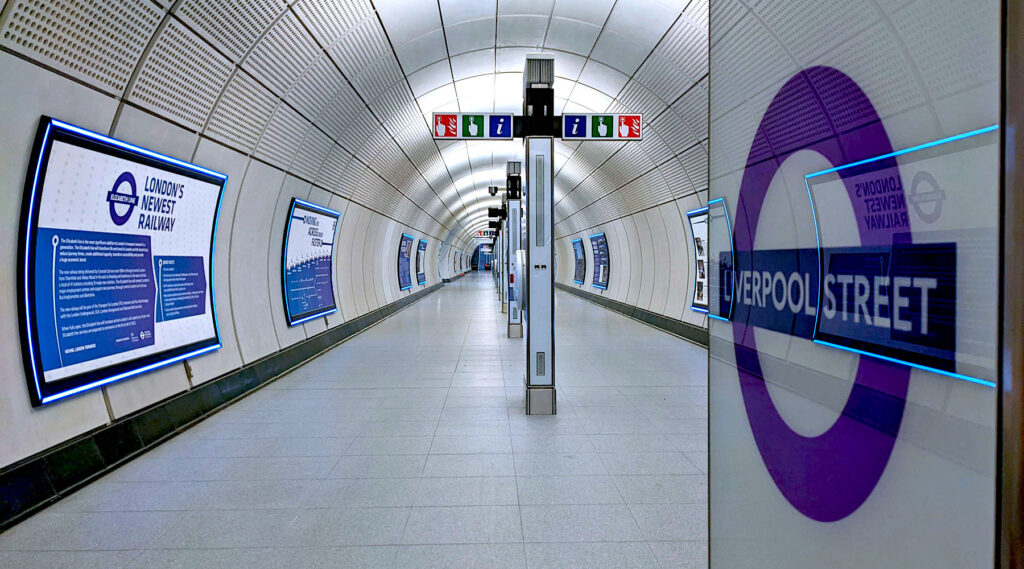
Liverpool Street Station, London Underground.
Part of the new Elizabeth line at Liverpool Street Station, London Underground. Photo courtesy of Ian Mansfield (ianVisits).

London’s Underground system was built on the back of the first industrial revolution – a key piece of physical infrastructure that led to a whole new way of thinking about transportation and which fundamentally changed the city in which it was built. It is easy to see parallels between the physical infrastructure building of the 19th century and the cyber infrastructures that we are building today, as the exponential industrial revolution, powered by computers, the internet and AI in which we currently sit develops. Much has been written about cyber infrastructures – there are over 5.7 million publications classified as “Information and Computing Sciences” (of which 3.1 million relate to AI and Image Processing) in Dimensions at the time of writing. While good infrastructure is often invisible, in the sense that it merges seamlessly into and becomes part of our lives, it is, perhaps, surprising to know that the London Underground also lays claims to a significant body of research.

Today marks the launch of London’s newest and shiniest piece of transport infrastructure – the Elizabeth line, which connects the far west of London, including Heathrow Airport (and ultimately out beyond Reading), to its eastern environs in Stratford and Abbey Wood. For those of us who are frequent travellers (or, more accurately, who used to be frequent travellers before COVID and issues of sustainability reigned us in) it is heartening, finally, to see a high-speed transport link that runs across London. In honour of the Elizabeth Line’s launch, we thought that we would do a little digging into the London Underground on the Dimensions platform where we uncovered a huge range of impacts across a wide range of topics.

Beyond the 42km of new tunnels and the new stations with their clean lines, this new line shows that London as a city continues to expand, extend and change in a variety of different ways. The London Underground, or Tube, is an iconic part of London and holds a special place in the hearts of many Londoners. There is a sense of pride in the design principles behind its maps and iconography, and the fact that it is the oldest such mass transit system in the world, which first opened in 1863. That pride will only increase now that we can understand a little more about its rich research history.

In recent years, the London Underground has moved beyond merely being a transport system and is now the subject of many books, from Stephen Smith’s excellent Underground London: Travels Beneath the City Streets to Andrew Martin’s intriguing Seats of London: A Field Guide to London Transport Moquette Patterns. It is not, however, only authors of books who have taken an interest in the Tube – there is a surprising amount of research material that makes reference to the London Underground and, in commemoration of today’s launch, we thought that we would give some insight into the way in which the most recognisable transport system in the world has been referred to in the research literature.

We specified a general search term as a high-level ‘catch all’ in Dimensions:

"London Underground" OR "London Tube" OR "Crossrail" OR "Elizabeth Line" OR "Piccadilly Line" OR "Circle Line" OR "District Line" OR "Metropolitan Line" OR "East London London" OR "Circle and District Line" OR "Victoria Line" OR "Jubilee Line" OR ("Central Line" AND "London Underground") OR "Northern Line" OR "Bakerloo Line" OR "Waterloo and City Line" OR "Waterloo & City Line" OR "Hammersmith and City Line" OR "Hammersmith & City Line" OR "Harry Beck”.

As of 24th May 2022, this search string returns just over 90,000 publications, 66 datasets, 104 grants, almost 25,000 patents, 4000 policy documents and 3 clinical trials. At first glance, this wealth of output is astounding and unexpected. Indeed, bearly a year goes by when between 3000 and 4000 publications (equivalent to the research volume of a fairly sizeable university) don’t mention the London Underground in some form. But, when you think about the ways in which such a historic transport system touches different aspects of our lives you begin to understand why it is mentioned so much.

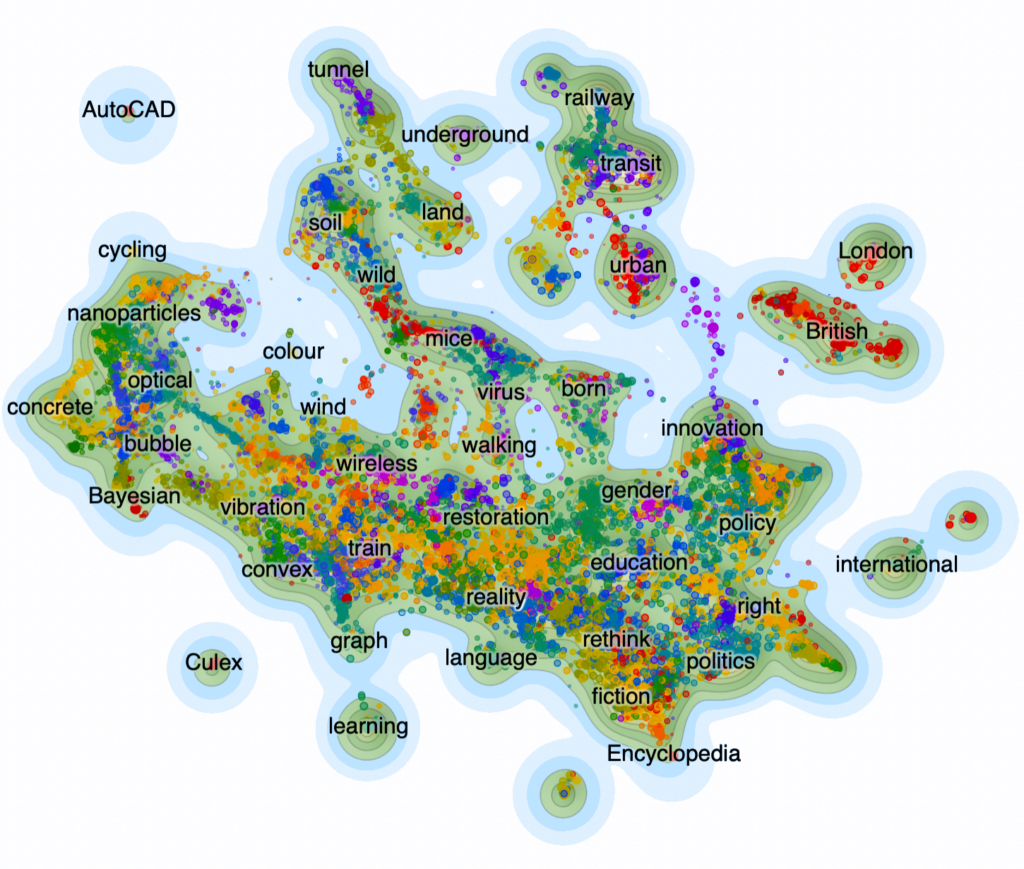
Figure 1: Topic landscape of London Underground research outputs from Dimensions.

Walking the landscape

We mentioned the importance of the London Underground’s maps and iconography, so it’s only natural we should make our own map of the landscape of London Underground research. Figure 1 is a high-level topic map of some of the more recent work that mentions the London Underground using Lingo4G. The closer areas are, the more closely connected they are; words that are shown are derived from article titles; colouring indicates groupings (note that some colours are repeated so that, for example, blue in one area of the graph is not necessarily the same topic group as another area of the graph). Just looking at this high-level representation gives an impression of the immense diversity of topics covered in the literature.

Just to give a flavour, topics range from: Accessibility (of the Tube map) to station accessibility for disabled people; urban design and congestion analysis; use of solar cells and graphene in mass transport systems for sustainability; economics and public policy (private-public sector partnerships); film and fiction (as a venue for movie making or as a setting for narrative); fuzzy logic and control systems (in train service optimisation); history (relationship to the industrial revolution); crisis management and terrorism (relationship to threats in public systems); epidemiology (virus spreading on the Tube and the prevalence of Culex Mosquitos on the Tube network as disease vectors); human interface design (the Tube map); network theory (as a commonly recognisable analog for the mathematical concept of a graph); climate change (how mass transit can be a powerful weapon against climate change); cybersecurity (protection of infrastructures against attack); geology (tunnelling through challenging formations); and crime (policing unusual environments).

This list merely scratches the surface of the rich research topics that surround the London Underground. One hundred and fifty nine years into the existence of this key piece of infrastructure, its cultural, historical and research impact is not at first evident.

Part of the new Elizabeth line at Paddington Station, London Underground.
Part of the new Elizabeth line at Paddington Station, London Underground. Photo courtesy of Ian Mansfield (ianVisits).

Distinctive personalities

Of course, while the London Underground was the first major subterranean railway, it is not the only one.  Many, including Shanghai, Tokyo, Paris, Singapore and Berlin are busier. Despite the unique and beautiful tiling designs across the London Underground, Moscow’s Soviet-inspired mosaics and Paris’s Art deco might be considered to be more aesthetic. London is only 10th in the world in length of track and 9th in number of stations.  However, arguably it has had the most research articles written about it, with the New York Metro coming in a close second at 86,000 outputs, and other notable mentions being the Paris Metro with more than 14,000 outputs and the Tokyo Metro with almost 13,000 outputs.

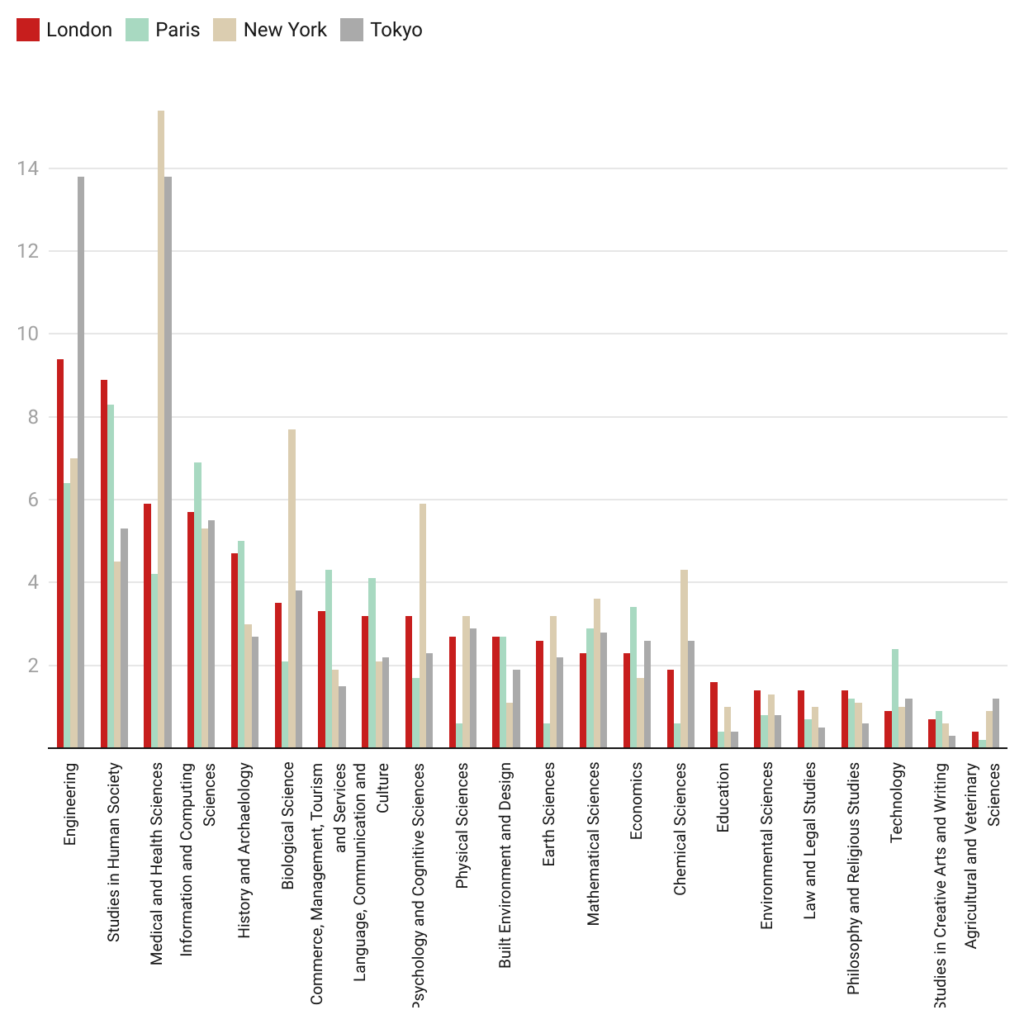
Each of these systems has its own personality and, again, looking into Dimensions and, comparing the different queries on a subject level by ANZSRC FOR code at the 2-digit level, we can see a little of those personalities emerging in Figure 2.

While the London Underground is most studied from the perspective of Engineering and Sociology (Studies in Human Society), both it and the Paris Metro are not nearly so studied (relative to overall output) as the New York Subway and Tokyo Metro for Medical and Health Sciences. Engineering is not such a strong theme for New York and Paris (presumably because much of the network is much nearer the surface and less tunnelled than either London or Tokyo). London and Paris share a peak in History and Archeology for understandable reasons.

It is, perhaps, also interesting to note the “inner life” of these underground reflections of the cities above.  Again, relative to the overall output of research New York has a significant peak where researchers have written about Psychological and Cognitive Science topics whereas the London Underground has been more discussed in the Education literature. The Paris Metro has had more attention in works on Economics and in Creative Arts and Writing.

Figure 2: Comparison of publication research output for all years by ANZSRC 2-digit FOR classification for four major subterranean railways by percentage of total output. Note that bars for each railway will not add to 100% as outputs can contribute to multiple classifications and full output counting rather than fractional counting has been used here.

International Attention

The final musing that we want to leave you with is that despite the local nature of transport systems, they attract international research attention. Indeed, 87.7% of the research outputs relating to the London Underground do not feature a UK-based author (although of that 12.3% focus from the UK a very considerable number of papers (more than 3000) can be attributed to London-based institutions).  It is a similar story with other international transit systems – Paris enjoys a similar percentage of international attention to London with New York and Tokyo both being a little more locally biased with 77.3% and 80.9% of their research coming from non-local sources.

While research on underground railways in general has been the focus of this piece, a cursory look at both scientometric and bibliometric research literature suggests that understanding the scholarly record around London Underground has not been a priority for the community. But, with the launch of the Elizabeth line today, we are confident that this is about to change!  We hope that this brief analysis demonstrates that there is so much more to the Tube than getting from A to B and inspires you to search Dimensions for your favourite topics.

The Authors

Daniel Hook, CEO | Digital Science

Simon Porter, Director Innovation | Digital Science

The post The Secret (Research) Life of the London Underground appeared first on Digital Science.


from Digital Science https://ift.tt/Bzv7qMI

Monday, May 23, 2022

Denial of structural racism linked to anti-Black prejudice

Chess pieces on board

People who deny the existence of structural racism are more likely to exhibit anti-Black prejudice and less likely to show racial empathy or openness to diversity, according to research published by the American Psychological Association.

However, there were no similar findings for people who claimed they ignore race, which was instead associated with greater openness to diversity, the study found.

Researchers analyzed 83 previous studies on racism that included more than 25,000 participants. Denying structural racism and ignoring race are often considered to be two different types of colorblind racial ideology, but researchers and educators need to delineate between them because they appear to have very different outcomes, said lead researcher Jacqueline Yi, MS, a clinical-community psychology doctoral student at the University of Illinois at Urbana-Champaign (UIUC). The research was published online in the Journal of Counseling Psychology.

“The denial of structural racism appears to be a big barrier to racial equity because it allows for more victim-blaming explanations of systemic inequality,” Yi said. “The more that BIPOC [Black, indigenous and people of color] individuals are blamed for racial disparities, the less likely it is for white people and institutions to take responsibility for the continued effects of systemic racism.”

Denial of structural racism was more closely linked to anti-Black prejudice than prejudice against other people of color. People who denied structural racism were also more likely to endorse stronger beliefs that societal inequality is acceptable and reported fewer intentions to engage in social justice behaviors. There were no similar findings for people who said they ignore race.

Even though there were no negative findings related to ignoring race, Yi said it is still an “insidious form of racism.”

“On its surface, ignoring racial group differences and emphasizing sameness as humans seems beneficial,” said Helen Neville, PhD, co-author and professor of educational psychology and African American studies at UIUC. “However, this approach can be a way for white people to avoid discomfort associated with appearing prejudiced and become less willing to engage in anti-racist actions.”

Psychologists need to work with individuals to challenge their or others’ denial of structural racism as a means of working toward eradicating it, Yi said. Other institutions, such as non-profits, corporations and government agencies, should move from racially colorblind to racially conscious approaches that actively implement policies and procedures to promote racial equity, Yi said.

Article: “Ignoring Race and Denying Racism: A Meta-Analysis of the Associations between Colorblind Racial Ideology, Anti-Blackness and Other Variables Antithetical to Racial Justice,” Jacqueline Yi, MS, Helen A. Neville, PhD, and Nathan R. Todd, PhD, University of Illinois at Urbana-Champaign, and Yara Mekawi, PhD, University of Louisville, Journal of Counseling Psychology, published online May 23, 2022.

Contact: The authors may be contacted at CBRImetaanalysis@gmail.com.


from ScienceBlog.com https://ift.tt/2KaefJc

Planets of binary stars as possible homes for alien life

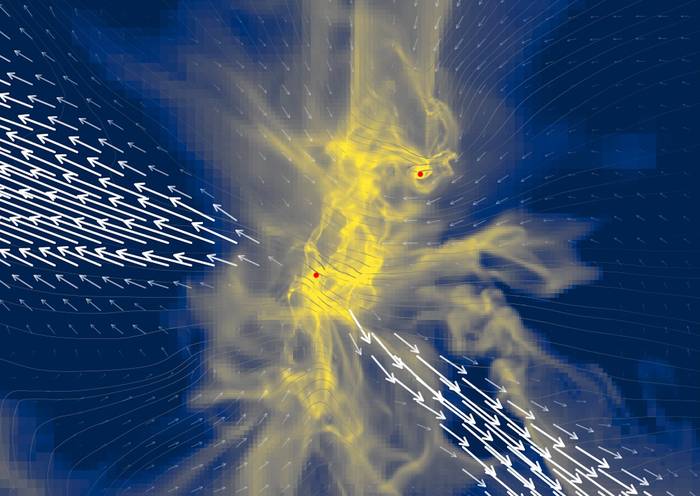
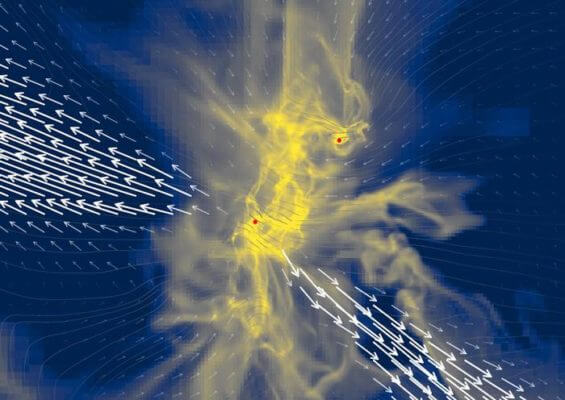
Simulation of binary star

Nearly half of Sun-size stars are binary. According to University of Copenhagen research, planetary systems around binary stars may be very different from those around single stars. This points to new targets in the search for extraterrestrial life forms.

Since the only known planet with life, the Earth, orbits the Sun, planetary systems around stars of similar size are obvious targets for astronomers trying to locate extraterrestrial life. Nearly every second star in that category is a binary star. A new result from research at University of Copenhagen indicate that planetary systems are formed in a very different way around binary stars than around single stars such as the Sun.

“The result is exciting since the search for extraterrestrial life will be equipped with several new, extremely powerful instruments within the coming years. This enhances the significance of understanding how planets are formed around different types of stars. Such results may pinpoint places which would be especially interesting to probe for the existence of life,” says Professor Jes Kristian Jørgensen, Niels Bohr Institute, University of Copenhagen, heading the project.

The results from the project, which also has participation of astronomers from Taiwan and USA, are published in the distinguished journal Nature.

Bursts shape the planetary system

The new discovery has been made based on observations made by the ALMA telescopes in Chile of a young binary star about 1,000 lightyears from Earth. The binary star system, NGC 1333-IRAS2A, is surrounded by a disc consisting of gas and dust. The observations can only provide researchers with a snapshot from a point in the evolution of the binary star system. However, the team has complemented the observations with computer simulations reaching both backwards and forwards in time.

“The observations allow us to zoom in on the stars and study how dust and gas move towards the disc. The simulations will tell us which physics are at play, and how the stars have evolved up till the snapshot we observe, and their future evolution,” explains Postdoc Rajika L. Kuruwita, Niels Bohr Institute, second author of the Nature article.

Notably, the movement of gas and dust does not follow a continuous pattern. At some points in time – typically for relatively shorts periods of ten to one hundred years every thousand years – the movement becomes very strong. The binary star becomes ten to one hundred times brighter, until it returns to its regular state.

Presumably, the cyclic pattern can be explained by the duality of the binary star. The two stars encircle each other, and at given intervals their joint gravity will affect the surrounding gas and dust disc in a way which causes huge amounts of material to fall towards the star.

“The falling material will trigger a significant heating. The heat will make the star much brighter than usual,” says Rajika L. Kuruwita, adding:

“These bursts will tear the gas and dust disc apart. While the disc will build up again, the bursts may still influence the structure of the later planetary system.”

Comets carry building blocks for life

The observed stellar system is still too young for planets to have formed. The team hopes to obtain more observational time at ALMA, allowing to investigate the formation of planetary systems.

Not only planets but also comets will be in focus:

“Comets are likely to play a key role in creating possibilities for life to evolve. Comets often have a high content of ice with presence of organic molecules. It can well be imagined that the organic molecules are preserved in comets during epochs where a planet is barren, and that later comet impacts will introduce the molecules to the planet’s surface,” says Jes Kristian Jørgensen.

Understanding the role of the bursts is important in this context:

“The heating caused by the bursts will trigger evaporation of dust grains and the ice surrounding them.  This may alter the chemical composition of the material from which planets are formed.”

Thus, chemistry is a part of the research scope:

“The wavelengths covered by ALMA allow us to see quite complex organic molecules, so molecules with 9-12 atoms and containing carbon. Such molecules can be building blocks for more complex molecules which are key to life as we know it. For example, amino acids which have been fund in comets.”

Powerful tools join the search for life in space

ALMA (Atacama Large Millimeter/submillimeter Array) is not a single instrument but 66 telescopes operating in coordination. This allows for a much better resolution than could have been obtained by a single telescope.

Very soon the new James Webb Space Telescope (JWST) will join the search for extraterrestrial life. Near the end of the decade, JWST will be complemented by the ELT (European Large Telescope) and the extremely powerful SKA (Square Kilometer Array) both planned to begin observing in 2027. The ELT will with its 39-meter mirror be the biggest optical telescope in the world and will be poised to observe the atmospheric conditions of exoplanets (planets outside the Solar System, ed.). SKA will consist of thousands of telescopes in South Africa and in Australia working in coordination and will have longer wavelengths than ALMA.

”The SKA will allow for observing large organic molecules directly. The James Webb Space Telescope operates in the infrared which is especially well suited for observing molecules in ice. Finally, we continue to have ALMA which is especially well suited for observing molecules in gas form. Combining the different sources will provide a wealth of exciting results,” Jes Kristian Jørgensen concludes.

The scientific article on the studies of the binary star system NGC 1333-IRAS2A will be published by Nature on 23 May 2022.


Background

The team has had observation time on the ALMA telescopes in Chile to observe the binary star system NGC 1333-IRAS2A in the Perseus molecular cloud. The distance from Earth to the binary star is about 1,000 lightyears which is a quite short distance in an astronomical context. Formed some 10,000 years ago, it is a very young star.

The two stars of the binary system are 200 astronomical units (AUs) apart. An AU equals the distance from Earth to the Sun. In comparison, the furthest planet of the Solar System, Neptune, is 30 AUs from the Sun.


from ScienceBlog.com https://ift.tt/SpFYMDJ

Skydiving salamanders live in world’s tallest trees

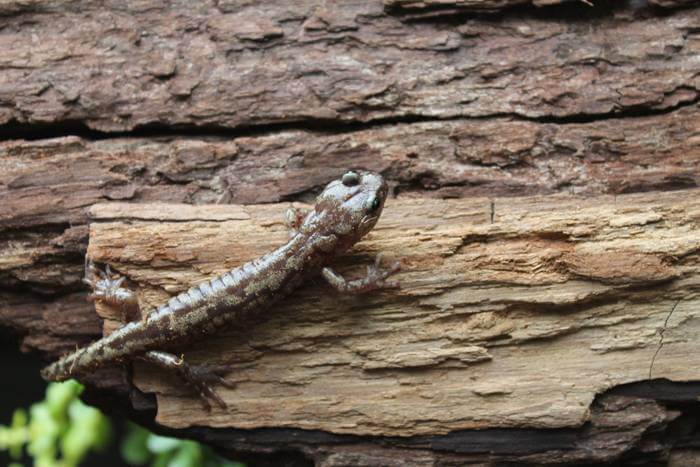
Salamanders that live their entire lives in the crowns of the world’s tallest trees, California’s coast redwoods, have evolved a behavior well-adapted to the dangers of falling from high places: the ability to parachute, glide and maneuver in mid-air.

Flying squirrels, not to mention numerous species of gliding frogs, geckos, and ants and other insects, are known to use similar aerial maneuvers when jumping from tree to tree or when falling, so as to remain in the trees and avoid landing on the ground.

Similarly, the researchers suspect that this salamander’s skydiving skills are a way to steer back to a tree it’s fallen or jumped from, the better to avoid terrestrial predators.

“While they’re parachuting, they have an exquisite amount of maneuverable control,” said Christian Brown, a doctoral candidate at the University of South Florida (USF) in Tampa and first author of a paper about these behaviors. “They are able to turn. They are able to flip themselves over if they go upside down. They’re able to maintain that skydiving posture and kind of pump their tail up and down to make horizontal maneuvers. The level of control is just impressive.”

The aerial dexterity of the so-called wandering salamander (Aneides vagrans) was revealed by high-speed video footage taken in a wind tunnel at the University of California, Berkeley, where the salamanders were nudged off a perch into an upward moving column of air simulating free fall.

“What struck me when I first saw the videos is that they (the salamanders) are so smooth — there’s no discontinuity or noise in their motions, they’re just totally surfing in the air,” said Robert Dudley, UC Berkeley professor of integrative biology and an expert on animal flight. “That, to me, implies that this behavior is something deeply embedded in their motor response, that it (falling) must happen at reasonably high frequencies so as to effect selection on this behavior. And it’s not just passive parachuting, they’re not just skydiving downwards. They’re also clearly doing the lateral motion, as well, which is what we would call gliding.”

The behavior is all the more surprising because the salamanders, aside from having slightly larger foot pads, look no different from other salamanders that aren’t aerially maneuverable. They have no skin flaps, for example, that would tip you off to their parachuting ability.

“Wandering salamanders have big feet, they have long legs, they have active tails. All of these things lend themselves to aerial behaviors. But everybody just assumed that was for climbing, because that’s what they use those features for when we’re looking at them,” Brown said. “So, it’s not really a dedicated aerodynamic control surface, but it functions as both. It helps them climb, and it seems to help them parachute and glide, as well.”

Among the questions the researchers hope to answer in future research are how salamanders manage to parachute and maneuver without obvious anatomical adaptations to gliding and whether many other animals with similar aerial skills have never been noticed before.

“Salamanders are sluggish, you don’t think of them as having particularly fast reflexes. It’s life in the slow lane. And flight control is all about rapid response to dynamic visual cues and being able to target and orient and change your body position,” Dudley said. “So, it’s just kind of odd. How often can this be happening, anyway, and how would we know?”

A paper describing the behavior will be published May 23 in the journal Current Biology.

Life in the canopy

Using the wind tunnel, Brown and UC Berkeley graduate student Erik Sathe compared the gliding and parachuting behavior of A. vagrans — adults are about 4 inches (10 centimeters) from snout to tip of tail — with the abilities of three other salamander species native to Northern California, each with varying degrees of arboreality — that is, the propensity to climb or live in trees. The wandering salamander, which probably spends its entire life in a single tree, moving up and down but never touching the ground, was the most proficient skydiver. A related species, the so-called arboreal salamander, A. lugubris, which lives in shorter trees, such as oaks, was nearly as effective at parachuting and gliding.

Two of the least arboreal salamanders — Ensatina eschscholtzii, a forest floor-dwelling salamander, and A. flavipunctatus, the speckled black salamander, which occasionally climbs trees — essentially flailed ineffectively for the few seconds they were airborne in the wind tunnel. All four species are plethodontid, or lungless, salamanders, the largest family of salamanders and mostly found in the Western Hemisphere.

“The two least arboreal species flail around a lot. We call it ineffective, undulating motion because they don’t glide, they don’t move horizontally, they just kind of hover in the wind tunnel freaking out,” Brown said. “The two most arboreal species never actually flailed.”

Brown encountered these salamanders while working in California’s Humboldt and Del Norte counties with nonprofit and university conservation groups that mark and track the animals that live in the redwood canopy, primarily in old growth forest some 150 feet off the ground. Using ropes and ascenders, the biologists regularly climb the redwoods — the tallest of which rise to a height of 380 feet — to capture and mark wandering salamanders. Over the past 20 years, as part of a project led by James Campbell-Spickler, now director of the Sequoia Park Zoo in Eureka, the researchers discovered that most of their marked salamanders could be found in the same tree year after year, although at different heights. They live primarily in fern mats growing in the duff, the decaying vegetable matter that collects in the junctions of large branches. Brown said that few marked wandering salamanders from the redwood canopy have been found on the ground, and most of those were found dead.

Brown noticed, when picking them up to mark them, that the salamanders were quick to leap out of his hands. Even a light tap on a branch or a shadow passing nearby were enough to get them to jump from the redwood canopy. Given their location high above the forest floor, their nonchalant leaps into thin air were surprising.

“They jump, and before they’ve even finished toeing off, they’ve got their forelimbs splayed out, and they’re ready to go,” he said. “So, the jump and the parachute are very closely tied together. They assume the position immediately.”

When he approached Dudley, who has studied such behavior in other animals, he invited Brown to bring some of the salamanders into his wind tunnel to record their behavior. Using a high-speed video camera shooting at 400 frames per second, Brown and Sathe filmed the salamanders for as long as they floated on the column of air, sometimes up to 10 seconds.

They then analyzed the frames to determine the animals’ midair posture and to deduce how they used their legs, bodies and tails to maneuver. They typically fell at a steep angle, only 5 degrees from vertical, but based on the distances between branches in the crowns of redwoods, this would usually be sufficient for them to reach a branch or trunk before they hit the ground. Parachuting reduced their free-fall speed by about 10%.

Brown suspects that their aerial skills evolved to deal with falls, but have become part of their behavioral repertoire and perhaps their default method of descent. He and USF undergraduate Jessalyn Aretz found, for example, that walking downward was much harder for the salamander than walking on a horizontal branch or up a trunk.

“That suggests that when they’re wandering, they’re likely walking on flat surfaces, or they’re walking upward. And when they run out of habitat, as the upper canopy becomes drier and drier, and there’s nothing else for them up there, they could just drop back down to those better habitats,” he said. “Why walk back down? You’re already probably exhausted. You’ve burned all your energy, you’re a little 5 gram salamander, and you’ve just climbed the tallest tree on Earth. You’re not going to turn around and walk down — you’re going to take the gravity elevator.”

Brown sees A. vagrans as another poster child for old growth forests that is akin to the spotted owl because it is found primarily in the crowns of the tallest and oldest redwoods, although also in Douglas fir and Sitka spruce.

“This salamander is a poster child for the part of the redwoods that was almost completely lost to logging — the canopy world. It is not there in these new-growth forests created by logging companies,” he said. “Perhaps it would help not just efforts in conserving redwoods, but restoring redwoods, so that we could actually get canopy ecosystems. Restoring redwoods to the point of fern mats, to the point of salamanders in the canopy — that would be a new bar for conservation.”

In the meantime, this denizen of old growth forests has a lot to tell us about evolution and perhaps the origin of flight, said Dudley.

“It (gliding) is a novelty, something unexpected in an otherwise well-studied group of animals, but it illustrates the urgency with which animals that are living in trees must evolve aerial capacity, even if they don’t have wings,” Dudley said. “Flight, in the sense of controlled aerial behavior, is very common. They’re controlling their body posture, and they’re moving laterally. This predisposes many, many things that are living in trees to ultimately evolve flapping flight, which is probably hard to evolve and why it has only turned up three times on the planet today.”

Co-authors of the paper with Brown and Dudley are Sathe and Stephen Deban, professor of integrative biology at the University of South Florida.


from ScienceBlog.com https://ift.tt/lFYpIoH

Living with dogs (but not cats) as a toddler might protect against Crohn’s disease

Young children who grow up with a dog or in a large family may have some protection later in life from a common inflammatory bowel disease known as Crohn’s disease, according to a study to be presented at Digestive Disease Week® (DDW) 2022.

“Our study seems to add to others that have explored the ‘hygiene hypothesis’ which suggests that the lack of exposure to microbes early in life may lead to lack of immune regulation toward environmental microbes,” said Williams Turpin, PhD, the study’s senior author and a research associate with Mount Sinai Hospital and the University of Toronto.

Researchers used an environmental questionnaire to collect information from nearly 4,300 first-degree relatives of people with Crohn’s disease enrolled in the Crohn’s and Colitis Canada Genetic, Environmental, and Microbial (CCC-GEM) project. Using responses to the questionnaire and historical data collected at the time of recruitment, Dr. Turpin and his team analyzed several environmental factors, including family size, the presence of dogs or cats as household pets, the number of bathrooms in the house, living on a farm, drinking unpasteurized milk and drinking well water. The analysis also included age at the time of exposure.

The study found that exposure to dogs, particularly from ages 5 to 15, was linked with healthy gut permeability and balance between the microbes in the gut and the body’s immune response, all of which might help protect against Crohn’s disease. Similar effects were observed with exposure to dogs across all age groups.

“We did not see the same results with cats, though we are still trying to determine why,” Dr. Turpin said. “It could potentially be because dog owners get outside more often with their pets or live in areas with more green space, which has been shown previously to protect against Crohn’s.”

Another protective factor seemed to be living with three or more family members in the first year of life, which was associated with microbiome composition later in life. The gut microbiome is believed to play a role in a number of health conditions, such as inflammatory bowel disease, colorectal cancer, diabetes, and high blood pressure.

Dr. Turpin and his colleagues hope their findings may assist physicians in asking detailed questions of patients to determine who is at highest risk. However, he noted that the early life environmental factors were assessed by questionnaires, so caution is warranted in interpreting these results due to possible recall bias at recruitment. The reasons dog ownership and larger families appear to provide protection from Crohn’s remain unclear.

Crohn’s disease is a type of inflammatory bowel disease that affects around half a million people in the U.S. It most often develops in young adults, people who smoke, and those with a close family member who has IBD. Symptoms include diarrhea, abdominal pain and weight loss. Treatments currently aim to prevent symptom flare-ups through diet modification, medication, and surgery.


from ScienceBlog.com https://ift.tt/1kSCyOg

Low glycemic index diet helps heart patients lose weight

Go Easy on the Avocado Toast: ‘Good Fat’ Can Still Be Bad for You, Research Shows

 Eating low glycaemic index foods promotes a healthier body shape in patients with coronary artery disease, according to a study presented at ACNAP-EuroHeartCare Congress 2022, a scientific congress of the European Society of Cardiology (ESC).1

The glycaemic index (GI) ranks carbohydrate-containing foods according to how quickly they affect blood sugar levels. High GI foods cause a rapid increase in blood sugar and include white bread, white rice, potatoes and sweets. Low GI foods are digested more slowly and gradually raise blood sugar; they include some fruits and vegetables such as apples, oranges, broccoli and leafy greens, pulses such as chickpeas, lentils, and kidney beans, and wholegrains such as brown rice and oats. Meat, poultry and fish do not have a GI rating because they do not contain carbohydrates.

Observational studies have previously indicated that high GI diets are associated with increased risks of cardiovascular disease2 and type 2 diabetes.3 This randomised controlled study assessed the potential benefit of a low GI diet on body mass index (BMI), waist circumference, hip circumference and waist-to-hip ratio in patients with coronary artery disease.

Between 2016 and 2019, the study randomly allocated 160 patients aged 38 to 76 years old to three months of either a low GI diet or routine diet. Both groups continued to receive standard therapies for coronary artery disease. Patients in the low GI group were advised to consume low GI foods and exclude high GI foods while continuing  their usual consumption of protein and fat. The routine diet group was advised to consume the recommended diet for coronary artery disease which limits fat and some proteins such as whole milk, cheese, meat, egg yolks and fried foods. Dietary adherence was assessed with a food frequency questionnaire. Anthropometric indices were measured at baseline and three months.

The average age of participants was 58 years and 52% were women. Anthropometric indices were similar between groups at baseline. At three months, all body measurements had decreased within both groups compared to baseline but the changes were only significant in the low GI group.

When the researchers compared changes from baseline to study completion between groups, the low GI diet led to significant reductions in BMI and waist circumference. BMI declined by 4.2 kg/m2 in the low GI group compared to 1.4 kg/m2 in the routine diet group. Waist circumference decreased by 9 cm in the low GI group compared with 3.3 cm in the routine diet group. There was no significant difference between groups for hip circumference and waist-to-hip ratio.

The researchers also investigated whether the intervention affected women and men differently. They found that a low GI diet was more likely to influence waist circumference, hip circumference and waist-to-hip ratio in men compared with women. The beneficial effect of a low GI diet on BMI was the same for men and women.

Study author Dr. Jamol Uzokov of the Republican Specialized Scientific Practical Medical Center of Therapy and Medical Rehabilitation, Tashkent, Uzbekistan said: “While larger studies are needed to confirm these findings, our research indicates that emphasising low GI foods as part of a balanced diet could help patients with heart disease control their body weight and their waistline.”


from ScienceBlog.com https://ift.tt/mLuIC6a

Tbilisi State University Achieves Global Recognition for Research Excellence

Tbilisi State University Achieves Global Recognition for Research Excellence Tbilisi State University (TSU) has been highlighted for its s...