Monday, March 28, 2022

Scientists Discover How Molecule Becomes Anticancer Weapon

Years of toil in the laboratory have revealed how a marine bacterium makes a potent anti-cancer molecule.

The anti-cancer molecule salinosporamide A, also called Marizomib, is in Phase III clinical trials to treat glioblastoma, a brain cancer. Scientists now for the first time understand the enzyme-driven process that activates the molecule.

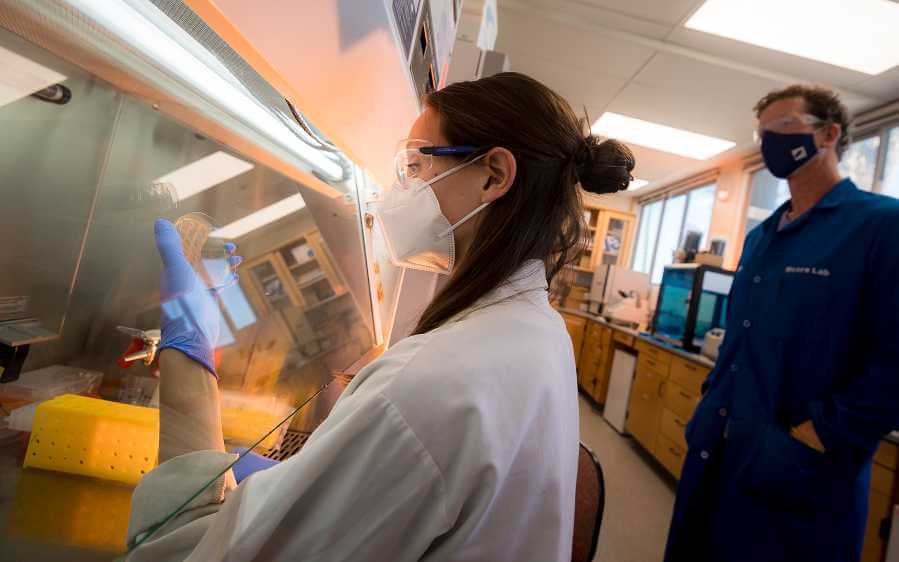
Researchers at UC San Diego’s Scripps Institution of Oceanography found that an enzyme called SalC assembles what the team calls the salinosporamide anti-cancer “warhead.” Scripps graduate student Katherine Bauman is the lead author of a paper that explains the assembly process in the March 21 issue of Nature Chemical Biology.

The work solves a nearly 20-year riddle about how the marine bacterium makes the warhead that is unique to the salinosporamide molecule and opens the door to future biotechnology to manufacture new anti-cancer agents.

“Now that scientists understand how this enzyme makes the salinosporamide A warhead, that discovery could be used in the future to use enzymes to produce other types of salinosporamides that could attack not only cancer but diseases of the immune system and infections caused by parasites,” said co-author Bradley Moore, a Distinguished Professor at Scripps Oceanography and the Skaggs School of Pharmacy and Pharmaceutical Sciences.

Salisporamide has a long history at Scripps and UC San Diego. Microbiologist Paul Jensen and marine chemist Bill Fenical of Scripps Oceanography discovered both salinosporamide A and the marine organism that produces the molecule after collecting the microbe from sediments of the tropical Atlantic Ocean in 1990. Some of the clinical trials over the course of the drug’s development took place at Moores Cancer Center at UC San Diego Health.

“This has been a very challenging 10-year project,” said Moore, who is Bauman’s advisor. “Kate’s been able to bring together 10 years’ worth of earlier work to get us across the finish line.”

A big question for Bauman was to find out how many enzymes were responsible for folding the molecule into its active shape. Are multiple enzymes involved or just one?

“I would have bet money on more than one. In the end, it was just SalC. That was surprising,” she said.

Moore says the salinosporamide molecule has a special ability to cross the blood-brain barrier, which accounts for its progress in clinical trials for glioblastoma. The molecule has a small but complex ring structure. It starts as a linear molecule that folds into a more complex circular shape.

“The way nature makes it is beautifully simple. We as chemists can’t do what nature has done to make this molecule, but nature does it with a single enzyme,” he said.

The enzyme involved is common in biology; it is one that participates in the production of fatty acids in humans and antibiotics like erythromycin in microbes.

Bauman, Percival Yang-Ting Chen of Morphic Therapeutics in Waltham, Mass., and Daniella Trivella of Brazil’s National Center for Research in Energy and Materials, determined the molecular structure of SalC. For this purpose they used the Advanced Light Source, a powerful particle accelerator that generates x-ray light, at the U.S. Department of Energy’s Lawrence Berkeley National Laboratory.

“The SalC enzyme performs a reaction very different from a normal ketosynthase,” Bauman said. A normal ketosynthase is an enzyme that helps a molecule form a linear chain. SalC, by contrast, manufactures salinosporamide by forming two complex, reactive, ring structures.

A single enzyme can form both of those ring structures that are hard for synthetic chemists to make in the lab. Armed with this information, scientists now can mutate the enzyme until they find forms that show promise for suppressing various types of disease.

The marine bacterium involved, called Salinispora tropica, makes salinosporamide to avoid being eaten by its predators. But scientists have found that salinosporamide A also can treat cancer. They have isolated other salinosporamides, but salinosporamide A has features that the others lack – including biological activity that makes it hazardous to cancer cells.

“Inhibiting that proteasome makes it a great anti-cancer agent,” said Bauman, speaking of the protein complex that degrades useless or impaired proteins. But there’s another type of proteasome found in immune cells. What if scientists could devise a slightly different salinosporamide than salinosporamide A? One that poorly inhibits the cancer-prone proteasome but excels at inhibiting the immunoproteasome? Such a salinosporamide could be a highly selective treatment for autoimmune diseases, the type that causes the immune system to turn upon the very body it should protect.

“That’s the idea behind generating some of these other salinosoporamides. And access to this enzyme SalC that installs the complicated ring structure opens the door to that in the future,” Bauman said.

As Bauman’s list of co-authors attests, Moore’s group began working on this project more than a decade ago. Former Moore Lab postdoctoral scientists who contributed are Tobias Gulder of Germany’s Technical University of Dresden; Daniela Trivella of Brazil’s National Center for Research in Energy and Materials; and Percival Yang-Ting Chen of Morphic Therapeutics in Waltham, Mass. Vikram V. Shende is a current postdoctoral scientist in the Moore Lab. The other two co-authors are longtime collaborators on the project: Sreekumar Vellalath and Daniel Romo of Baylor University.

Bauman’s work is funded by a National Research Service Award from the National Institutes of Health. Further funding was provided by the Robert A. Welch Foundation and the São Paulo Research Foundation.


from ScienceBlog.com https://ift.tt/gfD96oG

Unstable Molecule Clicks with Synthetic Strategy

The elements on the periodic table of elements are listed in ways that emphasize certain relationships. There are families, periods (the horizonal rows) and groups (the vertical columns). The elements within each of these groupings exhibit some commonalities.

Diagonal relationships in the periodic table exist between two elements in diagonal positions to each other who exhibit similar chemical properties. Lithium and magnesium, boron and silicon, and carbon and phosphorus are all examples.

An iconic diagonal relationship has long been recognized between carbon and phosphorus, especially in cases where element-element multiple bonding is present, such as diphosphorus (P2) in which two phosphorus atoms are joined by a weak triple bond.

This diagonal relationship between phosphorus and carbon has set that expectation that the diphosphorus molecule should mimic the attributes of the hydrocarbon acetylene (C2H2). For instance, both diphosphorus and acetylene react with other organic molecules through their pi-bonds, a type of covalent bond found in molecules with multiple bonding.

A coordination complex consists of a central atom or ion that is usually metallic, and is surrounded by bound molecules or ions, known as ligands or complexing agents. Coordination complexes are vital to life on earth and include hemoglobin and chlorophyll. They are also used extensively in industrial applications as catalysts.

Although acetylene has well-documented coordination chemistry with single transition metals, coordination complexes that feature diphosphorus bound to a single metal center have remained elusive.

Recently researchers at the University of California San Diego, the University of Rochester and the Ohio State University report binding diphosphorus to a single metal center. This work appears in the March 25 issue of Science.

Diphosphorus—unlike acetylene—is highly unstable and reactive. When generated in free form, diphosphorus rapidly polymerizes or reacts with substrate molecules that are present. In other words, diphosphorus does not remain diphosphorus for long—its nature is to combine with other elements and molecules. This makes it difficult to study or manipulate.

Several synthetic routes have been established to form multinuclear diphosphorus complexes. The most popular method is by separating the tetrahedral P4 molecule, more commonly known as white phosphorus. However, white phosphorus is toxic and highly flammable (it was a main component in many incendiary bombs used in World War II).

“The work presented here provides a synthetic strategy to access mononuclear complexes of diphosphorus in laboratory settings,” stated UC San Diego Professor of Chemistry and Biochemistry Joshua Figueroa, principal investigator and co-author on the paper. “We anticipate that this coordination mode may further enable the development of selective phosphorus-atom transfer reactions to organic molecules.”

In designing the experiment, Figueroa and UC San Diego postdoctoral scholar Shuai Wang used iron as the metal ion because it provided a good coordination platform that allowed binding of small molecules in an efficient way. In binding diphosphorus to an iron ion, they were able to stitch together the two phosphorus atoms in a way that circumvented the free release of diphosphorus, providing much sought-after stability.

Wang, who is the first author on the paper and performed the synthetic work, said, “Considering the extreme sensitivity of the free diphosphorus molecule as a fleeting species, it is remarkable how stable it becomes upon coordinating to the sterically encumbered mononuclear iron center.”Researchers used x-ray crystallography to determine the precise 3D structure of the molecules and Mossbauer spectroscopy to observe changes in the bonding interactions between the iron ion and the diphosphorus. This was a key technique because it allowed the researchers to show that diphosphorus and an acetylene molecule influenced the properties of the iron center in similar ways.

If diphosphorus can exist in a form that is relatively stable and selectively reactive, scientists will be able to attach it to substrates in something known as “click” chemistry. Click chemistry does not describe one single, specific reaction, but describes a way of generating substances by joining small modular units. This may open up new areas of discovery in synthetic chemistry for the preparation of pharmaceutical compounds.

“We are excited about this work because it demonstrates the importance of using fundamental concepts learned in first-year chemistry in guiding new discoveries,” said Figueroa.

This work was supported by the National Science Foundation through grants CHE-1802646 (to J.S.F.) and CHE-1954480 (to M.L.N.), as well as the National Institutes of Health through grant R01GM111480 (to M.L.N.).


from ScienceBlog.com https://ift.tt/mBxAOZ6

Amygdala overgrowth that occurs in autism spectrum disorder may begin during infancy

The amygdala — a brain structure enlarged in two-year-old children diagnosed with autism spectrum disorder (ASD) — begins its accelerated growth between 6 and 12 months of age, suggests a study funded by the National Institutes of Health. The amygdala is involved in processing emotions, such as interpreting facial expressions or feeling afraid when exposed to a threat. The findings indicate that therapies to reduce the symptoms of ASD might have the greatest chance of success if they begin in the first year of life, before the amygdala begins its accelerated growth.

The study included 408 infants, 270 of whom were at higher likelihood of ASD because they had an older sibling with ASD, 109 typically developing infants, and 29 infants with Fragile X syndrome, an inherited form of developmental and intellectual disability. The researchers conducted MRI scans of the children at 6, 12 and 24 months of age. They found that the 58 infants who went on to develop ASD had a normal-sized amygdala at 6 months, but an enlarged amygdala at 12 months and 24 months. Moreover, the faster the rate of amygdala overgrowth, the greater the severity of ASD symptoms at 24 months. The infants with Fragile X syndrome had a distinct pattern of brain growth. They had no differences in amygdala growth but enlargement of another brain structure, the caudate, which was linked to increased repetitive behaviors.

The research team, part of the NIH Autism Centers of Excellence Infant Brain Imaging Study network, was led by Mark Shen, Ph.D., of the University of North Carolina at Chapel Hill and the Infant Brain Imaging Study. The study appears in the American Journal of Psychiatry. Funding was provided by NIH’s Eunice Kennedy Shriver National Institute of Child Health and Human Development (NICHD), National Institute of Environmental Health Sciences and National Institute of Mental Health.

The authors suggested that difficulty processing sensory information during infancy may stress the amygdala, leading to its overgrowth.

ASD is a complex developmental disorder that affects how a person behaves, interacts with others, communicates and learns.

Who

Alice Kau, Ph.D., of the NICHD Intellectual and Developmental Disabilities Branch, is available for comment.

Article

Shen, MD. Subcortical brain development in autism and fragile X syndrome: evidence for dynamic, age-and disorder-specific trajectories in infancy. American Journal of Psychiatry. 2022. DOI:


from ScienceBlog.com https://ift.tt/aSVpYZC

Therapeutic digital gaming and VR to level-up treatment for addiction

EU scientists are tapping into the virtual world of video games, VR (virtual reality) and smartphone apps to build better self-control in addiction recovery. © Halfpoint, Shutterstock

EU scientists are tapping into the virtual world of video games, VR (virtual reality) and smartphone apps to build better self-control in addiction recovery. © Halfpoint, Shutterstock

Researchers developing treatments for addiction are turning to virtual reality and gaming to help patients overcome their lack of impulse control and decrease the relapse rates.

In a lab in Berlin, Germany, healthy older adults are immersed in a cruise trip simulation called Schiff Ahoi! (Ship Ahoy!). Armed with a tablet device, they must quickly move food items from the ship’s buffet onto a plate before they disappear, while avoiding items they have been instructed not to take. Performance-related points help sail the ship to Mediterranean destinations, where players can collect virtual postcards.

Such games may hold the key to finding innovative ways of training inhibition in people with addictions or impulsive behaviours. From alcohol and drug use to smoking, gambling and food-related disorders, these can be notoriously hard to break, and there is a significant chance of relapse even when evidence-based treatments are applied.

Relapse rates

‘Relapse rates are really high, especially in the first year after treatment,’ said Dr Leonie Ascone Michelis, a postdoctoral clinical psychologist at the University Medical Center Hamburg-Eppendorf (UKE) in Germany. ‘It’s a global burden concerning costs, the economy, and especially the lives of people who are detrimentally affected.’

While there’s no substitute for counselling, the continuing challenge in overcoming addictions suggests it is important to find supplementary and easily accessible methods to beat them. EU researchers are therefore working to create more immersive experiences via digital formats to aid self-control as part of the addiction recovery process.

In the Self-Control project in which Dr Ascone is involved, part of the ethos is that methods for overcoming addiction do not need to be dull and can be developed in a more positive and fun way. The aim is to create interactive methods using such means as video games and smartphone apps, making patients more enthusiastic to engage and thus improve their capacity for self-control.

The project is also using virtual reality (VR) to closer replicate the real-life environments in which people face temptations. ‘We’re trying to implement these gaming interventions or virtual reality interventions as part of our clinical programme,’ Dr Ascone explained. ‘A lot of people like computer games, so if we combine them with something useful then hopefully it will help.’

Impulse control

It has been hotly debated whether self-control can really be trained. Such attempts have often failed, but the seeds of the project were planted in a study that produced evidence of successful inhibition training using video games.

In the study, led by Simone Kühn, principal investigator on Self-Control and a neuroscientist also at UKE and the Max Planck Institute for Human Development in Berlin, a group of older adults trained by playing Ship Ahoy! for around 15 minutes daily for two months.

Participants who completed the training were found to perform better than control groups in a classical task used to test inhibition. Participants were asked to press buttons in response to the direction of an arrow, but withhold this reaction when the arrow turned red. The results of this so-called “stop-signal task” suggested potential for transferring self-control to other situations.

Interestingly, brain scans using magnetic resonance imaging (MRI) taken after the raining discovered a rise in thickness of a prefrontal area of the brain known as the right inferior frontal gyrus. Earlier research had shown this to be linked to inhibitory responses.

‘Based on these findings, it’s possible to modify our inhibitory behaviour,’ said Dr Ascone. ‘The question is, to what degree?’

VR headsets

The initial study showed promise for investigating this question through further development of digital and game-based approaches, something that the Self-Control team has been exploring.

Some games are based on adaptations of self-control methods that have already shown promise in earlier studies. For example, one builds on a method called approach-avoidance training (AAT), which stems from a finding that people who are dependent on alcohol have a faster tendency to approach representations of alcohol than they do to avoid them.

Traditionally played on a PC with a joystick using images of alcoholic and non-alcoholic drinks that they pull towards them or push away, such training has been linked in some studies to reductions in relapse rates.

In the Self-Control project, this concept has been extended to create a game that uses a VR headset where participants train in the more real-life 3D setting of a virtual bar with virtual drinks and replicate true-to-life arm movements. The concept is being tested alongside standard treatments in inpatient alcohol rehabilitation clinics in Denmark, Germany and Poland.

‘In the end, we will have data from different countries and can check whether it works like we hope,’ said Dr Ascone. ‘But patients like it and we hope we can do a planned three-month follow-up in most cases, because the three months after hospital discharge are often the most vulnerable.’

The team is also working on a portable VR version that people can use at home and that Dr Ascone likens to the lightsabre-based VR game Beat Saber. ‘I want to call that one AAAT, instead of the commonly used term AAT, as it will be some sort of anti-alcohol aggression training.’

Various other games and apps are also being evaluated with participants to see what works. One game is set in a supermarket and requires players to collect healthy snack options from shelves and avoid unhealthy ones, again using the stop-signal concept. Another app, which is based on AAT and conducted on a tablet, aims to combat smoking. ‘We are trying out different approaches, combining gaming elements and clinical knowledge in applications that are both fun and effective,’ said Dr Ascone.

High relapse rates suggest it is just as important to investigate the wider neuroscience behind addiction and the factors that aid recovery.

‘We should be very critical and think about whether we are looking even in the right directions. Should we approach this from a different angle?’ said Dr Janna Cousijn, a neuroscientist at Erasmus University Rotterdam in the Netherlands.

One way of generating new insights is to start bringing together separate strands of research, Dr Cousijn explained. ‘We have developed more and more methods to zoom into specific mechanisms,’ she said. ‘To me, it feels like the next challenge would be to bring those together, integrating the evidence at multiple levels.’

She thinks a starting point is filling in some key research gaps, several of which she identified as the basis for a project she leads called Aging Matters. One is that studies on addiction tend to separately look at adolescents and adults, while few compare them, meaning knowledge is limited on the impact of age on underlying mechanisms.

Age of addiction

In addition, Dr Cousijn points out, studies in adolescents usually focus on risk of addiction rather than looking at their ability to bounce back, which tends to be greater than in adults. ‘If you know why some people can recover and do it on their own, maybe studying those processes in more detail can tell us more about the brain’s natural potential to recover,’ she said.

To carry out the age comparison part of the project, Dr Cousijn plans to recruit 300 people between the ages of about 16 and 35 who use alcohol, cannabis or both for a three-year longitudinal neuroimaging study, which she hopes to begin around September. ‘I want to go from low to severe users to capture the whole range,’ she said.

Dr Cousijn intends to conduct MRI tests to assess cognition and brain function at both the start and end of the period, correlating that to how people say their cannabis or alcohol use has changed. In addition, she plans to conduct interventions with computer tasks and games to further assess cognitive control-related functions.

‘I really hope to isolate crucial elements of similarities and differences between young people and adults who use drugs, and that this information can guide others into optimising prevention and treatment strategies targeted at specific age groups,’ she said.

To fill in further gaps through another comparative study – this time between people and animals – Dr Cousijn will study the same addictions in rats during adolescence and adulthood, for which her team has developed a protocol for testing humans and animals with the same scanner set-up.

The advantage of this approach is that the researchers can both perform more in-depth analyses of brain function in rats and have much more control over their environment, helping eliminate the influence of external factors. ‘This means that if you find similar associations between both, then we’re more sure about causality,’ explained Dr Cousijn.

Rating images

To address yet another gap, she will look at the complex role of social environment in addiction through use of a questionnaire, as well as tasks such as rating images of beers and seeing how answers are affected after people receive feedback from their peer group. This is a key part of the equation for tackling the issue of addiction, with the need to compare how the brain reacts to substances in social versus non-social situations, says Dr Cousijn.

Tackling addiction, she emphasises, will ultimately need fresh approaches, whether these stem from technology or experimental methods. ‘I’m very much invested in developing new experimental paradigms to test the processes underlying addiction,’ she said. ‘Then I hope that information can be used by others to help develop treatments and for prevention.’

The research in this article was funded by the EU. If you liked this article, please consider sharing it on social media.


from ScienceBlog.com https://ift.tt/5qMYgOe

Sunday, March 27, 2022

A tool for predicting the future

Whether someone is trying to predict tomorrow’s weather, forecast future stock prices, identify missed opportunities for sales in retail, or estimate a patient’s risk of developing a disease, they will likely need to interpret time-series data, which are a collection of observations recorded over time.

Making predictions using time-series data typically requires several data-processing steps and the use of complex machine-learning algorithms, which have such a steep learning curve they aren’t readily accessible to nonexperts.

To make these powerful tools more user-friendly, MIT researchers developed a system that directly integrates prediction functionality on top of an existing time-series database. Their simplified interface, which they call tspDB (time series predict database), does all the complex modeling behind the scenes so a nonexpert can easily generate a prediction in only a few seconds.

The new system is more accurate and more efficient than state-of-the-art deep learning methods when performing two tasks: predicting future values and filling in missing data points.

One reason tspDB is so successful is that it incorporates a novel time-series-prediction algorithm, explains electrical engineering and computer science (EECS) graduate student Abdullah Alomar, an author of a recent research paper in which he and his co-authors describe the algorithm. This algorithm is especially effective at making predictions on multivariate time-series data, which are data that have more than one time-dependent variable. In a weather database, for instance, temperature, dew point, and cloud cover each depend on their past values.

The algorithm also estimates the volatility of a multivariate time series to provide the user with a confidence level for its predictions.

“Even as the time-series data becomes more and more complex, this algorithm can effectively capture any time-series structure out there. It feels like we have found the right lens to look at the model complexity of time-series data,” says senior author Devavrat Shah, the Andrew and Erna Viterbi Professor in EECS and a member of the Institute for Data, Systems, and Society and of the Laboratory for Information and Decision Systems.

Joining Alomar and Shah on the paper is lead author Anish Agrawal, a former EECS graduate student who is currently a postdoc at the Simons Institute at the University of California at Berkeley. The research will be presented at the ACM SIGMETRICS conference.

Adapting a new algorithm

Shah and his collaborators have been working on the problem of interpreting time-series data for years, adapting different algorithms and integrating them into tspDB as they built the interface.

About four years ago, they learned about a particularly powerful classical algorithm, called singular spectrum analysis (SSA), that imputes and forecasts single time series. Imputation is the process of replacing missing values or correcting past values. While this algorithm required manual parameter selection, the researchers suspected it could enable their interface to make effective predictions using time series data. In earlier work, they removed this need to manually intervene for algorithmic implementation.  

The algorithm for single time series transformed it into a matrix and utilized matrix estimation procedures. The key intellectual challenge was how to adapt it to utilize multiple time series.  After a few years of struggle, they realized the answer was something very simple: “Stack” the matrices for each individual time series, treat it as a one big matrix, and then apply the single time-series algorithm on it.

This utilizes information across multiple time series naturally — both across the time series and across time, which they describe in their new paper.

This recent publication also discusses interesting alternatives, where instead of transforming the multivariate time series into a big matrix, it is viewed as a three-dimensional tensor. A tensor is a multi-dimensional array, or grid, of numbers. This established a promising connection between the classical field of time series analysis and the growing field of tensor estimation, Alomar says.

“The variant of mSSA that we introduced actually captures all of that beautifully. So, not only does it provide the most likely estimation, but a time-varying confidence interval, as well,” Shah says.

The simpler, the better

They tested the adapted mSSA against other state-of-the-art algorithms, including deep-learning methods, on real-world time-series datasets with inputs drawn from the electricity grid, traffic patterns, and financial markets.

Their algorithm outperformed all the others on imputation and it outperformed all but one of the other algorithms when it came to forecasting future values. The researchers also demonstrated that their tweaked version of mSSA can be applied to any kind of time-series data.

“One reason I think this works so well is that the model captures a lot of time series dynamics, but at the end of the day, it is still a simple model. When you are working with something simple like this, instead of a neural network that can easily overfit the data, you can actually perform better,” Alomar says.

The impressive performance of mSSA is what makes tspDB so effective, Shah explains. Now, their goal is to make this algorithm accessible to everyone.

One a user installs tspDB on top of an existing database, they can run a prediction query with just a few keystrokes in about 0.9 milliseconds, as compared to 0.5 milliseconds for a standard search query. The confidence intervals are also designed to help nonexperts to make a more informed decision by incorporating the degree of uncertainty of the predictions into their decision making.

For instance, the system could enable a nonexpert to predict future stock prices with high accuracy in just a few minutes, even if the time-series dataset contains missing values.

Now that the researchers have shown why mSSA works so well, they are targeting new algorithms that can be incorporated into tspDB. One of these algorithms utilizes the same model to automatically enable change point detection, so if the user believes their time series will change its behavior at some point, the system will automatically detect that change and incorporate that into its predictions.

They also want to continue gathering feedback from current tspDB users to see how they can improve the system’s functionality and user-friendliness, Shah says.

“Our interest at the highest level is to make tspDB a success in the form of a broadly utilizable, open-source system. Time-series data are very important, and this is a beautiful concept of actually building prediction functionalities directly into the database. It has never been done before, and so we want to make sure the world uses it,” he says.

“This work is very interesting for a number of reasons. It provides a practical variant of mSSA which requires no hand tuning, they provide the first known analysis of mSSA, and the authors demonstrate the real-world value of their algorithm by being competitive with or out-performing several known algorithms for imputations and predictions in (multivariate) time series for several real-world data sets,” says Vishal Misra, a professor of computer science at Columbia University who was not involved with this research. “At the heart of it all is the beautiful modeling work where they cleverly exploit correlations across time (within a time series) and space (across time series) to create a low-rank spatiotemporal factor representation of a multivariate time series. Importantly this model connects the field of time series analysis to that of the rapidly evolving topic of tensor completion, and I expect a lot of follow-on research spurred by this paper.”


from ScienceBlog.com https://ift.tt/ayOUAcz

Q&A: Climate Grand Challenges finalists on new pathways to decarbonizing industry

Note: This is the third article in a four-part interview series highlighting the work of the 27 MIT Climate Grand Challenges finalist teams, which received a total of $2.7 million in startup funding to advance their projects. In April, the Institute will name a subset of the finalists as multiyear flagship projects.

The industrial sector is the backbone of today’s global economy, yet its activities are among the most energy-intensive and the toughest to decarbonize. Efforts to reach net-zero targets and avert runaway climate change will not succeed without new solutions for replacing sources of carbon emissions with low-carbon alternatives and developing scalable nonemitting applications of hydrocarbons.

In conversations prepared for MIT News, faculty from three of the teams with projects in the competition’s “Decarbonizing complex industries and processes” category discuss strategies for achieving impact in hard-to-abate sectors, from long-distance transportation and building construction to textile manufacturing and chemical refining. The other Climate Grand Challenges research themes include using data and science to forecast climate-related risk, building equity and fairness into climate solutions, and removing, managing, and storing greenhouse gases. The following responses have been edited for length and clarity.

Moving toward an all-carbon material approach to building

Faced with the prospect of building stock doubling globally by 2050, there is a great need for sustainable alternatives to conventional mineral- and metal-based construction materials. Mark Goulthorpe, associate professor in the Department of Architecture, explains the methods behind Carbon>Building, an initiative to develop energy-efficient building materials by reorienting hydrocarbons from current use as fuels to environmentally benign products, creating an entirely new genre of lightweight, all-carbon buildings that could actually drive decarbonization.

Q: What are all-carbon buildings and how can they help mitigate climate change?

A: Instead of burning hydrocarbons as fuel, which releases carbon dioxide and other greenhouse gases that contribute to atmospheric pollution, we seek to pioneer a process that uses carbon materially to build at macro scale. New forms of carbon — carbon nanotube, carbon foam, etc. — offer salient properties for building that might effectively displace the current material paradigm. Only hydrocarbons offer sufficient scale to beat out the billion-ton mineral and metal markets, and their perilous impact. Carbon nanotube from methane pyrolysis is of special interest, as it offers hydrogen as a byproduct.

Q: How will society benefit from the widespread use of all-carbon buildings?

A: We anticipate reducing costs and timelines in carbon composite buildings, while increasing quality, longevity, and performance, and diminishing environmental impact. Affordability of buildings is a growing problem in all global markets as the cost of labor and logistics in multimaterial assemblies creates a burden that is very detrimental to economic growth and results in overcrowding and urban blight.

Alleviating these challenges would have huge societal benefits, especially for those in lower income brackets who cannot afford housing, but the biggest benefit would be in drastically reducing the environmental footprint of typical buildings, which account for nearly 40 percent of global energy consumption.

An all-carbon building sector will not only reduce hydrocarbon extraction, but can produce higher value materials for building. We are looking to rethink the building industry by greatly streamlining global production and learning from the low-labor methods pioneered by composite manufacturing such as wind turbine blades, which are quick and cheap to produce. This technology can improve the sustainability and affordability of buildings — and holds the promise of faster, cheaper, greener, and more resilient modes of dwelling.

Emissions reduction through innovation in the textile industry

Collectively, the textile industry is responsible for over 4 billion metric tons of carbon dioxide equivalent per year, or 5 to 10 percent of global greenhouse gas emissions — more than aviation and maritime shipping combined. And the problem is only getting worse with the industry’s rapid growth. Under the current trajectory, consumption is projected to increase 30 percent by 2030, reaching 102 million tons. A diverse group of faculty and researchers led by Gregory Rutledge, the Lammot du Pont Professor in the Department of Chemical Engineering, and Yuly Fuentes-Medel, project manager for fiber technologies and research advisor to the MIT Innovation Initiative, is developing groundbreaking innovations to reshape how textiles are selected, sourced, designed, manufactured, and used, and to create the structural changes required for sustained reductions in emissions by this industry.

Q: Why has the textile industry been difficult to decarbonize?

A: The industry currently operates under a linear model that relies heavily on virgin feedstock, at roughly 97 percent, yet recycles or downcycles less than 15 percent. Furthermore, recent trends in “fast fashion” have led to massive underutilization of apparel, such that products are discarded on average after only seven to 10 uses. In an industry with high volume and low margins, replacement technologies must achieve emissions reduction at scale while maintaining performance and economic efficiency.

There are also technical barriers to adopting circular business models, from the challenge of dealing with products comprising fiber blends and chemical additives to the low maturity of recycling technologies. The environmental impacts of textiles and apparel have been estimated using life cycle analysis, and industry-standard indexes are under development to assess sustainability throughout the life cycle of a product, but information and tools are needed to model how new solutions will alter those impacts and include the consumer as an active player to keep our planet safe. This project seeks to deliver both the new solutions and the tools to evaluate their potential for impact.

Q: Describe the five components of your program. What is the anticipated timeline for implementing these solutions?

A: Our plan comprises five programmatic sections, which include (1) enabling a paradigm shift to sustainable materials using nontraditional, carbon-negative polymers derived from biomass and additives that facilitate recycling; (2) rethinking manufacturing with processes to structure fibers and fabrics for performance, waste reduction, and increased material efficiency; (3) designing textiles for value by developing products that are customized, adaptable, and multifunctional, and that interact with their environment to reduce energy consumption; (4) exploring consumer behavior change through human interventions that reduce emissions by encouraging the adoption of new technologies, increased utilization of products, and circularity; and (5) establishing carbon transparency with systems-level analyses that measure the impact of these strategies and guide decision making.

We have proposed a five-year timeline with annual targets for each project. Conservatively, we estimate our program could reduce greenhouse gas emissions in the industry by 25 percent by 2030, with further significant reductions to follow.

Tough-to-decarbonize transportation

Airplanes, transoceanic ships, and freight trucks are critical to transporting people and delivering goods, and the cornerstone of global commerce, manufacturing, and tourism. But these vehicles also emit 3.7 billion tons of carbon dioxide annually and, left unchecked, they could take up a quarter of the remaining carbon budget by 2050. William Green, the Hoyt C. Hottel Professor in the Department Chemical Engineering, co-leads a multidisciplinary team with Steven Barrett, professor of aeronautics and astronautics and director of the MIT Laboratory for Aviation and the Environment, that is working to identify and advance economically viable technologies and policies for decarbonizing heavy duty trucking, shipping, and aviation. The Tough to Decarbonize Transportation research program aims to design and optimize fuel chemistry and production, vehicles, operations, and policies to chart the course to net-zero emissions by midcentury.

Q: What are the highest priority focus areas of your research program?

A: Hydrocarbon fuels made from biomass are the least expensive option, but it seems impractical, and probably damaging to the environment, to harvest the huge amount of biomass that would be needed to meet the massive and growing energy demands from these sectors using today’s biomass-to-fuel technology. We are exploring strategies to increase the amount of useful fuel made per ton of biomass harvested, other methods to make low-climate-impact hydrocarbon fuels, such as from carbon dioxide, and ways to make fuels that do not contain carbon at all, such as with hydrogen, ammonia, and other hydrogen carriers.

These latter zero-carbon options free us from the need for biomass or to capture gigatons of carbon dioxide, so they could be a very good long-term solution, but they would require changing the vehicles significantly, and the construction of new refueling infrastructure, with high capital costs.

Q: What are the scientific, technological, and regulatory barriers to scaling and implementing potential solutions?

A: Reimagining an aviation, trucking, and shipping sector that connects the world and increases equity without creating more environmental damage is challenging because these vehicles must operate disconnected from the electrical grid and have energy requirements that cannot be met by batteries alone. Some of the concepts do not even exist in prototype yet, and none of the appealing options have been implemented at anywhere near the scale required.

In most cases, we do not know the best way to make the fuel, and for new fuels the vehicles and refueling systems all need to be developed. Also, new fuels, or large-scale use of biomass, will introduce new environmental problems that need to be carefully considered, to ensure that decarbonization solutions do not introduce big new problems.

Perhaps most difficult are the policy, economic, and equity issues. A new long-haul transportation system will be expensive, and everyone will be affected by the increased cost of shipping freight. To have the desired climate impact, the transport system must change in almost every country. During the transition period, we will need both the existing vehicle and fuel system to keep running smoothly, even as a new low-greenhouse system is introduced. We will also examine what policies could make that work and how we can get countries around the world to agree to implement them.


from ScienceBlog.com https://ift.tt/AbrL1aF

Friday, March 25, 2022

How fingers could point to a link between low testosterone and Covid hospitalizations

It is widely recognized that a longer ring finger is a marker of higher levels of testosterone prenatally, whereas a longer index finger is a marker of higher levels of oestrogen. Generally, men have longer ring fingers, whereas women have longer index fingers.

New research involving Swansea University is examining the link between levels of sex hormones in the womb and in puberty and Covid hospitalizations.

Most people who contract the virus only experience mild symptoms. But when it comes to patients who need hospital care, the rates vary depending on age (with elderly people the most affected) and gender (with males experiencing a higher severity than females).

This has led scientists to examine the link between testosterone and Covid-19 severity more closely. One hypothesis implicates high testosterone in severe cases but another links low levels of testosterone in elderly men with a poor prognosis.

Now Professor John Manning, of the Applied Sports Technology, Exercise and Medicine (A-STEM) research team, has been working with colleagues from the Medical University of Lodz in Poland and Sweden’s Karolinska University Hospital to look more closely at digit ratios (ratios of the 2nd, 3rd, 4th and 5th digits) as predictors of severity of Covid-19 symptoms.

The researchers observed that patients with “feminized” short little fingers relative to their other digits tend to experience severe Covid-19 symptoms leading to hospitalization, and more importantly patients with large right hand – left hand differences in ratios 2D:4D and 3D:5D – have substantially elevated probabilities of hospitalization.

These preliminary findings have just been published in online journal Scientific Reports.

Professor Manning said: “Our findings suggest that Covid-19 severity is related to low testosterone and possibly high oestrogen in both men and women.

“’Feminized’ differences in digit ratios in hospitalised patients supports the view that individuals who have experienced low testosterone and/or high oestrogen are prone to severe expression of Covid-19. This may explain why the most at-risk group is elderly males.

“This is significant because if it is possible to identify more precisely who is likely to be prone severe Covid-19, this would help in targeting vaccination. Right-Left differences in digit ratios (particularly 2D:4D and 3D:5D) may help in this regard.”

There are currently several trials of anti-androgen (testosterone) drugs as treatment for Covid-19. However, in contrast, there is also interest in testosterone as an anti-viral against Covid-19.

He added: “Our research is helping to add to understanding of Covid-19 and may bring us closer to improving the repertoire of anti-viral drugs, helping to shorten hospital stays and reduce mortality rates.”

Professor Manning said the team’s work would now continue: “The sample is small but ongoing work has increased the sample. We hope to report further results shortly.”

His previous work in the field highlighted how the length of children’s fingers relate to mothers’ income level and point to susceptibility to diseases that begin in the womb.

Researchers led by Professor Manning revealed that low-income mothers may feminize their children in the womb by adjusting their hormones, whereas high-income mothers masculinize their offspring.


from ScienceBlog.com https://ift.tt/5q8JdtZ

Celebrating Scientific Excellence | World Science Awards 2024

  Celebrating Scientific Excellence | World Science Awards 2024 Scientific progress is driven by researchers, innovators, and visionaries wh...