Monday, November 29, 2021

Extinct swordfish-shaped marine reptile discovered

Extinct swordfish-shaped marine reptile discovered

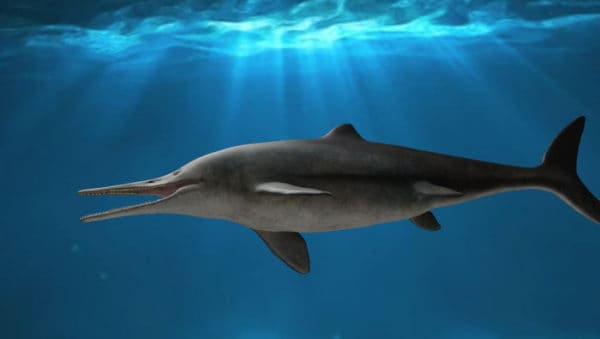
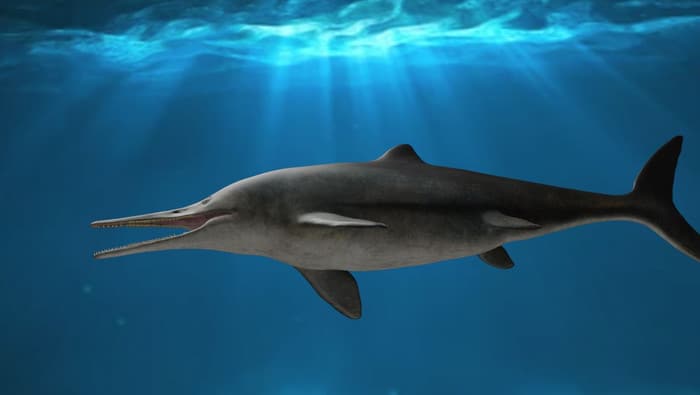
A team of international researchers from Canada, Colombia, and Germany has discovered a new marine reptile. The specimen, a stunningly preserved metre-long skull, is one of the last surviving ichthyosaurs – ancient animals that look eerily like living swordfish.

“This animal evolved a unique dentition that allowed it to eat large prey,” says Hans Larsson, Director of the Redpath Museum at McGill University. “Whereas other ichthyosaurs had small, equally sized teeth for feeding on small prey, this new species modified its tooth sizes and spacing to build an arsenal of teeth for dispatching large prey, like big fishes and other marine reptiles.”

“We decided to name it Kyhytysuka which translates to ‘the one that cuts with something sharp’ in an indigenous language from the region in central Colombia where the fossil was found, to honour the ancient Muisca culture that existed there for millennia,” says Dirley Cortes, a graduate student under the supervision of Hans Larsson and Carlos Jaramillo of the Smithsonian Tropical Research Institute.

The big picture of ichthyosaur evolution is clarified with this new species, the researchers say. “We compared this animal to other Jurassic and Cretaceous ichthyosaurs and were able to define a new type of ichthyosaurs”, says Erin Maxwell of the State Natural History Museum of Stuttgart (a former graduate student of Hans Larsson’s lab at McGill). “This shakes up the evolutionary tree of ichthyosaurs and lets us test new ideas of how they evolved.”

According to the researchers, this species comes from an important transitional time during the Early Cretaceous period. At this time, the Earth was coming out of a relatively cool period, had rising sea levels, and the supercontinent Pangea was splitting into northern and southern landmasses. There was also a global extinction event at the end of the Jurassic that changed marine and terrestrial ecosystems. “Many classic Jurassic marine ecosystems of deep-water feeding ichthyosaurs, short-necked plesiosaurs, and marine-adapted crocodiles were succeeded by new lineages of long-necked plesiosaurs, sea turtles, large marine lizards called mosasaurs, and now this monster ichthyosaur” says Dirley Cortes.

“We are discovering many new species in the rocks this new ichthyosaur comes from. We are testing the idea that this region and time in Colombia was an ancient biodiversity hotspot and are using the fossils to better understand the evolution of marine ecosystems during this transitional time,” she adds. As next steps the researchers are continuing to explore the wealth of new fossils housed in the Centro de Investigaciones Paleontológicas of Villa de Leyva in Colombia. “This is where I grew up,” says Cortes “and it is so rewarding to get to do research here too.”

“Reappearance of hypercarnivore ichthyosaurs in the Cretaceous with differentiated dentition: revision of ‘Platypterygius’ sachicarum (Reptilia: Ichthyosauria, Ophthalmosauridae) of Colombia” by Dirley Cortes, Erin E. Maxwell, and Hans C. E. Larsson is published in the Journal of Systematic Palaeontology.

DOI: https://doi.org/10.1080/14772019.2021.1989507


from ScienceBlog.com https://ift.tt/3nZWasV

Satellites reveal Arctic rivers are changing faster than we thought

Satellites reveal Arctic rivers are changing faster than we thought

A civil and environmental engineering researcher at the University of Massachusetts Amherst has, for the first time, assimilated satellite information into on-site river measurements and hydrologic models to calculate the past 35 years of river discharge in the entire pan-Arctic region. The research reveals, with unprecedented accuracy, that the acceleration of water pouring into the Arctic Ocean could be three times higher than previously thought.

The publicly available study, published recently in Nature Communications, is the result of three years of intensive work by research assistant professor Dongmei Feng, the first and corresponding author on the paper. The unprecedented research assimilates 9.18 million river discharge estimates made from 155,710 orbital satellite images into hydrologic model simulations of 486,493 Arctic river reaches from 1984-2018. The project and the paper are called RADR (Remotely-sensed Arctic Discharge Reanalysis) and was funded by NASA and National Science Foundation programs for early career researchers.

“We recreated the river discharge information all over the pan-Arctic region. Previous studies didn’t do this,” Feng says. “They only used some gauge data and only for certain rivers, not all of them, to calculate how much water is pouring into the Arctic Ocean.”

“This is a new, publicly available daily record of flow across the global North,” adds Colin Gleason, civil and environmental engineering professor and principal investigator on the study. “No one has ever tried to do it at this scale: teaching the models what the satellites saw daily in half a million rivers from millions of satellite observations. It’s a very sophisticated data assimilation, which is the process of merging models and data.”

River discharge integrates all hydrologic processes of upstream watersheds and defines a river’s carrying capacity. It is considered the single most important measurement needed to understand a river, yet the availability of this information is limited due to a lack of reliable, comprehensive, publicly available data, Feng says.

Physically gauging rivers – the “gold standard” for gaining discharge information – is expensive and labor intensive to install and maintain because gauges need to be physically recalibrated several times a year. Also, rough terrain around some rivers can make gauge installation very difficult. This makes it more practical for studies in this region to focus on larger rivers that empty into the Arctic Ocean, so many small rivers are not gauged at all. Also, some countries don’t make their gauge information publicly available. That leaves hydrologists and environmental scientists in the dark about a tremendous number of rivers, Feng says.

“This is one major contribution of our work, because we can provide river discharge information everywhere, especially for the Eurasia region,” says Feng. “Satellites are like a gauge in space. If we don’t have a gauge in place on the rivers, we can use the satellite to improve the data we have now.”

Traditional studies have had to rely on limited gauge information or on simulations based on a representative sample of rivers. Feng’s work focuses on all Arctic rivers that eventually drain into the Arctic Ocean, Bering Strait, and the Hudson, James and Ungava bays. It excludes the Greenland Ice Sheet.

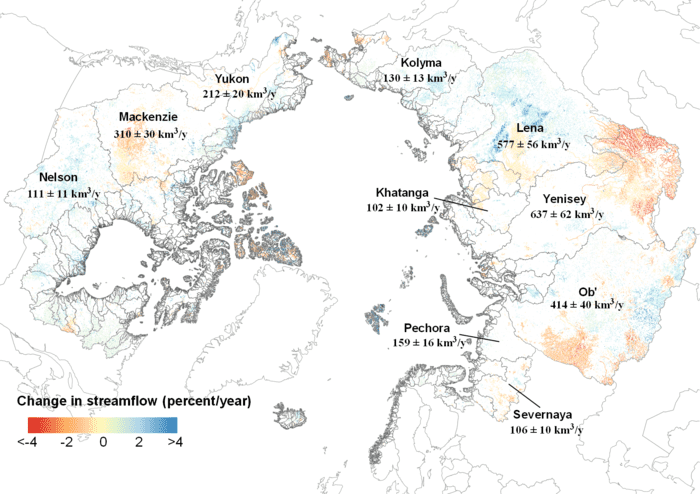
One of RADR’s major findings is that the acceleration in pan-Arctic river discharge over the past 35 years is 1.2 to 3.3 times larger than previously estimated.

“This is the new reality that we’ve actually experienced, rather than a projection of what might happen. RADR looks into the past and shows that up to 17% more water than previously thought has already gone into the Arctic Ocean,” Gleason says of RADR’s findings.

The increase in water discharge was not homogenous, however.

“We found very significant regional differences,” Feng says. “Some places showed an increase, but others showed a decrease. We also found that North America and Eurasia show different patterns.”

“For example, Mongolia is actually getting drier, as are parts of the interior Mackenzie River,” Gleason says.

As more satellites launch, the data provided by RADR will only become more accurate. “We can improve even more significantly, because we have built up this method and with this framework, we can very easily assimilate more satellite data, and with more data we can for sure improve more,” Feng says. “This is an exciting and also promising direction.”

Feng is making the system open access in the hopes that those studying other aspects of the Arctic, such as climate change, will use it to obtain new calculations of factors like river sediment, rainfall, and carbon emissions.

“I’m really excited that not only did we do this, but that we’re making it public and just putting it out there and anyone can download it and use it,” Gleason says. “I’m hoping this becomes a standard global data set for anyone who studies the Arctic across any of the natural sciences.”

“This is a really huge amount of information we can use for a lot of applications, like water resource management, hydropower, or other infrastructure impacted by rivers,” Feng says. “We can also improve the global river discharge simulation’s accuracy significantly.”

But the work has implications far beyond the Arctic, she adds.

“Because we show satellites can help us improve the accuracy of [measurements of] river discharge, we can use it to improve the data for river discharge all over the world,” she says.

The RADR framework “is a vector-based product, so it looks like a river network, and it’s going to be publicly available flow in literally half a million rivers, as narrow as three meters,” Gleason says.

Now that RADR has shown that previous predictions of river discharge are inaccurate, models using the new findings will have to be created.

“Now that we know this about the past, how does that change our future predictions? That’s where we’re going next,” Gleason says. “Climate change, ecology, pollution and sediment — those are the big things that will dramatically change.”

The paper, “Recent Changes to Arctic River Discharge,” can be found at doi 10.1038/s41467-021-27228-1

Contact: Dongmei Feng, dongmeifeng@umass.edu
Melinda Rose, melindarose@umass.edu


from ScienceBlog.com https://ift.tt/32D7yCJ

Researchers shrink camera to the size of a salt grain

Researchers shrink camera to the size of a salt grain

Micro-sized cameras have great potential to spot problems in the human body and enable sensing for super-small robots, but past approaches captured fuzzy, distorted images with limited fields of view.

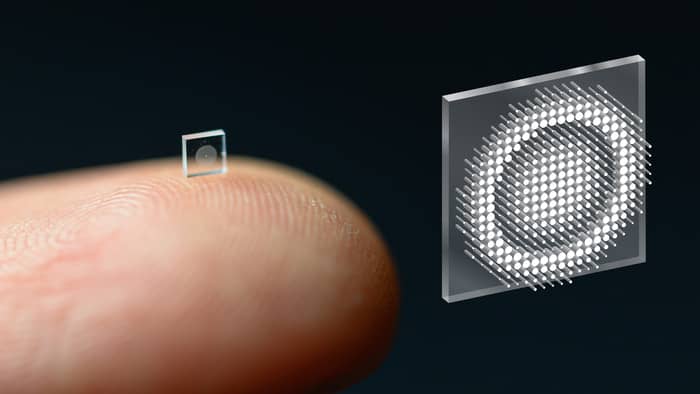
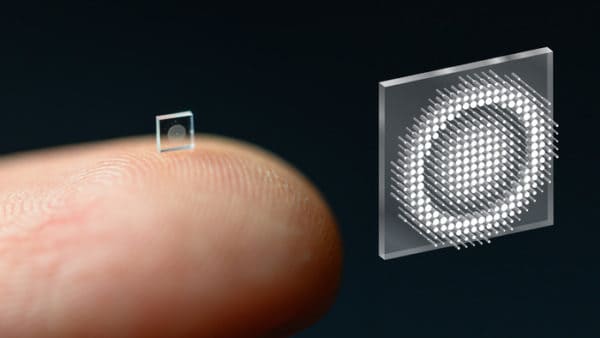
Now, researchers at Princeton University and the University of Washington have overcome these obstacles with an ultracompact camera the size of a coarse grain of salt. The new system can produce crisp, full-color images on par with a conventional compound camera lens 500,000 times larger in volume, the researchers reported in a paper published Nov. 29 in Nature Communications.

Enabled by a joint design of the camera’s hardware and computational processing, the system could enable minimally invasive endoscopy with medical robots to diagnose and treat diseases, and improve imaging for other robots with size and weight constraints. Arrays of thousands of such cameras could be used for full-scene sensing, turning surfaces into cameras.

While a traditional camera uses a series of curved glass or plastic lenses to bend light rays into focus, the new optical system relies on a technology called a metasurface, which can be produced much like a computer chip. Just half a millimeter wide, the metasurface is studded with 1.6 million cylindrical posts, each roughly the size of the human immunodeficiency virus (HIV).

Each post has a unique geometry, and functions like an optical antenna. Varying the design of each post is necessary to correctly shape the entire optical wavefront. With the help of machine learning-based algorithms, the posts’ interactions with light combine to produce the highest-quality images and widest field of view for a full-color metasurface camera developed to date.

A key innovation in the camera’s creation was the integrated design of the optical surface and the signal processing algorithms that produce the image. This boosted the camera’s performance in natural light conditions, in contrast to previous metasurface cameras that required the pure laser light of a laboratory or other ideal conditions to produce high-quality images, said Felix Heide, the study’s senior author and an assistant professor of computer science at Princeton.

The researchers compared images produced with their system to the results of previous metasurface cameras, as well as images captured by a conventional compound optic that uses a series of six refractive lenses. Aside from a bit of blurring at the edges of the frame, the nano-sized camera’s images were comparable to those of the traditional lens setup, which is more than 500,000 times larger in volume.

Other ultracompact metasurface lenses have suffered from major image distortions, small fields of view, and limited ability to capture the full spectrum of visible light — referred to as RGB imaging because it combines red, green and blue to produce different hues.

“It’s been a challenge to design and configure these little microstructures to do what you want,” said Ethan Tseng, a computer science Ph.D. student at Princeton who co-led the study. “For this specific task of capturing large field of view RGB images, it’s challenging because there are millions of these little microstructures, and it’s not clear how to design them in an optimal way.”

Co-lead author Shane Colburn tackled this challenge by creating a computational simulator to automate testing of different nano-antenna configurations. Because of the number of antennas and the complexity of their interactions with light, this type of simulation can use “massive amounts of memory and time,” said Colburn. He developed a model to efficiently approximate the metasurfaces’ image production capabilities with sufficient accuracy.

Colburn, who conducted the work as a Ph.D. student at the University of Washington Department of Electrical & Computer Engineering (UW ECE), where he is now an affiliate assistant professor. He also directs system design at Tunoptix, a Seattle-based company that is commercializing metasurface imaging technologies. Tunoptix was cofounded by Colburn’s graduate adviser Arka Majumdar, an associate professor at the University of Washington in the ECE and physics departments and a coauthor of the study.

Coauthor James Whitehead, a Ph.D. student at UW ECE, fabricated the metasurfaces, which are based on silicon nitride, a glass-like material that is compatible with standard semiconductor manufacturing methods used for computer chips — meaning that a given metasurface design could be easily mass-produced at lower cost than the lenses in conventional cameras.

“Although the approach to optical design is not new, this is the first system that uses a surface optical technology in the front end and neural-based processing in the back,” said Joseph Mait, a consultant at Mait-Optik and a former senior researcher and chief scientist at the U.S. Army Research Laboratory.

“The significance of the published work is completing the Herculean task to jointly design the size, shape and location of the metasurface’s million features and the parameters of the post-detection processing to achieve the desired imaging performance,” added Mait, who was not involved in the study.

Heide and his colleagues are now working to add more computational abilities to the camera itself. Beyond optimizing image quality, they would like to add capabilities for object detection and other sensing modalities relevant for medicine and robotics.

Heide also envisions using ultracompact imagers to create “surfaces as sensors.” “We could turn individual surfaces into cameras that have ultra-high resolution, so you wouldn’t need three cameras on the back of your phone anymore, but the whole back of your phone would become one giant camera. We can think of completely different ways to build devices in the future,” he said.

Besides Tseng, Colburn, Whitehead, Majumdar and Heide, the study’s authors include Luocheng Huang, a Ph.D. student at the University of Washington; and Seung-Hwan Baek, a postdoctoral research associate at Princeton.

The work was supported in part by the National Science Foundation, the U.S. Department of Defense, the UW Reality Lab, Facebook, Google, Futurewei Technologies, and Amazon.

By Molly Sharlach


from ScienceBlog.com https://ift.tt/3D6mwhl

Eight worst wildfire weather years on record happened in the last decade: study

Eight worst wildfire weather years on record happened in the last decade: study

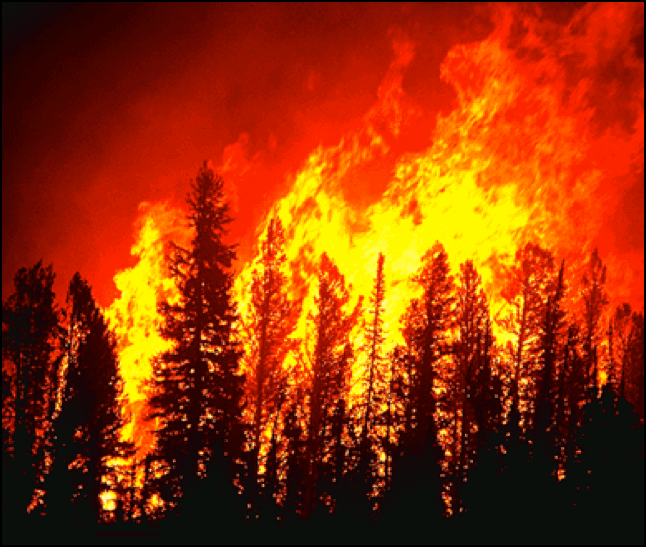
The world’s eight most extreme wildfire weather years have occurred in the last decade, according to a new study that suggests extreme fire weather is being driven by a decrease in atmospheric humidity coupled with rising temperatures.

“Extreme conditions drive the world’s fire activity,” said former U of A wildfire expert Michael Flannigan, who conducted the research with study lead Piyush Jain, research scientist with Natural Resources Canada, and Sean Coogan, postdoctoral fellow Faculty of Agricultural, Life & Environmental Sciences.

“For example, in Canada, just three per cent of fires are responsible for 97 per cent of the area burned.”

For the study, the team examined extreme fire weather trends from 1979 to 2020 using common fire weather indexes that provide estimates for fire intensity and rate of fire spread, as well as changes in vapour pressure, or humidity.

The results link trends in rising global temperatures and decreases in humidity to the likelihood that naturally occurring extreme fire events will happen more often, spread to new areas and burn more intensely than ever before in recorded history.

Decreasing relative humidity was a driver of more than three-quarters of significant increases in intensity and fire spread, and increasing temperature was a driver for 40 per cent of significant trends.

The study also found significant increases in extreme weather that can cause major fires in close to half of the Earth’s burnable land mass — including in Northern Canada and British Columbia.

Flannigan said regions around the world have almost universally witnessed an increase in extreme weather in the past 40 years, with marked increases in the last two decades.

“It’s not a big surprise, but with climate change, we expect warmer conditions to continue and this trend to continue, expand and get worse.”

In British Columbia, for instance, Flannigan said three of the last five fire seasons — 2017, 2018 and 2021 — are the three worst on record.

Devastating BC Flooding Illustrates Further Risks of Increased Fire Activity

Living with wildfire also means living with the consequences of fire. The recent flooding that is crippling land travel in and out of B.C.’s lower mainland is a good example.

“It is not all attributable to fires, but fires do play a role. When you remove the vegetation, the rain is not being intercepted by the trees, the roots aren’t picking up the moisture, there is nothing to give the soil stability — you’re much more likely to see land- and mudslides in burnt areas.

“This has been documented in California for years.”

He noted even if global warming stopped tomorrow, the wildfire threat would continue to loom large for decades, so communities need to prepare for all wildfire eventualities.

“We’re on this path of a new reality. It’s not normal because there’s nothing normal about what’s going on.”


from ScienceBlog.com https://ift.tt/3E1qtVI

Snow monkeys go fishing to survive harsh Japanese winters – study

Snow monkeys go fishing to survive harsh Japanese winters - study

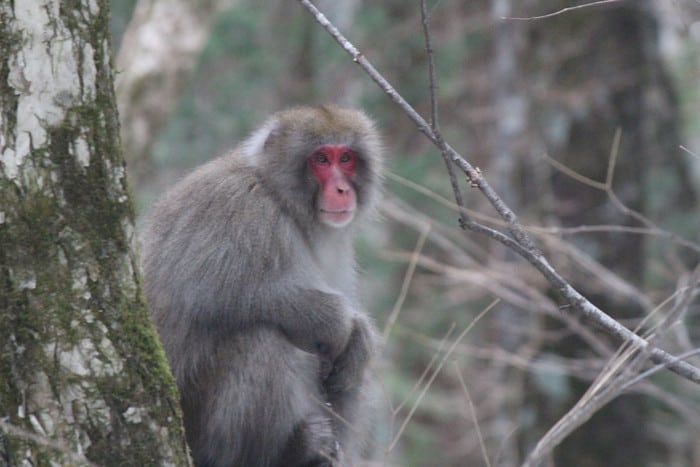
Snow monkeys living in one of the world’s coldest regions survive by ‘going fishing’ – scooping live animals, including brown trout, out of Japanese rivers and eating them to stay alive, a new study reveals.

The snow monkey (Japanese macaque Macaca fuscata) is native to the main islands of Japan, except Hokkaido. The most northerly living non-human primate find that snow cover limits the availability of their preferred foods in the Kamikochi area of Chubu Sangaku National Park of the Japanese Alps.

With favourite foods difficult to find, the snow monkeys run low on energy and face death by starvation, but groundwater-fed streams flow during the winter with a constant water temperature of about 5 0C  and are easily accessible for Japanese macaques to search for alternative live food.

Led by University of Birmingham experts, the international research team published its findings today in Scientific Reports – the first published scientific paper of Japanese macaques definitively eating freshwater animals in streams, including brown trout.

Previously, Japanese macaques have been shown to opportunistically capture marine fish, either when being dried  or washed up on beaches, whilst closely-related species have been shown to feed on freshwater fish.

Researchers found brown trout in Japanese macaques’ fecal samples and believe that macaques capture brown trout in shallow pools along the stream margin.

Using metabarcoding of fecal samples to determine the monkeys’ wintertime diet, the experts discovered that the animals also feed on riverine insects and molluscs – additional food sources  wich are likely to  aid their winter survival.

Alexander Milner, Professor of River Ecosystems at the University of Birmingham who led the study, commented: “Japanese macaques have a wider winter home range when food resources are scarce, but Kamikochi lies in a deep valley where they cannot cross the mountains. Population density is exceptionally high and macaques must overwinter in an extremely harsh environment.

“These larger populations create additional stress for surviving winter, but an abundance of groundwater upwellings and hot spring inputs from active volcanoes ensures many streams flow without ice cover allowing easy access to the monkeys.

“With high numbers of freshwater animals in its rivers and streams, the Kamikochi area may be the only environment in Japan where the topographical, geological, and meteorological conditions allow Japanese macaques to supplement their winter diet in this way.”

Researchers also found evidence of freshwater insects in macaques’ fecal samples, including aquatic insect larvae and nymphs. Although terrestrial insects are a major source of food for Japanese macaques, especially in summer, this is the first confirmed record of aquatic insect larvae and nymphs in their diet.


from ScienceBlog.com https://ift.tt/31c1Uqs

Self-Healing Suture of the Future Fights Infection

Self-Healing Suture of the Future Fights Infection

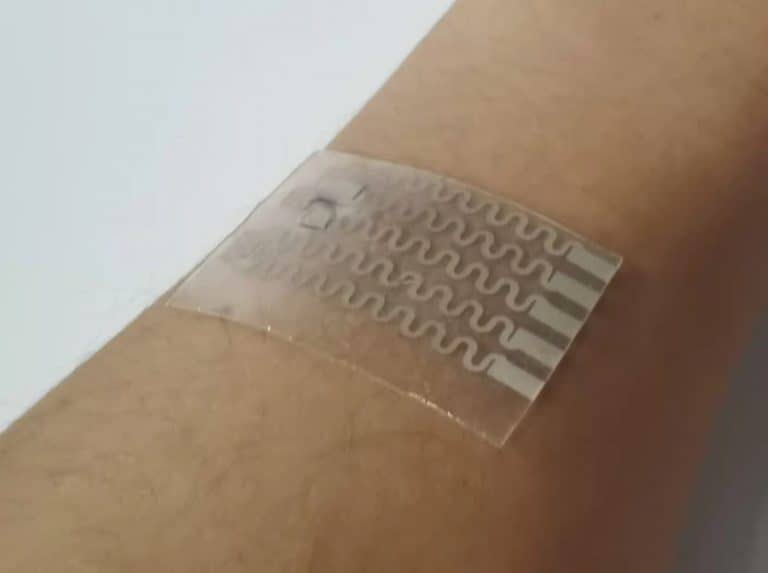
Technion scientists develop self-healing, antibacterial polymer as safer alternative to traditional post-surgical sutures. The smart bandage can dispense antibiotic, monitor wound-healing biomarkers and report important data directly to doctors.

“Sutures? That’s practically medieval!”

It is a staple of science fiction to mock sutures as outdated. The technique has, after all, been in use for at least 5,000 years. Surely medicine should have advanced since ancient Egypt. Professor Hossam Haick from the Wolfson Department of Chemical Engineering at the Technion has finally turned science fiction into reality. His lab succeeded in creating a smart, sutureless dressing that not only binds wounds together, but also wards off infection and reports the wound’s condition directly to doctors’ computers. Their study was published in Advanced Materials.

Current surgical procedures entail the surgeon cutting the human body, doing what needs to be done, and sewing the wound shut – an invasive procedure that damages surrounding healthy tissue. Some sutures degrade by themselves – or should degrade – as the wound heals. Others need to be manually removed. Dressing is then applied over the wound and medical personnel monitor the wound by removing the dressing to allow observation for signs of infection like swelling, redness, and heat. This procedure is painful to the patient, and disruptive to healing, but it is unavoidable. Working with these methods also means that infection is often discovered late, since it takes time for visible signs to appear and more time for medical staff to come around and see them. In developed countries with good sanitation available, about 20% of patients develop infections post-surgery, necessitating additional treatment and extending the recovery time. The figure and consequences are much worse in developing countries.

How will it work with Prof. Haick’s new dressing?

Prior to beginning a procedure, the dressing – which is very much like a smart band-aid – developed by Prof. Haick’s lab will be applied to the site of the planned incision. The incision will then be made through it. Following the surgery, the two ends of the wound will be brought together, and within three seconds the dressing will bind itself together, holding the wound closed, similarly to sutures. From then, the dressing will be continuously monitoring the wound, tracking the healing process, checking for signs of infection like changes in temperature, pH, and glucose levels, and report to the medical personnel’s smartphones or other devices. The dressing will also itself release antibiotics onto the wound area, preventing infection.

“I was watching a movie on futuristic robotics with my kids late one night,” said Prof. Haick, “and I thought, what if we could really make self-repairing sensors?”

Most people discard their late-night cinema-inspired ideas. Not Prof. Haick, who, the very next day after his Eureka moment, was researching and making plans. The first publication about a self-healing sensor came in 2015 (read more about it on the Technion website here). At that time, the sensor needed almost 24 hours to repair itself. By 2020, sensors were healing in under a minute (read about the study by Muhammad Khatib, a student in Prof. Haick’s lab here), but while they had multiple applications, they were not yet biocompatible, that is, not usable in contact with skin and blood. Creating a polymer that would be both biocompatible and self-healing was the next step, and one that was achieved by postdoctoral fellow Dr. Ning Tang.

The new polymer is structured like a molecular zipper, made from sulfur and nitrogen: the surgeon’s scalpel opens it; then pressed together, it closes and holds fast. Integrated carbon nanotubes provide electric conductivity and the integration of the sensor array. In experiments, wounds closed with the smart dressing healed as fast as those closed with sutures and showed reduced rates of infection.

“It’s a new approach to wound treatment,” said Prof. Haick. “We introduce the advances of the fourth industrial revolution – smart interconnected devices, into the day-to-day treatment of patients.”

Prof. Haick is the head of the Laboratory for Nanomaterial-based Devices (LNBD) and the Dean of Undergraduate Studies at the Technion.

Dr. Ning Tang was a postdoctoral fellow in Prof. Haick’s laboratory and conducted this study as part of his fellowship. He has now been appointed an associate professor in Shanghai Jiao Tong University.


from ScienceBlog.com https://ift.tt/3nZWisp

The Boy who is Still Crying Wolf 37 Years On

The Boy who is Still Crying Wolf 37 Years On

Last spring, I reviewed a book about the pharmaceutical industry’s rise to dominate the universe of medical research at major universities, medical journal gatekeepers, and press coverage of medical science in the popular media. It was the brainchild of the Sackler family, planned and executed over decades.

The missing piece of the story is the government agencies. Why are they not doing anything to impede the pharmaceutical distortion of science? Why does NIH seem sometimes to be outdoing the pharma companies to promote expensive, ineffective treatments over everything else?

Of course, we can’t expect pharmaceutical companies to fund research in preventive medicine, healthy living, herbal cures, or even repurposed drugs that are out of patent. They are motivated only to invest in research that will yield patent-protected profits. But that’s why we have government-supported research. That’s what NIH is for.

Bobby Kennedy is no stranger to “regulatory capture”, whereby government agencies become “sock puppets of the industries they were put there to regulate.” For decades, he has documented the phenomenon in the fields of fossil fuels and the chemical industry. In his new book, Bobby Kennedy characterizes the relationship between NIH and Big Pharma as “regulatory capture on steroids”. In the “ordinary” case of regulatory capture, industry executives are appointed as regulators, and regulators look forward to a cushy sinecure with the industry if they carry water faithfully for a few years. In the case of NIH, the Federal agency actually owns patents for drugs and profits from licensing them to pharma giants. Not only does the agency have a financial interest in pushing drugs, but individual scientists who work for NIH can collect royalties for drugs that they helped to develop. Thus the bribery is built into the system, codified as law.

FDA is no better than NIH. FDA is supposed to do independent investigations of each drug that comes up for approval. But these investigations are funded by the companies that want their drugs approved. The result is that FDA gets 45% of its funding from the pharmaceutical industry. Without this funding, a lot of regulators would lose their jobs. They know where their bread is buttered, and when a drug comes up for approval, they know that their job is to approve it.

Moreover, when a cheap drug that is not sponsored by Big Pharma is being reviewed for a repurposed application—especially if it threatens to compete with an expensive patented drug— blocking the competitor becomes the FDA’s mission.

AIDS as a rehearsal for COVID (This is the story as told by RFK.)

Since 1984, Fauci has been head of NIAID, the National Institute of Allergy and Infectious Disease. When Anthony Fauci was first appointed, infectious disease was a backwater, a tiny part of public health compared to cancer and heart disease and dementia; and allergies were far rarer than today. The budget of NIAID was sized for a small mission. In Fauci’s first years, along came the AIDS epidemic, and (as RFK tells the story) he saw it as a way to expand his agency and raise its profile.

It was not at all clear that AIDS was even an infectious disease. AIDS research was being conducted by the Cancer division of NIH. Everyone now “knows” that AIDS is caused exclusively by an RNA virus called HIV, and that HIV is transmitted sexually, or by contact with blood. Kennedy tells how it is that we came to “know” this, and in the process raises doubts in the minds of any thoughtful reader.

One alternative theory was proposed by Peter Duesburg, a Berkeley professor of molecular biology with a great deal of credibility. He had hundreds of publications with 15,000 citations, and a subspecialty in the evolutionary significance of RNA viruses. Duesberg cited evidence that AIDS is caused primarily by environmental factors including the recreational drug amyl nitrite, and that HIV is an opportunistic infection when immune systems have already been weakened. In particular, there were many known cases of HIV positive tests with no symptoms for years at a time; conversely, there were other cases in which all the symptoms of AIDS appeared (including the rare cancer Kaposi Sarcoma) in patients who tested negative for HIV.

Duesberg’s proposal posed a dilemma for Fauci. The problem was that AIDS was a true emergency, an epidemic that would justify large expenditures and allocation of new personnel with new resources—yet, if it turned out to be an environmental disease, study of AIDS would procede outside his department. Kennedy describes how Fauci offered Duesberg an opportunity to recant his heresy, then, when he declined, set about to destroy his career. Rather than refuting evidence for Duesberg’s theory, Fauci first cut off funding to Duesberg, then the funding of anyone who collaborated with him, then the funding of anyone who attended a conference where Duesberg spoke. Fauci’s assault extended to the science press, where he threatened that anyone who interviewed Duesberg would no longer have access to any sources at NIH!

This is the story Kennedy relates. He does not take a position on whether HIV is the primary cause of AIDS, but he paints Duesberg as a credible person with a credible theory that deserved debate, and still deserves debate today. Heresies and fixed dogmas have no place in science. The strength of the scientific community is its culture of open debate.

Fauci went on to ignore the public health strategies that might have limited the spread of AIDS, and to ignore as well the community doctors who had experimented with safe, non-toxic treatments, some of which seemed promising to them. The remedy he promoted to the exclusion of others was AZT.

The AZT trials

AZT had earlier been tested as a chemotherapy agent for leukemia, but had been abandoned as too toxic even for short-term use. Fauci sought to fast-track AZT for approval as a long-term, daily regimen for AIDS.

The 24-week, “placebo-controlled, double-blind” study was unblinded from the beginning. Patients in the AZT arm were so sick that they had to be given frequent blood transfusions to keep them alive. The study was terminated early, ostensibly because the patients on AZT were doing so much better than the placebo, but an FDA investigation (!) later concluded that “The Burroughs-Wellcome PIs had quickly realized that AZT was so reliably deadly that they were hard-pressed to keep the trial recruits alive for the full six-month study.” Placebo subjects were given AZT after the early termination, so that no long-term comparisons were possible.

AZT was approved in 1987 as “the only proven treatment for AIDS.” A year’s treatment cost $10,000 (equivalent to $24,000 today). It was given not just to late-stage AIDS patients, but to anyone who was HIV positive. AIDS patient groups, in fact, demanded it. The symptoms of AZT poisoning overlapped broadly with symptoms of AIDS. In retrospect, a majority of the people who were said to die of AIDS in the 1990s were, in fact, poisoned by AZT,

Kennedy draws parallels between the way Dr Fauci handled the AIDS epidemic in 1987 and the way he is handling COVID in the present. (quote)

  • “pumping up pandemic fears to lay the groundwork for larger budgets and greater powers
  • incriminating an elusive pathogen
  • fanning hysteria by exaggerating disease transmissibility
  • periodically stoking waning fear levels by warning of mutant superstrains and future surges
  • suggesting substantial changes in how people live, ostensibly to save their lives
  • keeping the public and politicians engaged through confusing and contradictory pronouncements
  • using faulty PCR and antibody tests and manipulating epidemiology to inflate nonverifiable case and death numbers, to maximize the perception of an imminent calamity
  • ignoring and dismissing effective off-the-shelf therapeutic remedies
  • directing energy and money toward profitable new patented drugs and vaccines
  • championing dangerous and ineffective drugs originating in government laboratories as the only winning solution to end the pandemic
  • funding and orchestrating confirmation-biased research to validate his chosen remedy
  • partnering with large pharmaceutical companies and giving his partners advantages in the race for approval
  • allowing preferred companies to skip key testing metrics
  • curtailing clinical trials to conceal severe safety and efficacy problems
  • sabotaging, discrediting, and sweeping aside more effective therapies that are established and out of patent
  • subjecting competitive products to efficacy and safety studies that are designed to fail, while endorsing his favored drugs without even the pretense of such studies
  • allowing thousands of sick patients to suffer and die by denying them access to demonstrably effective, cheap, available remedies, protesting the existing remedies were not subject to “randomized placebo testing”
  • controlling the key “independent” committees (DSMB, VRBPAC, ACIP) that approve and mandate new drugs by populating them with people he has generously funded over the years
  • presenting these agents as “independent” and trustworthy experts
  • using the Emergency Use Authorization to fast-track the concoctions through a rigged and abbreviated process
  • using official government propaganda to market concoctions in which he and NIAID had a financial interest
  • employing ‘science by press release’ to control narratives
  • using pervious and ineffective post-marketing surveillance systems to conceal mass injuries and deaths from the public
  • papering over all these testing deficiencies by crafting and promoting enduring narratives about the safety, and efficacy
  • citing “leading experts” to promote hypotheses that defy long-established principles of disease management
  • allowing pharmaceutical companies to charge Medicare and insurance companies inflated prices out of all proportion to cost
  • ensuring that research funding is restricted to projects supporting the dogma
  • refusing funding and actively sabotaging research into alternative hypotheses
  • preventing debate and censoring dissenting voices both in popular media and in scientific publications
  • promising ultimate salvation with vaccines”

The last part of Kennedy’s book is about the militarization of healthcare, and overlap between the agendas of CIA, DoD, and NIAID. Powerful people view democracy as an impediment to their ambitions for domination, and they have planned and war-gamed for decades strategies that would use fear of invisible microbes as an excuse to impose totalitarian rule.

“Drill exercises…reinforced the lesson that censorship, isolation, the militarization of medicine, totalitarian controls, and coercive vaccine mandates are the only appropriate response to pandemics. Scenario planning, in other words, is a potent brainwashing technique for creating and fortifying anti-democratic orthodoxies among key political leaders, the press, and the technocracy, preparing the nation to tolerate a coup d’etat without resistance”

After “failed pandemics” in 2003 and 2009, COVID has been the vehicle through which they brought the world to its knees. This story is complex and involves an evil more monstrous than any of us want to admit into our realities. I leave it to you to read Kennedy’s account in Chapter 12. There are connections to global finance, to eugenics, to Gates and Rockefeller and the World Economic Forum. I believe that even these enormously rich and powerful people may be fronting for people who are even more powerful, who meticulously keep their identities private.

This leads in many directions and demands changes in the fundamental way we have thought about the world we live in. The pesent situation is urgent, and we have no time to research and understand the sources and the protagonists of this 21st Century holocaust, no time for transformative personal growth. We, the 99%, will have to come together quickly and stand firm for our freedoms before the prison doors slam shut.


from ScienceBlog.com https://ift.tt/3E9UQt9
Tbilisi State University Achieves Global Recognition for Research Excellence

Tbilisi State University Achieves Global Recognition for Research Excellence Tbilisi State University (TSU) has been highlighted for its s...