Monday, August 30, 2021

Turning cameras off during virtual meetings can reduce fatigue

Turning cameras off during virtual meetings can reduce fatigue

More than a year after the pandemic resulted in many employees shifting to remote work, virtual meetings have become a familiar part of daily life. Along with that may come “Zoom fatigue” – a feeling of being drained and lacking energy following a day of virtual meetings.

New research conducted by Allison Gabriel, McClelland Professor of Management and Organizations and University Distinguished Scholar in the University of Arizona Eller College of Management, suggests that the camera may be partially to blame.

Gabriel’s research, published in the Journal of Applied Psychology, looks at the role of cameras in employee fatigue and explores whether these feelings are worse for certain employees.

“There’s always this assumption that if you have your camera on during meetings, you are going to be more engaged,” Gabriel said. “But there’s also a lot of self-presentation pressure associated with being on camera. Having a professional background and looking ready, or keeping children out of the room are among some of the pressures.”

After a four-week experiment involving 103 participants and more than 1,400 observations, Gabriel and her colleagues found that it is indeed more tiring to have your camera on during a virtual meeting.

“When people had cameras on or were told to keep cameras on, they reported more fatigue than their non-camera using counterparts,” Gabriel said. “And that fatigue correlated to less voice and less engagement during meetings. So, in reality, those who had cameras on were potentially participating less than those not using cameras. This counters the conventional wisdom that cameras are required to be engaged in virtual meetings.”

Gabriel also found that these effects were stronger for women and for employees newer to the organization, likely due to added self-presentation pressures.

“Employees who tend to be more vulnerable in terms of their social position in the workplace, such as women and newer, less tenured employees, have a heightened feeling of fatigue when they must keep cameras on during meetings,” Gabriel said. “Women often feel the pressure to be effortlessly perfect or have a greater likelihood of child care interruptions, and newer employees feel like they must be on camera and participate in order to show productiveness.”

Gabriel suggests that expecting employees to turn cameras on during Zoom meetings is not the best way to go. Rather, she says employees should have the autonomy to choose whether or not to use their cameras, and others shouldn’t make assumptions about distractedness or productivity if someone chooses to keep the camera off.

“At the end of the day, we want employees to feel autonomous and supported at work in order to be at their best. Having autonomy over using the camera is another step in that direction,” Gabriel said.

This research was co-authored by Eller doctoral student Mahira Ganster, Kristen M. Shockley with the University of Georgia, Daron Robertson with Tucson-based health care services company BroadPath Inc., Christopher Rosen with the University of Arkansas, Nitya Chawla with Texas A&M University and Maira Ezerins with the University of Arkansas.


from ScienceBlog.com https://ift.tt/3gJQi33

Proning manoeuvre dramatically improves COVID-19 patients’ blood oxygen levels

Proning manoeuvre dramatically improves COVID-19 patients’ blood oxygen levels

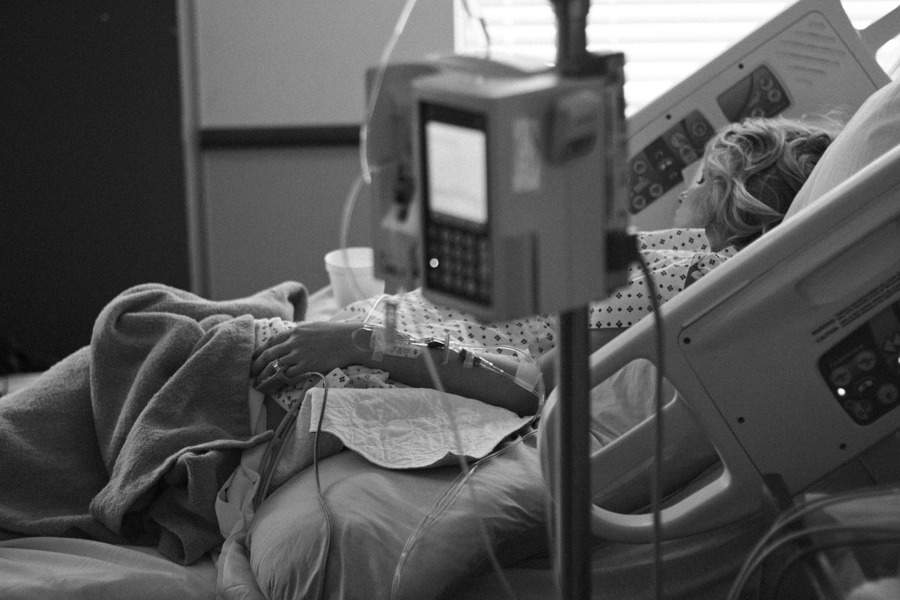
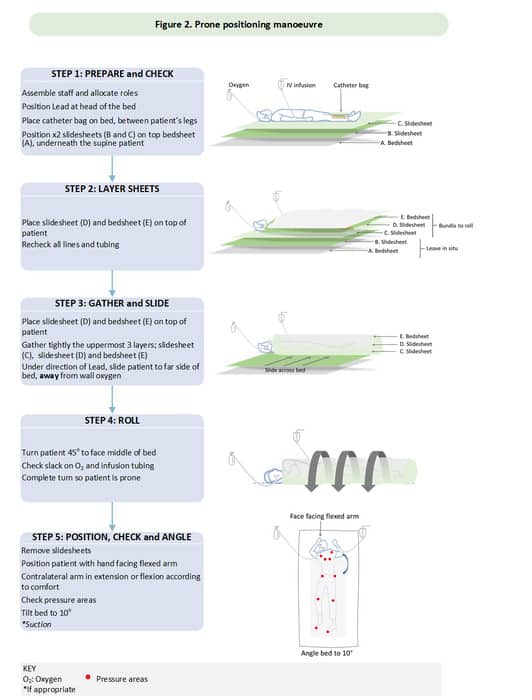
A new protocol for prone positioning — a technique commonly used to treat COVID-19 patients in respiratory distress by turning them on to their front to increase oxygen flow to the lungs, is published in the Journal of Frailty and Aging. Researchers from the University of Bristol in collaboration with clinicians at the Royal United Hospital in Bath, conducted a literature review of the manoeuvre to develop a standard protocol for the adjuvant treatment that can be used for COVID-19 patients at high risk of dying being treated in normal hospital wards.

Used to relieve hypoxia (low blood oxygen) since the 1970s, proning is associated with improving outcomes in those in respiratory distress and is commonly used during anaesthesia and in patients who are intubated and ventilated. Yet despite its use over several decades, there is limited guidance for clinicians on the optimal use of the manoeuvre and requisite monitoring.

Proning manoeuvre dramatically improves COVID-19 patients’ blood oxygen levelsA multidisciplinary team with expertise in caring for older adults with acute COVID-19 infection and based in the Ageing and Movement Research Group in Bristol’s Population Health Sciences sought to design a means by which alternative positioning of people with severe lung infections could improve their oxygen levels. They reviewed five studies that provided details of the technique which involved patients being cared for whilst lying on their fronts. This procedure is widely used in intensive care environments, but expertise, familiarity and staffing levels often preclude its use in normal NHS ward environments.

Two of the five studies tested the protocol in patients with non-invasive ventilation, and three described a protocol but did not test it in patients. Using the data from these five articles and from relevant clinical guidelines the study showed as well as being cost effective, when patients are positioned prone their oxygenation improves dramatically.   While the studies did not provide conclusive evidence to suggest a consensus on optimal duration in the COVID-19 population, studies that compared duration show a trend towards longer periods being of greater benefit.

Dr Emily Henderson, an Honorary Consultant Geriatrician at the Royal United Hospital Bath and Senior Lecturer at the University of Bristol and the study’s senior author, said: “Working on the frontline throughout the pandemic, I have sadly seen a large number of older adults in particular, die as a result of severe Covid-19 infection. Prone positioning is often used in intensive care settings and was a successful strategy that we trialled during the pandemic. We were struck by how little research there was to guide who this might benefit from this and how it could be adopted into practice safely. We are delighted to have developed a protocol for this potential adjuvant treatment. We look forward to exploring whether this, in addition to the drug treatments that are being developed and tested in large trials, may improve survival and outcomes. This strategy has particular utility for older people who are often looked after in NHS ward environments with Covid-19 infection.

Danielle Brazier, an academic physiotherapist at the University of Bristol, added: “Prone positioning for people with Covid-19 is a promising option but there’s a lot that needs to be considered prior to and during the procedure. We have designed a simple protocol to guide clinicians caring for people with Covid-19 infection. It was great to work with a multidisciplinary team of academics and clinicians to develop this guide.”

Prone Positioning of Older Adults with COVID-19: A Brief Review and Proposed Protocol by D. Brazier, N. Perneta, F.E. Lithander, E.J. Henderson in the Journal of Frailty and Aging.


from ScienceBlog.com https://ift.tt/38rPhYK

New beautiful, dragon-like species of lizard discovered in the Tropical Andes

New beautiful, dragon-like species of lizard discovered in the Tropical Andes

The Huallaga River in the Andes of central Peru extends for 1,138 km, making it the largest tributary of the Marañón River, the spinal cord of the Amazon River. This basin harbours a great variety of ecosystems, including the Peruvian Yunga ecoregion, which is considered a shelter of endemic birds, mammals, reptiles and amphibians.

How is it possible, then, that this corner of the Tropical Andes remains poorly known to biologists to this day? The main reason is indeed a quite simple one and it lies in the civil wars with terrorist organisations and drug traffickers that were going on in the region in the 1980s, disrupting biological studies.

It wasn’t until the late 1990s that the Peruvian government was able to liberate the area, and that’s when, little by little, some biologists began to venture back to the Huallaga Valley. However, forest destruction by coca plantations during the internal war, which eventually led to the construction of a hydroelectric power plant, left the Huallaga valley highly fragmented, making for an even more urgent need for biodiversity research in the area.

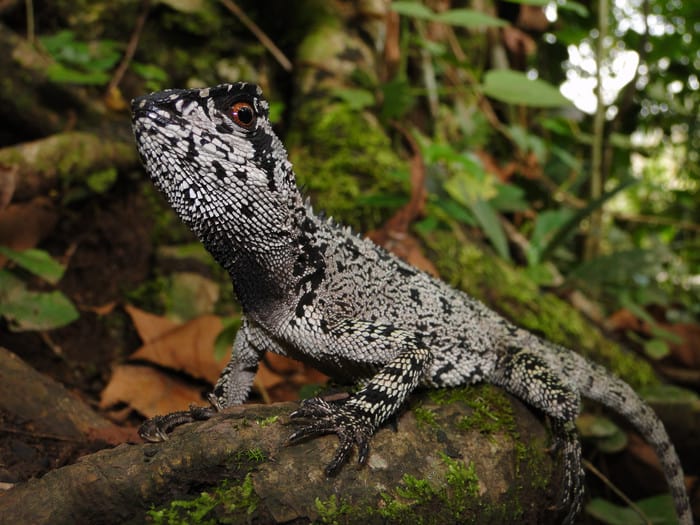
A new species of wood lizard, Enyalioides feiruzae, was recently confirmed from the premontane forest of the Huallaga river basin, and described in the open-access, peer-reviewed scientific journal Evolutionary Systematics. It took the researchers seven years of field surveys to formally describe it. To do so, they had first to spend plenty of nights in the forests, in order to pick by hand lizards that were sleeping on bushes 20–150 cm above the ground.

The Feiruz wood lizards – especially the males – come in a stunning variety of colours. Males can have brownish turquoise, gray, or greenish brown backs traced with pale lines. Females, in turn, can be greenish brown or floury brown, with faint dark brown lines on their back, limbs and tail, and spots on the sides.

The researchers believe E. feiruzae might have established as a separate species after it got geographically separated from a very similar lizard, E. rudolfarndti, possibly as a result from tectonic activity and climatic oscillations that occurred from the Late Oligocene to the Early Miocene.

The Feiruz wood lizard was named after – you guessed it – Feiruz – “a female green iguana, muse and lifelong friend”. The owner of Feiruz the iguana, Catherine Thomson, supported the authors’ efforts in taxonomic research and nature conservation.

The habitat of the E. feiruzae is very fragmented by croplands and pastures for cattle ranching, and for now we only know of a single protected population in the Tingo Maria National Park. Much more remains to be discovered about the size and distribution of E. feiruzae populations and their ability to survive and adapt in a fragmented landscape.

The new species belongs to the genus Enyalioides, which contains sixteen species. More than half of the known Enyalioides species have been described in the last two decades, largely due to the recent surveys of remote places in the Tropical Andes from Ecuador and Peru.


from ScienceBlog.com https://ift.tt/3mGMh3b

Shoelaces made from muscle? Synthetic biology enables microbes to build synthetic muscle

Shoelaces made from muscle? Synthetic biology enables microbes to build synthetic muscle

Would you wear clothing made of muscle fibers? Use them to tie your shoes or even wear them as a belt? It may sound a bit odd, but if those fibers could endure more energy before breaking than cotton, silk, nylon, or even Kevlar, then why not?

Don’t worry, this muscle could be produced without harming a single animal.

Researchers at the McKelvey School of Engineering at Washington University in St. Louis have developed a synthetic chemistry approach to polymerize proteins inside of engineered microbes. This enabled the microbes to produce the high molecular weight muscle protein, titin, which was then spun into fibers.

Their research was published Aug. 30 in the journal Nature Communications.

Also: “Its production can be cheap and scalable. It may enable many applications that people had previously thought about, but with natural muscle fibers,” said Fuzhong Zhang, professor in the Department of Energy, Environmental & Chemical Engineering. Now, these applications may come to fruition without the need for actual animal tissues.

Shoelaces made from muscle? Synthetic biology enables microbes to build synthetic muscle
Zhang

The synthetic muscle protein produced in Zhang’s lab is titin, one of the three major protein components of muscle tissue. Critical to its mechanical properties is the large molecular size of titin. “It’s the largest known protein in nature,” said Cameron Sargent, a PhD student in the Division of Biological and Biomedical Sciences and a first author on the paper along with Christopher Bowen, a recent PhD graduate of the Department of Energy, Environmental & Chemical Engineering.

Muscle fibers have been of interest for a long time, Zhang said. Researchers have been trying to design materials with similar properties to muscles for various applications, such as in soft robotics. “We wondered, ‘Why don’t we just directly make synthetic muscles?’” he said. “But we’re not going to harvest them from animals — we’ll use microbes to do it.”

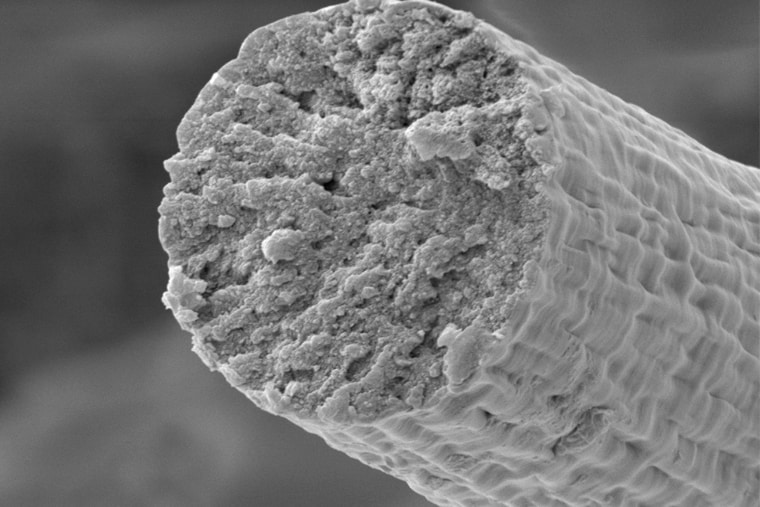
To circumvent some of the issues that typically prevent bacteria from producing large proteins, the research team engineered bacteria to piece together smaller segments of the protein into ultra-high molecular weight polymers around two megadaltons in size — about 50 times the size of an average bacterial protein. They then used a wet-spinning process to convert the proteins into fibers that were around 10 microns in diameter, or a tenth the thickness of human hair.

Working with collaborators Young Shin Jun, professor in the Department of Energy, Environmental & Chemical Engineering, and Sinan Keten, professor in the Department of Mechanical Engineering at Northwestern University, the group then analyzed the structure of these fibers to identify the molecular mechanisms that enable their unique combination of exceptional toughness, strength and damping capacity, or the ability to dissipate mechanical energy as heat.

Aside from fancy clothes or protective armor (again, the fibers are tougher than Kevlar, the material used in bulletproof vests), Sargent pointed out that this material has many potential biomedical applications as well. Because it’s nearly identical to the proteins found in muscle tissue, this synthetic material is presumably biocompatible and could therefore be a great material for sutures, tissue engineering and so on.

Zhang’s research team doesn’t intend to stop with synthetic muscle fiber. The future will likely hold more unique materials enabled by their microbial synthesis strategy. Working with Bowen, Sargent and Zhan, WashU has filed a patent application based on the research.

“The beauty of the system is that it’s really a platform that can be applied anywhere,” Sargent said. “We can take proteins from different natural contexts, then put them into this platform for polymerization and create larger, longer proteins for various material applications with a greater sustainability.”


from ScienceBlog.com https://ift.tt/2WBBKeY

Eating walnuts daily lowered bad cholesterol and may reduce cardiovascular disease risk

Eating walnuts daily lowered bad cholesterol and may reduce cardiovascular disease risk

Eating about ½ cup of walnuts every day for two years modestly lowered levels of low-density lipoprotein (LDL) cholesterol, known as “bad cholesterol,” and reduced the number of total LDL particles and small LDL particles in healthy, older adults, according to new research published today in the American Heart Association’s flagship journal Circulation.

Walnuts are a rich source of omega-3 fatty acids (alpha-linolenic acid), which have been shown to have a beneficial effect on cardiovascular health.

“Prior studies have shown that nuts in general, and walnuts in particular, are associated with lower rates of heart disease and stroke. One of the reasons is that they lower LDL-cholesterol levels, and now we have another reason: they improve the quality of LDL particles,” said study co-author Emilio Ros, M.D., Ph.D., director of the Lipid Clinic at the Endocrinology and Nutrition Service of the Hospital Clínic of Barcelona in Spain. “LDL particles come in various sizes. Research has shown that small, dense LDL particles are more often associated with atherosclerosis, the plaque or fatty deposits that build up in the arteries. Our study goes beyond LDL cholesterol levels to get a complete picture of all of the lipoproteins and the impact of eating walnuts daily on their potential to improve cardiovascular risk.”

In a sub-study of the Walnuts and Healthy Aging study, a large, two-year randomized controlled trial examining whether walnuts contribute to healthy aging, researchers evaluated if regular walnut consumption, regardless of a person’s diet or where they live, has beneficial effects on lipoproteins.

This study was conducted from May 2012 to May 2016 and involved 708 participants between the ages of 63 and 79 (68% women) who were healthy, independent-living adults residing in Barcelona, Spain, and Loma Linda, California.

Participants were randomly divided into two groups: active intervention and control. Those allocated to the intervention group added about a half cup of walnuts to their usual daily diet, while participants in the control group abstained from eating any walnuts. After two years, participants’ cholesterol levels were tested, and the concentration and size of lipoproteins were analyzed by nuclear magnetic resonance spectroscopy. This advanced test enables physicians to more accurately identify lipoprotein features known to relate to the risk of cardiovascular disease.

The two-year study had a 90% retention rate (632 participants completed the study). Complete lipoprotein analyses were available in 628.

Among key findings of all study participants:

  • At 2 years, participants in the walnut group had lower LDL cholesterol levels – by an average of 4.3 mg/dL, and total cholesterol was lowered by an average of 8.5 mg/dL.
  • Daily consumption of walnuts reduced the number of total LDL particles by 4.3% and small LDL particles by 6.1%. These changes in LDL particle concentration and composition are associated with a lower risk of cardiovascular disease.
  • Intermediate Density Lipoprotein (IDL) cholesterol also decreased. It is known that IDL cholesterol is a precursor to LDL and refers to a density between that of low-density and very-low-density lipoproteins. In the last decade, IDL cholesterol has emerged as a relevant lipid cardiovascular risk factor independent of LDL cholesterol.
  • LDL cholesterol changes among the walnut group differed by sex; in men, LDL cholesterol fell by 7.9% and in women by 2.6%.

“While this is not a tremendous decrease in LDL cholesterol, it’s important to note that at the start of the study all our participants were quite healthy, free of major non-communicable diseases. However, as expected in an elderly population, close to 50% of participants were being treated for both high blood pressure and hypercholesterolemia. Thanks in part to statin treatment in 32%, the average cholesterol levels of all the people in our study were normal,” Ros said. “For individuals with high blood cholesterol levels, the LDL cholesterol reduction after a nut-enriched diet may be much greater.”

“Eating a handful of walnuts every day is a simple way to promote cardiovascular health. Many people are worried about unwanted weight gain when they include nuts in their diet,” Ros said. “Our study found that the healthy fats in walnuts did not cause participants to gain weight.”

The major limitation of this investigation is that both participants and researchers knew who was and was not eating walnuts. However, the study did involve two very different populations with distinct diets. “The outcomes were similar in both groups, so we can safely apply the results of this study to other populations,” Ros said. More research is also needed to clarify the different LDL results in men and women.

According to the American Heart Association, walnuts are especially high in omega-3 fatty acids, the same heart-healthy fat found in oily fish. A serving size is a small handful or 1.5 ounces of whole nuts or 2 tablespoons of nut butter.

Co-authors are Sujatha Rajaram, Ph.D.; Montserrat Cofán, D.Pharm., Ph.D.; Aleix Sala-Vila, D.Pharm., Ph.D.; Ella Haddad, R.D., Dr.P.H.; Mercè Serra-Mir, R.D.; Edward Bitok, R.D., Dr.P.H.; Irene Roth, R.D., Ph.D.; Tania M. Freitas-Simoes, R.D.; Amandeep Kaur, M.P.H.; Cinta Valls-Pedret, M.Sc.; Mónica Doménech, M.D., Ph.D.; Keiji Oda, M.P.H.; Dolores Corella, Ph.D.; and Joan Sabaté, M.D., Dr.P.H. Authors’ disclosures are listed in the manuscript.

The study was funded by the California Walnut Commission.


from ScienceBlog.com https://ift.tt/2Wzchmb

Perceptions of supernatural beings reveal feelings about good and bad in humans

Perceptions of supernatural beings reveal feelings about good and bad in humans

What transpires in comedies and cartoons when a character has a devil on one shoulder and an angel on the other is not far off from people’s perceptions of the real world, finds a new study from the University of Waterloo.

Intended to illustrate the characters’ decision-making dilemma with comedic results, the moral character and motives of the supernatural beings are obvious. And people have similar expectations when it comes to individuals they see as good or bad.

The researchers explored expectations about how good and evil individuals respond to requests. The researchers were interested in understanding why movies and folktales often depict the devil and demons as eager to grant accidental requests, whereas angels are not depicted this way.

Their study indicates that people’s beliefs about good and evil characters are influenced by their views of ordinary humans.

“Our results suggest people expect good agents will be sensitive to intentions behind requests whereas they expect evil individuals will be relatively insensitive to these intentions,” said Ori Friedman, developmental psychology professor at Waterloo and lead author of the study. “These findings shape people’s expectations about requests directed both to regular humans and to supernatural agents.

The study shows that people have distinct ideas of how being good or bad influences the decisions of others. People assume that evil individuals are indifferent about anything that doesn’t directly impact their own aims.

These findings support previous research in suggesting that at least some of people’s everyday beliefs about supernatural beings could be based on their views of humans.

“One aspect of seeing someone as evil might be that we expect that person to put less emphasis on the intentions of others, and instead focus more on the outcome of people’s actions,” says Brandon Goulding, a PhD candidate in developmental psychology and co-author of the study. “Whereas we think that a good person will also consider what someone meant to do, and weigh that against what they actually did.”

Researchers investigated people’s expectations about good and evil agents with five experiments. In the study, 2,231 participants read short stories about a protagonist’s request to either a human or supernatural being and rated the likelihood the request would be granted.   When the request was directed to someone good, ratings depended on whether the requester actually understood what they were requesting. Evil individuals were expected to grant requests just as often when they were confused and didn’t reflect the requester’s intentions.

“This research tells us something very interesting about how people view good and evil, which is that people don’t just think that evil agents focus exclusively on causing harm. Instead, people relate evil to being indifference and to not caring about what people want,” Friedman said. “It also suggests that people think moral goodness is about more than producing good outcomes. People also see moral goodness as being connected with caring about what people want and intend.”

The study, Butt-dialing the devil: Evil agents are expected to disregard intentions behind requests, by Goulding, Friedman, Rebecca Dunk and Jonathan Fugelsang appears in the Journal of Experimental Social Psychology.


from ScienceBlog.com https://ift.tt/3kuRAzO

Shining a Light in a Black Box: Algorithms That Show Their Work

Shining a Light in a Black Box: Algorithms That Show Their Work

Our society is awash in data, and people in all fields are clamoring for better ways to use it. How can we use data to better predict which convicted criminals are most likely to commit crimes again … or which hospitalized neurology patients are most likely to have a seizure … or which manholes in New York City are most likely to explode?

Cynthia Rudin, Ph.D., develops computer programs that use machine learning to answer these questions and others. Rudin, who is a professor in the departments of computer science, electrical and computer engineering, and statistics, collaborates with experts in a wide range of fields to generate better solutions to important problems.

“I like using mathematics and algorithms to help make society more efficient,” says Rudin., “And I like to learn about a lot of different things.”

Rudin is pushing the field of artificial intelligence by creating and applying innovative techniques in machine learning that increase its interpretability and usefulness.

“It’s much easier to create a complicated model that a human doesn’t understand than to create a model that a human can understand. But more interpretability leads to more accuracy, because you know what [the program is] doing.”

Cynthia Rudin

In machine learning, a computer program is “trained” on a large set of data to perform a particular task. If the task is to identify dogs, the dataset is a large number of photographs that do and don’t contain dogs. The human operator doesn’t give instructions for how to identify dogs, but does provide feedback on the accuracy of the computer program’s attempts. The computer program becomes more accurate over time as it incorporates the feedback and refines its strategies. If the program in this example is what’s called a “black box” program, it may be successful on the dataset it was trained on, but it won’t share its strategies for recognizing dogs. Is it the ears? The long nose? The collar? The loving look in its eyes? All of the above?

At the moment, most machine learning programs are black boxes. Rudin, however, writes computer programs that are interpretable. In other words, she has the computer program show its work in addition to spitting out a solution.

“It’s much easier to create a complicated model that a human doesn’t understand than to create a model that a human can understand,” she says. “But more interpretability leads to more accuracy of the overall system, because you know what [the program is] doing.”

Black box programs work well enough on problems like identifying dogs or deciding which ads to show consumers on internet browsers, but they aren’t as useful for real-world problems with complicated datasets and high-stakes consequences. When a computer program is guiding life-or-death decisions, experts need to be able to double-check the program’s work to make sure it’s providing reasonable solutions based on sound data. Black boxes make that extremely difficult.

“If you make the model understandable, you can immediately realize if there is something wrong with the model or the dataset it was trained from,” Rudin says. “And it’s really easy to detect whether you’ve made a typographical error [in the input to] an interpretable model.”

Interpretable models also allow the users to evaluate the model and bring their human judgment to bear on its value. For example, a computer program currently used in the criminal justice system to predict a criminal’s likelihood of reoffending has come under fire for promoting decisions that appear to be racist. But because it’s a black box program, it’s difficult for users to evaluate whether that’s true. “Fairness is much easier to assess when you know what the model is doing,” Rudin says.

In her most recent project, Rudin has teamed up with Catherine Brinson, Ph.D., to improve the way new materials are designed. Brinson is the Sharon C. and Harold L. Yoh, III, Distinguished Professor and the Donald Alstadt Chair of the Thomas Lord Department of Mechanical Engineering and Materials Science.

Shining a Light in a Black Box: Algorithms That Show Their Work
Crystal structure representations of materials studied by Rudin and Brinson. Photo creditZhi Chen

Brinson combines polymers and nanoparticles in novel ways to make both nanocomposites and metamaterials, which are materials engineered to behave in unexpected, and potentially very useful, ways. A metamaterial could, for example, stop certain types of mechanical waves from passing through it. A material like this could be an excellent packing material for the Mona Lisa, because the force of an impact or vibrations would not travel through the material. “You can imagine shipping a piece of art surrounded by material that doesn’t just dampen a blow like Styrofoam, but actually makes the mechanical impact in the object go to zero,” Brinson says.

While she can certainly list many such possible applications of her metamaterials, she says, “The most important application could be something unexpected. These materials could enable something that was impossible before.” For that reason, Brinson focuses on understanding the fundamentals of how metamaterials work – which geometries lead to the cessation of elastic waves. And machine learning helps with that.

That’s because changing small details of the geometries or the choice of materials used, or even the scale at which she produces them have surprising and counterintuitive results. “It’s an infinite space of possibility, and you can’t make and test everything or even compute all possibilities,” Brinson says. Machine learning can discover patterns that elude the human brain, highlighting ways to change the recipe to get a desired result.

Rudin explains, “Interpretable models can guide the design of these new materials [by helping you] understand what aspects of materials cause or lead to specific properties.”

In addition to their scientific collaboration, Rudin and Brinson are working together to create a program, funded by the National Science Foundation, to offer training at the intersection of artificial intelligence and materials science for Ph.D. students in engineering, math, computer science, or the physical sciences. The program, called Artificial Intelligence for Understanding and Designing Materials (aiM), welcomed its first group of students in 2021.

Rudin and Brinson both point to Duke’s culture of interdisciplinary collaboration as an important underpinning of their work together.

“I’ve never been anywhere like Duke,” Rudin says. “It’s a climate where people aren’t against each other; they are working for each other and with each other. That’s why I came here.”


from ScienceBlog.com https://ift.tt/3zpJQ8C

Assist. Prof. Dr. Ruchi Sharma Receives the Best Researcher Award

  Assist. Prof. Dr. Ruchi Sharma Receives the Best Researcher Award Recognizing Research Excellence, Academic Dedication, and Scientific Con...