The second day of the Digital Science Global Showcase 2020 was all about collaboration, and even included the surprise launch of Dimensions’ partnership with Google BigQuery!
Intrigued by what you missed, or want to relive it again? No problem!
Download the DS Daily below, and don’t forget that you can still sign up for our Showcase here:
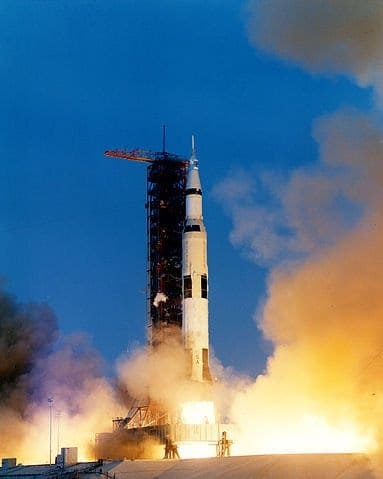
Remember the story of Apollo 13? Remember how the capsule, in effect, in being slingshot around the moon, created a kind of centrifugal force required for it to get back to Earth? Do you not also recall that in making their way back, the astronauts ran into setback after setback and how the they themselves, along with the team at Mission Control though seemingly frantically, but diligently, and the fact that they worked as unit that is what ultimately enabled the Apollo 13 astronauts to return to Earth unharmed, the team’s steadfast refusal in the face of such adversity to let failure be an option that made a terrestrial splashdown possible? You remember that, right?
What the Apollo 13 mission demonstrated, from lift-off to touchdown, is a refusing-to-accept-defeat attitude, along with the intestinal fortitude and wherewithal needed to get the astronauts home mostly all of the mission under the most difficult of circumstances, which shows what is possible in times of crisis. What’s also possible is having clean air for everyone to breathe but only on the condition that’s what we want and do the due diligence necessary to achieve that.
That’s all it takes. Piece of cake: right?
As far as that goes, the air will not be cleansed either by our resting on our laurels or us wishing it so. That we all know and something akin to wishing the corona virus away without any mitigating action taken. Though I can’t say with any certainty, but based on what I understand about the spread of the disease thus far, in all likelihood, that outcome probably ain’t gonna happen.
When you think about it, our battle with dirty air, or maybe more correctly, the way in which we deal with polluted air from now on, could be based on our experience in handling COVID-19. That is to say that if we are ultimately able to get the disease under control and stop its spread, and if eradication of the virus turns out to be as a result of the world working together, that would have implications for the kind of approach taken to nip in the bud the deplorable state of the air, absolutely. That I can say confidently.
Approaching this piecemeal or half-heartedly, won’t do justice. But, a focused, wholehearted effort on the order and to the degree of that summoned by the Apollo 13 mission team, on the other hand, is what it is going to take to be able to declare victory here. That’s the key.
Stopping the deadly corona virus outbreak, meanwhile, that’s first and foremost.
Whether stamping that out or filtering the air of toxic chemicals, impurities, particles and substances, failure has absolutely no place here! That, too, is key.
The ability of certain fish to heal damage to their hearts could lead to new treatments for patients who have suffered heart attacks and may also help to unravel how the lifestyle of our parents and grandparents can affect our own heart health.
The human heart cannot heal itself. After a heart attack – where blood flow to the beating cardiac muscle is interrupted, starving it of oxygen – scar tissue forms in place of any dead cells over the next few weeks.
This stiffer scar tissue interferes with the heart’s ability to pump blood around the body, making cardiac arrest and lethal heart failure more likely in the future.
There are no drugs or treatments that can repair the damage caused by a heart attack and cardiovascular disease is the leading cause of death worldwide, accounting for 17.9 million deaths each year. In Europe alone it claims the lives of four million people annually – almost half of all deaths in the region.
But nature proves, however, that repairing the heart is not impossible. Mice embryos and very young mice can generate new heart muscle cells after an injury, and some fish can even regrow damaged heart muscle as adults.
Researchers hope that by understanding how these animals are able to repair their damaged hearts, it may one day lead to new drug treatments that can be given to patients who have suffered a heart attack. But to do this they also need to unravel exactly why some animals can repair heart muscle while others cannot.
One European research group, led by Professor Mathilda Mommersteeg, a developmental and regenerative scientist at the University of Oxford, UK, has turned to a remarkable species of fish to try solve this heart repair puzzle.
Blind cavefish
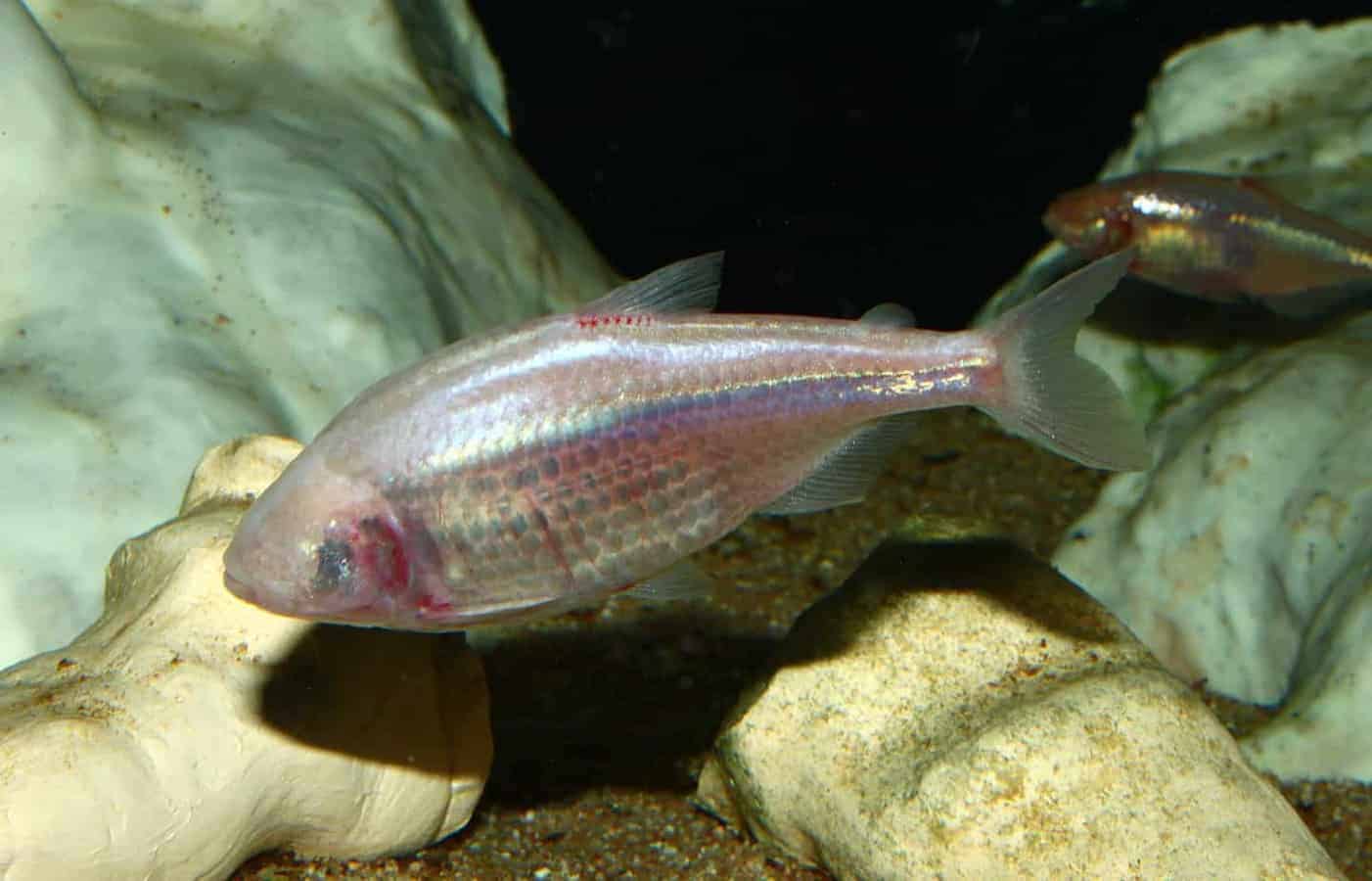
The Mexican tetra (Astyanax mexicanus) is a freshwater fish that takes on two very different forms. The first is a drab, ordinary looking fish found in the rivers and creeks of Mexico and southern Texas. But the same species can also be found in pools deep inside caves. This form of the fish is blind and has a pinkish-white colour. They have also gained more sensitive taste buds and vibration sensing lines.
The blind cavefish are thought to have evolved over one million years ago after some Mexican tetra became trapped in caves and began adapting to the dark conditions there. The cavefish’s metabolism has slowed compared to its relatives on the outside, meaning they can survive scarcity of food and live longer.
But Mommersteeg’s team for the CaveHeart project has discovered another remarkable difference – the tetra’s that live in the outside world can repair damaged heart tissue, but the cavefish cannot.
‘Our project may provide important clues as to why other animals lost the ability to regenerate the heart during evolution,’ said Dr Gennaro Ruggiero, a molecular biologist at the University of Oxford who is part of the team conducting the research. ‘If we understand the mechanism, that can help us develop new ways to promote human heart repair.’
They have already found that both species of fish produce new heart cells at similar levels about a week after a heart injury, but in the cavefish tetra, it coincides with a strong scarring and immune response. This appears to interfere with the new heart cells ability to replace the scar tissue, and Dr Ruggiero is now investigating why this happens.
‘If we understand the mechanism, that can help us develop new ways to promote human heart repair.’
Dr Gennaro Ruggiero, University of Oxford, UK
Dr Ruggiero has also been interbreeding the cave-dwelling fish with those from the surface. Some of the offspring can repair hearts, while others cannot. By comparing the genetic maps of these offspring, it is helping the team see which genes and proteins are most important in allowing the fish to regenerate heart tissue.
‘We found some regions on the genome that are linked directly with the heart regeneration process,’ said Dr Ruggiero. One difference the researchers have noted is that the mix of proteins floating in the space between heart cells is different between fish that can and fish that cannot repair heart muscle.
This ‘extracellular matrix’, as it is known, is secreted by special cells called fibroblasts, involved in wound repair. Dr Ruggiero and his colleagues plan to screen about a thousand compounds to see how they influence fibroblasts and the proteins they secrete.
‘We want to find compounds that are able to induce differences in extracellular matrix proteins, especially those that enhance regeneration, not scarring,’ explained Dr Ruggiero. The aim is to discover a small chemical compound that would effectively wind back the heart repair capabilities of cavefish so that they can regenerate heart tissue in a similar way to their surface-dwelling relatives.
‘Understanding why fish can regenerate may help us promote regeneration in mammals,’ said Professor Nadia Mercader, a developmental biologist at the University of Bern, Switzerland. ‘This is a basic science approach. To try and understand what works in nature.’
She is using zebrafish in laboratory experiments as part of the TransReg project to better understand the origins of heart disease.
She is interested in whether damage to heart tissue in a parent or grandparent might be passed down through the generations as a ‘biological memory’. This process is known as epigenetic inheritance and occurs due to chemical changes of the DNA molecule or surrounding proteins during a creature’s life and act like genetic switches, without changing the DNA code itself. Environmental factors such as stress or food shortages cause shifts in the pattern of these chemical modifications, and so cause different genes to switch on or off.
In some animals, these semi-permanent epigenetic changes can also be passed down generations from parents to their children and have even been seen to last several generations. It has been well studied in simple animals such as the nematode worm Caenorhabditis elegans, but is not so well understood in humans.
‘Imagine you have a grandfather and something happened to him,’ said Prof. Mercader. ‘The grandchildren would then have some information encoded about this.’
Unravelling how genetics, epigenetic inheritance or lifestyle choices contribute to heart problems in people is extremely complicated. There are so many variations during life and people cannot be monitored around the clock.
‘It is a lot easier to understand in a lab, where you can control the environmental variables that can influence results,’ said Prof. Mercader. This is why she is investigating zebrafish with heart injuries and what happens to their progeny.
‘Many of the cells that are present in zebrafish hearts are also present in our own hearts,’ she said. If she and her colleagues find that epigenetic changes related to damage in heart tissue are passed down from parents or grandparents, it could ultimately provide a way of detecting those most at risk of heart problems.
‘This is more about prevention than about therapy,’ explained Prof. Mercader. ‘If there is a memory of an injury then that is important to know.
‘If you know you are more predisposed to have an injury, then you take more care.’
The research in this article was funded by the EU’s European Research Council. If you liked this article, please consider sharing it on social media.
The cloak of wildfire smoke that has descended across huge swaths of Northern California is a visible reminder of air pollution’s health threats. For people at high risk for severe COVID-19 symptoms, the bad air presents a new challenge. For firefighters and others exposed to large amounts of smoke, the long-term effects are uncertain.
Kari Nadeau, director of Stanford’s Sean N. Parker Center for Allergy & Asthma Research, and Mary Prunicki, the center’s director of air pollution and health research, study wildfire smoke’s effects on the heart, lungs and immune system. One of their current projects involves analyzing blood from current and retired firefighters, as well as members of the public, to see how smoke alters the immune system over time and how air purifiers and masks might lessen the impact (read more about their research).
Here, Nadeau and Prunicki discuss health threats, preparedness and ongoing research related to wildfire smoke.
Kari Nadeau
What kind of health effects are you seeing from these fires? How are you studying them?
Nadeau: We are doing a comprehensive collection, via searches in the electronic medical record system of Stanford’s emergency department, of health-emergency data from the past few days compared to the time period prior to the wildfires. We are finding that there are increases in asthma, heart attacks and strokes during this week of wildfires compared to the week prior. People who are over 65 years of age have a higher chance of heart attacks and strokes even after two to three days of bad air quality due to wildfire smoke.
The smoke from wildfires goes through the lungs and the airways and can be absorbed into the blood. There are over 400 toxins associated with wildfire smoke, which have a multitude of bad effects on the body. In the blood, these toxins can activate the immune system and platelets and the lining of blood vessels. When this happens, the inflammation can induce clots which lodge in the heart or the brain vessels and cause heart attacks or strokes, respectively. Asthma can get worse with wildfire smoke because the smoke gets into the lungs and causes irritation and muscle spasms, which lead to wheezing and difficulty breathing.
Any implications of wildfire smoke for long-term organ functioning that would make someone more susceptible to COVID-19?
Prunicki: We know air pollution causes immune changes, and increased levels of long-term exposure to small particulates called PM2.5 is associated with decreased life expectancy. Given that wildfire smoke is 80 percent PM2.5, we expect acute immune dysregulation. Our own research has shown increases in inflammatory markers in teenagers exposed to wildfire smoke. Less is known about long-term impacts of wildfire smoke exposure on health, which is why our work with retired firefighters is so important. Given that areas of elevated air pollution are associated with increased COVID-19 rates, exposure probably renders the body less able to fight off viral infections, such as COVID-19.
Mary Prunicki
Some COVID-19 symptoms, such as headache and shortness of breath, are similar to the symptoms people suffer from poor air quality. How will doctors differentiate between the two in a timely manner without rapid COVID tests?
Nadeau: It will be difficult to distinguish these symptoms without seeing a clinician first. Typically, with a virus, a person can have fatigue and muscle aches and fever, which are not associated with wildfire exposure. The smoke and toxins from wildfire exposure can cause headaches, wheezing, shortness of breath, coughing, heart attacks and strokes. In addition, the two can be differentiated because when the wildfire smoke dissipates, symptoms may improve, whereas for viral infections like COVID, symptoms can worsen over a period of one to two weeks and then improve.
How should vulnerable populations, such as older adults, weigh whether to open windows – if they don’t have air conditioning – and risk respiratory issues, or keep windows closed and risk heat issues?
Nadeau: This is a tough question. Vulnerable populations, like young children, infants, pregnant women and older adults, have worse symptoms after wildfire exposure. If you or someone you know needs to evacuate, it is better to go to a place with air conditioning and filtration, such as cooling stations set up by municipalities. People should contact agencies such as the American Red Cross or municipal offices to see where those might be. I also recommend using an indoor and outdoor monitor and filter for your home and staying indoors to decrease exposure to bad air.
Do cloth masks that many people are wearing as a precaution against COVID-19 offer any protection from wildfire smoke? How should the average person weigh the benefits of an N95 mask, in terms of reducing particulate inhalation, and the need to reserve them for public health workers dealing with COVID-19?
Prunicki: Cloth masks offer very limited protection but are better than nothing. One study used the smoke from a candle to measure filtration and found that cloth masks were about 50 percent effective in filtering very small particles. However, the best solution is to stay indoors if you can. Otherwise, standard N95 masks are in limited supply for health care workers, but an N95 mask with an exhalation valve could be used. These help protect you from the particulate matter in wildfire smoke, but can’t be used in the health care setting because the valve could potentially allow the transmission of virus.
Images (two): Sean N. Parker, Center for Allergy Research at Stanford University
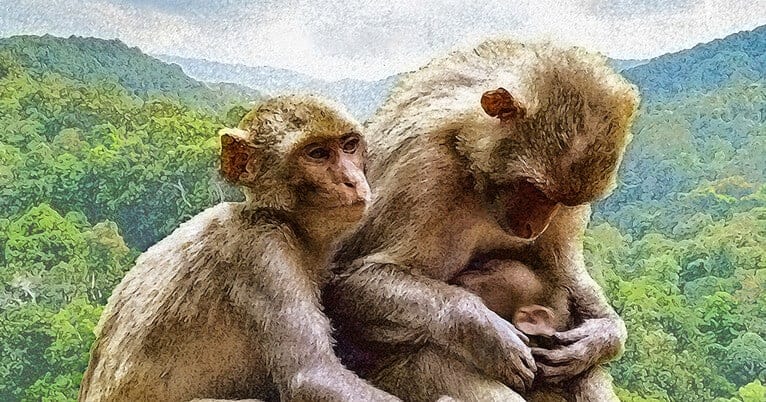
To understand the importance of early-life attachment to mothers and how it affects the likelihood of success across generations, we can learn a lot from monkeys, say scientists.
In a long-term study of rhesus monkeys, Yale researchers have quantified the health and social benefits of secure mother-rearing and attachment. The working paper, published in the National Bureau of Economic Research, suggests that the benefits of early attachment persist for generations.
The study was led by Amanda Dettmer, associate research scientist at Yale, along with economists including Nobel laureate James Heckman from the University of Chicago, and represents a unique collaboration between primatology and economics.
“It’s really novel to show intergenerational effects,” said Dettmer, a primatologist and behavioral neuroscientist. “And it’s a really novel collaboration between two very different fields of study.”
For the study, the scientists observed 650 mother-infant pairs. At birth, monkeys were randomly assigned to be reared by their mothers or reared in a nursery. Those monkeys who were nursery reared had human caregivers for the first 40 days and were then either assigned to a cloth surrogate with daily peer playtime, or housed together with four other monkey peers. After eight months, all monkeys were housed and treated identically. This randomization occurred in subsequent generations as well.
According to Dettmer, rhesus monkeys can reveal important insights for understanding human behavior. They share 93% of their DNA with humans, develop attachment at infancy, and have similar social structures to humans. “They are very valid models for human conditions, but they develop four times faster,” she said. “We can get answers much faster than we can from humans.”
Unlike in studies of humans, in which children cannot be randomly assigned to particular early life experiences, this experimental paradigm allowed researchers to test causality — rather than simply correlation — between early social experiences and later health outcomes. And because the researchers had access to data collected over four decades, they were also able to show how these early-life advantages benefited generations of descendants.
Researchers found that in cases where monkeys were reared by their mothers and descended from generations of monkeys reared by their mothers, they were most likely to have healthier outcomes later in life and to require less veterinary care. These monkeys also scored higher on dominance measures — achieving a higher social ranking as evidenced through easier access to food and sweets and grooming from preferred partners.
“These were the monkeys who got the banana first,” Dettmer said.
Nursery-reared monkeys whose mothers were reared by their mothers did not realize the same benefits. That is, researchers found that the benefits of mother-rearing were only positive for the offspring of mothers who themselves were reared by mothers. “Parenting,” the authors conclude, “is the primary channel of intergenerational transmission of early-life advantage.”
Dettmer noted that monkeys assigned to nurseries were still given “an extremely enriched environment with access to caregivers around the clock” as well as daily playtime and “stimulating cognitive assessments.” But the absence of a mother caregiver had a lasting impact, she said.
Heckman has previously shown that investments in a child’s early years via quality early childhood programs yielded benefits across their lifespan.
The current paper looks at how investments in early care and secure attachments provides benefits that persist across generations. The monkeys who were nursery-reared can be equated with children who are unable to develop secure attachments, said Dettmer, such as might be experienced by those in foster care.
Dettmer’s lab is continuing research, not only into the health and behavioral outcomes of early attachment but also into changes that might be happening at the biological level. “We want to see how early experiences influence DNA methylation and how that, too, helps to explain differences,” she said.
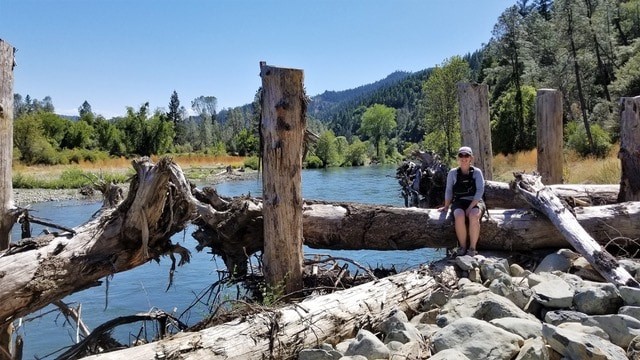
Researchers at MIT have modeled how engineered and natural wood jams change river water levels, enabling an assessment of the trade-offs in flood risk and habitat creation for river restoration projects.
In a recent paper published in Geophysical Research Letters, researchers Elizabeth Follett ’09 PhD ’16, postdoc Isabella Schalko, and Donald and Martha Harleman Professor of Civil and Environmental Engineering Heidi Nepf detail their analysis of 584 experiments measuring the backwater rise induced by model logjams in an experimental flume. Schalko ran these experiments, with the hope of filling gaps of the previously understudied physical processes to better explain just how water flow is impacted by large, densely packed groups of logs and to better inform current and future flood risk as well as river restoration projects.
“We’ve been missing a way to describe the physical mechanisms by which large groups of wood pieces affect the river water level,” says Follett, who is the lead author on the paper and a Royal Academy of Engineering Research Fellow at Cardiff University. “Our work allows researchers to characterize structural properties of wood jams from field measurements, by measuring the river water level up- and downstream of the jam and applying our new model.”
The team hopes that the structural metrics will be useful for a wide range of scientists and engineers. The paper has also had an unintended benefit: bridging gaps between research groups.
“What I like most about the paper is that it brings together two research communities; those who look more at in-stream wood, and those more interested in canopy shear flows,” says Schalko.
The findings could have significant implications for government or non-profit organizations engaging in restoration projects. According to the researchers, there is growing interest all over the world in river restoration projects; up until now, it was understood that adding wood to rivers was good for restoration because wood increases flow heterogeneity by increasing water depth. Despite the growing popularity of wood as a solution, the physical processes have not been studied in depth and are not always accounted for in flood prediction models.
“Flood risk and river restoration projects have attracted recent investments, but up to now it has been difficult to include the effect of wood in flood models to improve the design and assessment of these projects,” says Follett. “This is a first step in the direction of being able to theoretically describe how wood alters the flow conditions in a river.” When joined with existing information, the new data on wood jams should better inform flood risk and river restoration efforts in the future.







.png)