Chandrayaan 2 Moon Landing: Countdown begins for India's historic mission as Chandrayaan-2 will make its most significant move to journey to the moon. As the Vikram Lander will touchdown the lunar surface during the wee hours of Saturday, ISRO will prove its mettle in the space science. But do you know how ISRO created artificial moon surface to test rover, lander?
Notably, the surface of the moon and that of the earth are completely different. So ISRO created an artificial moon surface to test rover and lander.
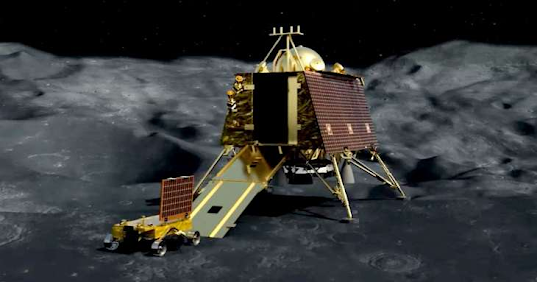
The Indian space agency has done a lot of hard work on the ground so that its moon lander -- Vikram -- can soft-land safely and rover Pragyaan can move around.
The moon's surface is covered with craters, rocks and dust. Its soil is also of different texture as compared to that of earth. The legs of lander and wheels of the rover had to be tested before Chandrayaan 2 launch.
So, the Indian space agency created moonlight environment for testing its rover. Importing lunar soil-like substance from the US was a costly affair. So, ISRO had to look for a local solution as its need was about 60/70 ton of soil.
As many geologists had told ISRO that there were "anorthosite" rocks near Salem in Tamil Nadu that would be similar to features of moon soil or regolith. It is when ISRO finalised to take the "anorthosite" rocks from Sithampoondi and Kunnamalai villages in Tamil Nadu for moon soil.
The Digital Science team is getting ready to head off to San Francisco for the annual Science Foo Camp. This is a remarkable gathering of scientists, thinkers, technologists, creators and communicators, who come together over three days in mid-July.
‘Sci Foo’, as it’s affectionately known, is unlike any other science conference. Hosted by ‘X’ (formerly “Google X”), it is an ‘unconference’ with no fixed agenda, and is co-organized by Google, O’Reilly Media, Digital Science and Nature.
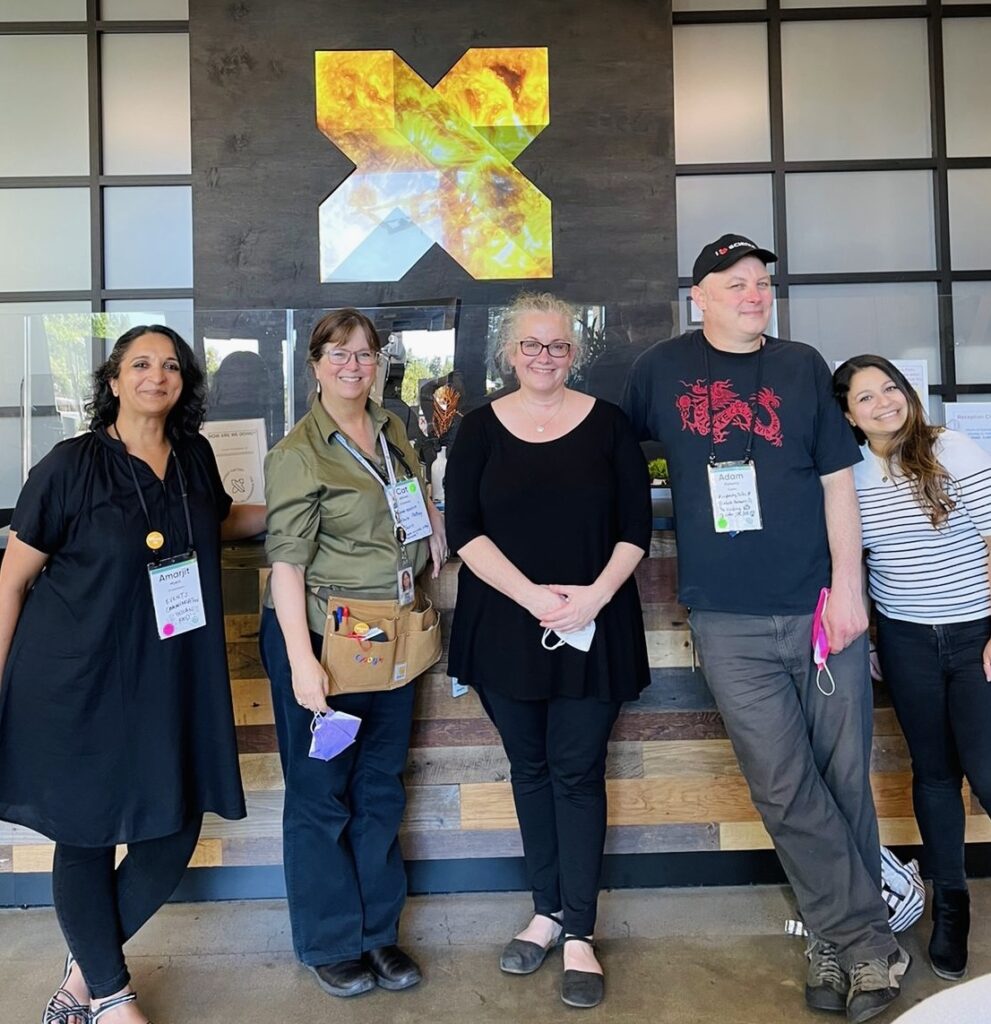
Attendees at Sci Foo 2022, pictured at X (from left): Amarjit Myers, Cat Allman, Marsee Henon, Adam Flaherty and Suze Kundu. Photo: Amarjit Myers.
Since the first event in 2006, Sci Foo has aimed to do things differently – 18 years later it retains that original spirit and continues to attract some of the most prolific players on the world stage. Indeed, the British astrophysicist Lord Martin Rees has called Sci Foo the ‘Woodstock of the Mind’.
Forging an environment of openness and collaboration, attendees are encouraged to connect and share ideas with those around them. The schedule includes the always popular lightning talks but discourages keynotes and corporate overviews – and is dominated by unconference sessions that are proposed and organised by the attendees themselves. This format allows for unparalleled diversity of disciplines and thinking, with a rich seam of discussion, debate and insights running through the event. Conversations are encouraged to continue over mealtimes and into the evening.
As one of the organizers, Digital Science is especially excited for Sci Foo 2023. With around 250 attendees, we have also provided travel support to a number of early-career scientists from South Africa, Ecuador, Brunei and other countries and we are looking forward to the energy they will bring to what promises to be a fantastic Sci Foo.
If you want to know more about Sci Foo 2023 including who’s there and what’s trending, please look out for online chat about the event via the official hashtag #SciFoo and discussion on Twitter and LinkedIn from the Digital Science team.
About the Author
Amarjit Myers is Head of Strategic Events at Digital Science.
Today sees the launch of Threads, the new social media platform from Facebook and Instagram parent company Meta. The news has been greeted with much anticipation – and not a little humour – from users and the latest clash between Twitter’s Elon Musk and Threads’ Mark Zuckerberg. But will the new channel pack a punch for academics who might use it in their research? Social media and research communications expert Andy Tattersall provides the tale of the tape.
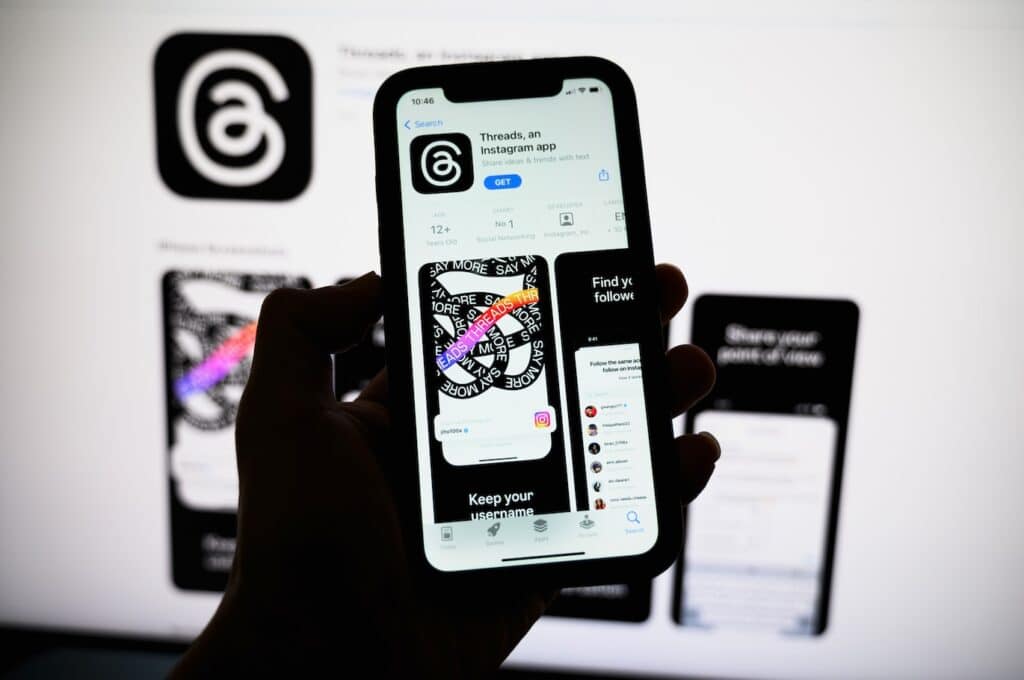
Meta’s new Threads social media app. Stock image.
How will Threads square up to Twitter in the social media arena? Do academics need another platform to disseminate their research?
When Facebook’s parent company Meta announced it was launching its own microblogging rival to Twitter, it felt inevitable but also sent a shudder down the spine of many people living in my part of the world. Whilst Threads might seem like a suitable, if not cliched name for the platform, given Twitter’s use of threaded updates, it also conjures up dystopian images. Firstly as those of a certain age will remember, Threads was a British-Australian BBC produced TV film that depicted a fictional nuclear war, at a time when this felt like a real possibility. It was set in Sheffield, near to where I grew up and currently work. Whilst the newest social media kid on the block is unlikely to result in that kind of devastation, it does appear to be spurred on by an increasingly public spat between the two tech giants Elon Musk and Mark Zuckerberg. And at first glance on launch day, Threads appears remarkably similar to its established rival in terms of functionality, although there is no Direct Message function. In addition, it does not have a desktop version, which for some might seem progressive, but for professionals it implies the whole thing has been rushed.
What lies ahead for Threads?
The latest addition to the researcher’s communications toolkit is unlikely to gain large numbers of followers from academia overnight. When Musk took over Twitter last year many from the academic community saw it as the final straw due to the platform’s increasingly toxic environment. Mastodon was one of the winners from the exodus with an estimated 200,000 new users in those first few days. The number jumped to over two million new subscribers in the following weeks. I was one of them and like many reminisced as Mastodon felt very much like Twitter a decade earlier, fresher, friendlier and more focused. Yet it did not have the critical mass due to the siloed nature of Mastodon’s servers, known as Instances. Despite the Twitter backlash it was much harder for organisations to make the switch and leave behind carefully constructed audiences. Also, Twitter was widely acknowledged as the number one communications tool for academics, largely due to its ease of use (it is easy to use, harder to use it well), but also because the institutions, media, funders and public were all on there. The initial weeks after Musk’s takeover I found myself juggling both platforms, initially using cross-posting tools until Musk intervened to turn off access to helpful independent platforms that allowed that kind of functionality. Twitter’s changes in policy and direction also led me to use LinkedIn a bit more, where I have seen increased activity across my network, whilst also endeavouring to engage in specialist groups more.
Where Threads might be different
Twitter is a tool in isolation, it has no associated social media platforms to lean on to for leverage. Threads is different, in that it will rely heavily on its social media siblings Facebook and Instagram to help with the launch. Their combined user base far outstrips that of Twitter, the question will be whether fans of those two platforms will adopt it and how well will they work as a suite of tools. For it to be a useful academic tool it needs the public, the organisations, publishers, funders and the public on board. Where it is likely to be different from Twitter is how it is openly controlled by the owners. Twitter is seen by many as Musk’s plaything which he uses to flirt with conspiracy and controversy. Whilst Facebook, also collectively guilty of various internet misdemeanours, does not have a large personality publicly shaping the platform on the fly. Having a major tech company behind you is no guarantee that your new platform will take off. One only has to look at Google’s various attempts and subsequent failures with their forays into social media. On a personal level, as someone who had given up Instagram, it was annoying that I had to revive my Instagram credentials to sign up for a Threads account. This in itself may be a major barrier to many new users, especially as you are stuck using your Instagram account name by default. This is problematic if you have a personal identity (where you use a fictitious name) and want your academic Threads profile to have your real name. As an aside, it could mean ultimately Instagram gains millions of new users as a by-product, whether they engage is another thing. Whilst its launch has been delayed in the EU, which hardly helps connecting academics together.
What does this mean for academia?
For those academics communicating their research it means another platform to consider. This in itself is problematic, as with too much choice the easiest option is to just ignore them all or stick with what you know. Communicating one’s research is not only a good thing to do, it is increasingly regarded as an important part of the research lifecycle. It can help increase citations, form collaborations, generate impact and project your work to those who may not be aware of it but find it beneficial. The demands on academics’ time and attention means there is little or no room to explore new platforms. Not only are there a plethora of general and specialist social media platforms, but there are also other mediums to consider. Blogging, podcasts, videos, animations and discussion forums provide valuable ways to reach out to different audiences. Academics do not have the time to critically appraise and learn this growing suite of technologies, which is something I try to do, which is far from easy. Hence why so many researchers and aligned professionals either pay to learn about which tools to use properly, or outsource the work altogether to external consultants.
Facebook is the number one social media platform but one that the academic community has never truly taken advantage of. To a large extent, this is a shame as it is global, has a decent demographic spread between young and middle-aged adults, and has good functionality, especially in relation to groups and pages. It is used by academics and groups, in particular for reaching groups and communities or by targeted adverts. However, on an individual level it has struggled to strike a balance between professional and personal identities. Twitter is much easier to navigate between multiple accounts and networks. So if academics can look beyond that and see Threads as a whole new platform it may be useful. No doubt whatever happens, it will highlight even more tensions between Musk and Zuckerberg, how much of it is real or for show, nobody knows. Nor can anyone predict what Musk will do as a result, some have long predicted Twitter’s demise and there is a possibility that one of the contenders could knock the other one out, in the ring or on the web.
Andy Tattersall is an Information Specialist at The School of Health and Related Research (ScHARR) and writes, teaches and gives talks about digital academia, technology, scholarly communications, open research, web and information science, apps, altmetrics, and social media. In particular, their applications for research, teaching, learning, knowledge management and collaboration. Andy received a Senate Award from The University of Sheffield for his pioneering work on MOOCs in 2013 and is a Senior Fellow of the Higher Education Academy. He is also Chair for the Chartered Institute of Library and Information Professionals – Multi Media and Information Technology Committee. Andy was listed as one of Jisc’s Top Ten Social Media Superstars for 2017 in Higher Education. He has edited a book on altmetrics for Facet Publishing which is aimed at researchers and librarians.
For the second consecutive year, Google has not featured a doodle to commemorate International Yoga Day 2023, leaving many yoga enthusiasts and internet users surprised. The absence of a dedicated doodle has sparked speculation and discussion among online users.
Google, known for its creative and interactive doodles that celebrate various occasions and events, has traditionally featured International Yoga Day in the past. The decision to skip the yoga-themed doodle for two consecutive years has raised questions among users.
Taking to Twitter, some users expressed disappointment over the absence of Google Doodle on International Yoga Day, a username Anand Prasad wrote, “It's International Yoga Day today but Google Doodle (at least in India, not sure elsewhere) is not promoting that."
However, the researchers point out that drug development from a native toxin of snake venom is tedious. To overcome this problem, Mukherjee and his collaborators developed two novel custom peptides (commercially produced peptides for use in biomedical laboratories) — TNP and HNP, inspired by snake venom neurotrophin, that regulate the development, maintenance, and function of vertebrate nervous systems. These peptides show selective binding to human TrkA receptor of nerve cells and, hence, can improve the selectivity and specificity of drug molecules toward the receptor, thereby enhancing the therapeutic potency of those drug molecules. Mukherjee emphasises that the low molecular weight, structural stability, small size, and target sensitivity of the peptides make them powerful tools for conquering the limitations of using endogenous neurotrophins as therapeutic agents. This drug-like peptide discovered by the group can potentially reduce the progression of neurodegenerative diseases through an entirely new strategy. The treatment would be most effective for people with fewer symptoms earlier during the onset of the disease. Bacteria-busting water Researchers from IISc have demonstrated the generation of plasma-activated water containing reactive oxygen and nitrogen species such as hydrogen peroxide, nitrogen dioxide and nitrate in high strengths. This high-strength plasma-activated water (hs-PAW) was found capable of inactivating even hyper-virulent multidrug-resistant pathogens. The study, led by Lakshminarayana N Rao and Dipshikha Chakravortty, also shows that plasma-activated water is neutral, making it suitable for biomedical applications, says IISc’s in-house newsletter Kernel. The team found that the reactive species in hs-PAW disintegrates the bacteria’s outer cell membrane by perforation, arresting the metabolic activity, eventually inactivating or killing the bacteria. The team also found that the hs-PAW could retain its bactericidal activity even after 15 days. They suggest that hs-PAW can be used in several medical applications, such as wound healing, apart from tackling hard-to-treat multidrug-resistant pathogens. Anemia mukht Bharat The Central Salt and Marine Chemicals Research Institute in Bhavnagar has developed a ‘Double Fortified Salt’ using “an innovative new cost-effective fortified food product”. Using this salt helps in delivering small but crucial amounts of iodine and iron in our diet. This helps in improving mental capacity, maternal and infant survival and human productivity with an endeavor of “Anaemia mukht Bharat”, says CSMCRI. Both iron (Fe3+) and iodine are very stable in this salt. “The additional nutrition that one gets out of this salt is magnesium, an important nutrient that helps in preventing diabetes mellitus,” says CSMCRI website.
The United Nations’ Sustainable Development Goals have become a byword for the key challenges our world faces. But are developing countries facing an additional challenge, by not being recognized equally for the impact their research is having? Simon Linacre looks at a new white paper that shows more can be done to raise up funding and research recognition for the developing world.
When the UN adopted the SDGs in 2015 to focus attention on the major challenges facing the world, it did so seeking to recognise all 193 signatory countries equally. It has always been apparent that some of the worst problems facing humanity are felt much more keenly in developing countries, however the UN’s 2030 Agenda for Sustainable Development was an opportunity to right the wrongs of the past and even out inequalities.
However, there has been a nagging doubt, to paraphrase George Orwell, that ‘all countries are equal, but some countries are more equal than others’. This fear has been realized in a landmark white paper by Times Higher Education(THE),Prince Sultan University and Digital Science, titled ‘Research in the Context of the United Nations Sustainable Development Goals in the Developed and Developing World: Evidence From the Past 15 Years’ and available on the website of the 2023 Global Sustainable Development Congress where it was released last week.
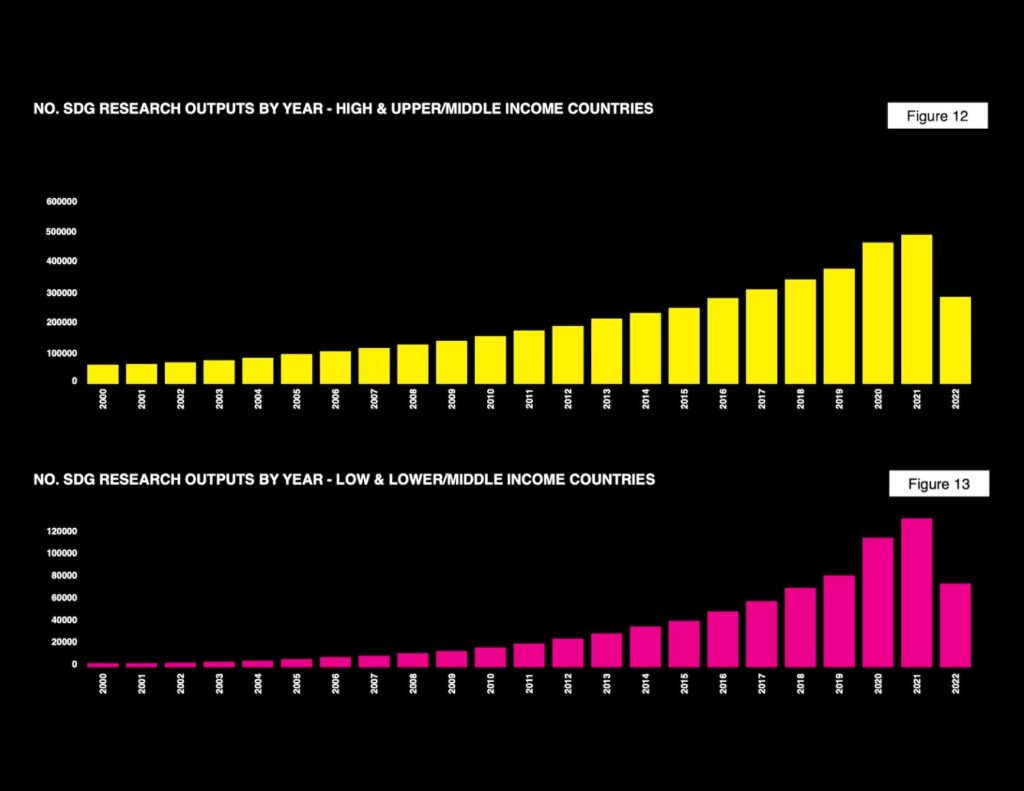
Figures 12 and 13 from the white paper. SDGs research outputs per year, organized by country income. Source: Dimensions.
The white paper is the most comprehensive of its kind to date and calls for greater equity for developing nations within the global research ecosystem, especially as those countries are impacted most by the issues the SDGs focus on.
The white paper was commissioned by THE and utilizes data from Dimensions to uncover significant gaps in research funding, collaboration and assessment between developed and developing countries. Lower income countries struggle to gain recognition for their contributions towards the SDGs. The authors wanted to level the playing field with a series of recommendations, including:
Targeted interventions to support lower-income countries, promote research infrastructure, and provide funding opportunities to bolster their research capacities and collaborations
Continued use of THE Impact Rankings to help address global inequalities and promote strong SDG partnerships between regions
Use of comprehensive and (if needed) bespoke metrics that capture the multidimensional aspects of research impact aligned with the SDGs, to provide valuable insights and guide policy-making and funding decisions
Incentives at local and international levels to accelerate SDG research and research collaboration between high-income and lower-income countries, to help uplift scholars from countries that suffer from structural, historical and contemporary imbalances of power in the global research ecosystem.
When reviewing the report, it is clear from the analysis that there is a substantial gap between higher and lower income nations when it comes to research funding and recognition. Perhaps most importantly, this gap has been closing only slowly over the past 15 years, not quickly as one might hope and expect.
The authors – Professor Mohammad Nurunnabi (Prince Sultan University), Dr Sanjida Haque (Prince Sultan University), Ms Ann Campbell (Digital Science), Dr Juergen Wastl (Digital Science), Dr Ishan Cader (Times Higher Education) – conclude by seeking to reinforce the urgent calls to action by policymakers, both regionally and globally. They say there is a clear need to reflect the quality and impact of research within less developed regions and implement strategies that not only improve the research ecosystem, but that utilize the global influence of university impact rankings. For everyone’s sake, let’s hope the game can be changed in favor of those who have been at a disadvantage since the first whistle.
“Research in the Context of the United Nations Sustainable Development Goals in the Developed and Developing World: Evidence From the Past 15 Years” is available on the website of the 2023 Global Sustainable Development Congress.
Simon Linacre
About the Author
Simon Linacre, Head of Content, Brand & Press | Digital Science
Simon has 20 years’ experience in scholarly communications. He has lectured and published on the topics of bibliometrics, publication ethics and research impact, and has recently authored a book on predatory publishing. Simon is also a COPE Trustee and ALPSP tutor, and holds Masters degrees in Philosophy and International Business.
 The moon's surface is covered with craters, rocks and dust. Its soil is also of different texture as compared to that of earth. The legs of lander and wheels of the rover had to be tested before Chandrayaan 2 launch.



.png)