Monday, March 1, 2021

Q&A: Climate monitoring, pandemic insight, decomposition – what insects do for us

Q&A: Climate monitoring, pandemic insight, decomposition – what insects do for us

Insects are vital to the health of our planet but they can also reveal a lot about climate change and help us fight future vector-borne disease outbreaks, says Alexey Solodovnikov, an associate professor at the University of Copenhagen, Denmark, who runs the rove beetle-dedicated Solodovnikov Lab and is a curator at the Natural History Museum of Denmark. 

Dr Solodovnikov tells us how exploring bug biodiversity through systematic entomology – the evolutionary classification of insects – is critical for humans to have a less biased view of what he calls our ‘planet of insects’.

A study last year showed a 25% drop in insect numbers, others have suggested insects could disappear within a century. Are you concerned?

Generally, I’m more worried about people than insects because I think insects will survive. But people are destroying our ecosystems. So this is more problematic for us.

The studies about insect decline and the PR part of that, generally, is good because it attracts attention to insects, it alarms about nature protection.

But when experts look in more detail at how this was measured, that may not be a long-term decline. It might be a more local decline. It’s more complex. We cannot simplify the pattern (and) say, ‘Now the trend is in 100 years all insects disappear’.

What concerns you the most?

We barely have a part of the planet which is intact. Many species, even though they are not getting extinct entirely, they decline or disappear from certain local ecosystems.

The major driving force for insect species extinction is habitat destruction. So big deforestation, big landscape alterations may basically ruin the entire range of certain species. If the mountain range somewhere in the tropical forest gets deforested, this could be a home for a few locally endemic species (so) all these species will disappear.

Mammals or birds, when they go extinct, that is better noticed. But bigger animals often have bigger distribution ranges. Insects have very small micro habitats – (it can be) tens of square kilometres and that’s it.

Why does loss of insects matter?

Most insects, when they are not flying around, are hidden in cryptic habitats like soil surface, leaf litter, and forest canopies. So we don’t see them. But because there are so many species and there are such big numbers, they are extremely important in the biosphere because they participate in the food chains, they decompose organic matter (as many dung beetles do), they pollinate plants, to mention just a few.

As a systematic entomologist, what do you do?

We are the first biologists to meet an unknown diversity of insects and we taxonomically describe species and classify them into some systematic order that allows other scientists to navigate this diversity.

(We study) phylogeny – or the evolutionary tree – because a good modern biological classification should be based on the tree of life, then it informs us about many things.

Why is this important?

First of all, it’s part of basic science. And if we know more about bigger animals or mammals like us (than we know about insects), then we have a biased view of nature or a biased view of the world.

That’s why we need to shift our bias to something less notable for us but more notable for nature itself and balance the scientific view of the world.

To give you a very simple example, if we have a new (vector-borne) disease or a new vector for a disease, we run to systematic entomology. We run to the library and try to find a book about this group of insects and try to identify the species that caused the problem.

But this book about mosquitoes (for example) was written not because we have a vector-borne disease, but because somebody was interested in mosquito diversity and studied them for the sake of general knowledge.

So it could be very helpful in a future pandemic.

Exactly. Imagine a future disease that is transmitted by insects, some new species that we didn’t know yet as a transmitter. Then we need basic knowledge to quickly identify the species and find a solution, because if we spend time to explore the group, to explore diversity and biology, it would cost us extra years.

Entomologists have described more than 1 million insect species and there could be as many as 10 million. Why haven’t we classified more?

There are many factors. And one of them is there are so many insects. It’s a huge task.

We need a lot more resources. There are not enough resources or enough societal interest yet towards systematic entomology.

On the other hand, there could be better approaches. If we use more genomic technologies, digitalisation approaches for collections, we could speed this up. But current experiments also show that these advanced technological approaches also require resources and time.

‘You can trace the evolution of the continental drift, the evolution of the climate, by tracing the evolution of rove beetles.’

Dr Alexey Solodovnikov, University of Copenhagen, Denmark

You helped train new researchers in this area through the BIG4 project, which ended in 2018. How will that help?

There are so many insects and they are so important, especially these big four groups (beetles; bees, ants and wasps; flies and mosquitoes; butterflies and moths). And we have so few experts. The main goal was to train a cohort of early stage researchers that would be experts in modern approaches.

We had a network of projects. We improved phylogenetic knowledge for several groups. There was one study that used machine learning, computer vision, for species identification. Another project developed protocols for how to extract ancient DNA (from museum specimens) and use it in an effective way. Genomics has a lot of power in our research.

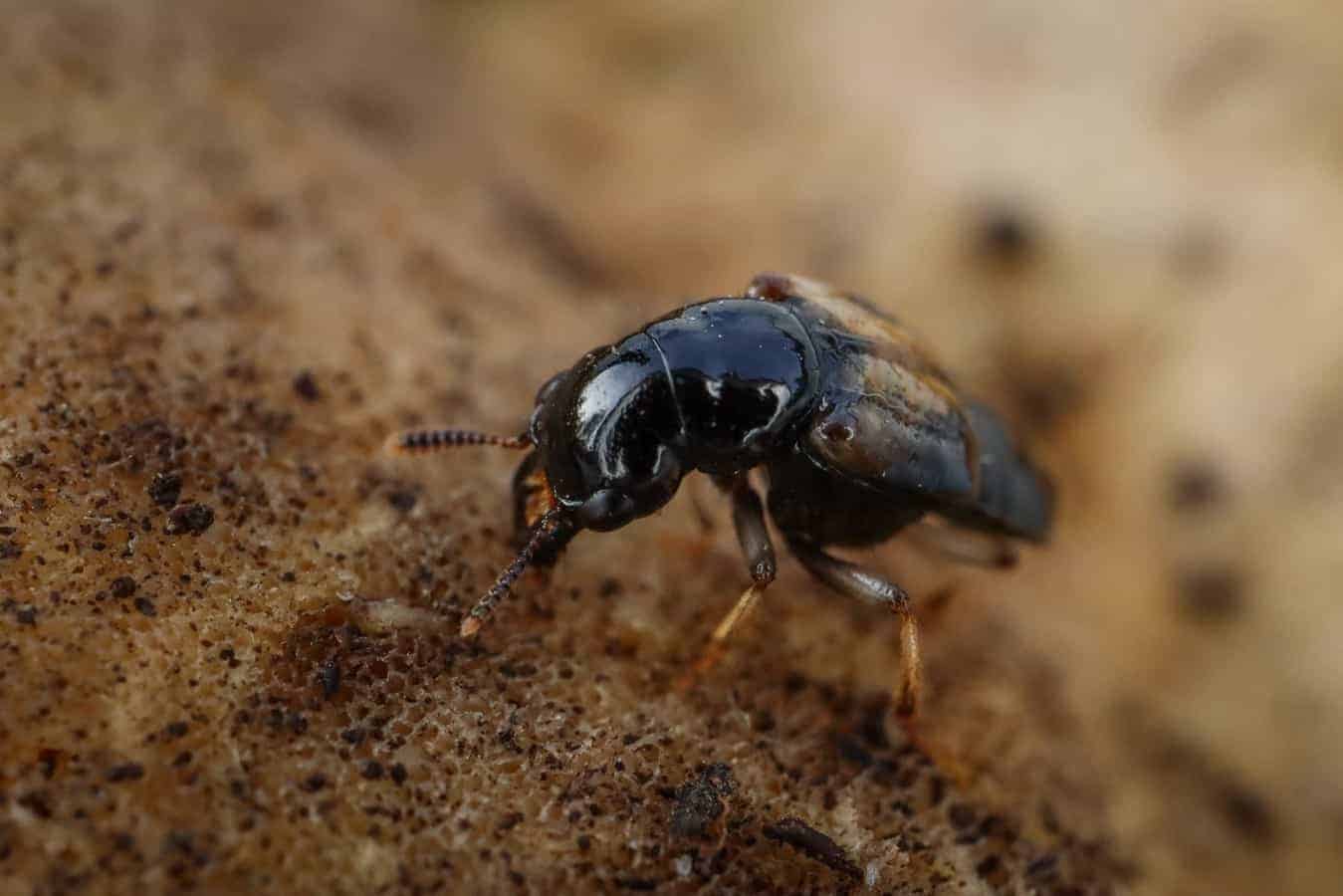
You focus on rove beetles, of which there are some 47,000 described species and are one of the largest families of living organisms. Why, personally, are you interested in them?

They are not the most beautiful or the most spectacular kind of beetles. It’s not an ‘Oh wow!’ effect or something.

I really love the challenges that they give me as a scientist – unresolved questions and a lot of exciting puzzles or interesting patterns that I discover studying them.

What key questions are you trying to answer through rove beetles?

Well, first of all, they are very ancient – one of the oldest lineages of beetles. We know that from the fossil records from hundreds of millions years ago. Many (insect) groups went extinct along the way. But rove beetles, due to their perfect adaptations, survived. And they’re still a pretty dominant, evolutionary successful group. So what makes them so successful?

Evolutionary lineage originates somewhere and then it evolves and expands. Because there are so many species, they’re in so many habitats. They are in every patch of ground that we could grab. If extra-terrestrials come to Earth on their spaceship, land and have one hour to sample whatever they see on Earth, there is a very high chance that they grab a couple of rove beetles.

You can trace the evolution of the continental drift, the evolution of the climate, by tracing the evolution of rove beetles. Many rove beetles are preserved in Baltic amber and are good proxies for reconstructing past climates.

The rove beetles have amazing biologies. Amblyopinini from South America evolved mutualistic relationships with (small- and medium-sized placental) mammals. They hunt the parasites in mammals’ skin and mammals evolved tolerance toward them. They are not grooming them out. It’s a very rare phenomenon. Usually they (the relationships) are antagonistic.

Could you tell us more about rove beetles as past climate proxies?

Reconstructing past climates generally – it’s a big scientific problem.

Different species of beetles are specific to certain temperatures and moisture (in habitats such as the steppe, deserts, tropical or temperate forests). So you can reconstruct the environment based on the species composition, because every species has certain requirements for temperature, humidity, duration of different seasons.

In the same way as we do for modern fauna, we could reconstruct the conditions of the past. For instance, Baltic amber is formed in Europe. In it, we find species that are tropical or subtropical. These species do not occur in Europe. The climate has changed significantly. So we find in Baltic amber from the Eocene (56 million to 33.9 million years ago), species composition that is analogous now to the subtropics and tropics of southeastern Asia.

Can studying these beetles also help address climate change today?

It’s probably more difficult. What we can do by studying rove beetles and other insects is monitor change. We can detect change at the fine scale because rove beetles and insects react quickly to changing conditions – a certain species would diminish in number or retreat from a certain territory.

If we have this good monitoring system, on a longer term comparing that data to climatic data, we could infer, ‘Ok, if we notice some change in insects, that will mean certain change in the climate.’ So we can project these trends and kind of see what is ahead of us.

Is monitoring something that you are working on?

Not currently. We (entomologists at the University of Copenhagen) are moving towards that. That’s what we are actually trying to implement here in Denmark. Right now we are talking with the Aage V Jensen foundation to launch a long-term monitoring program.

How can systematic entomology help us protect insect biodiversity?

It provides the basic knowledge framework. It doesn’t give us immediate solutions for protecting some species, but it makes the search for such solutions possible.

The interview has been edited for length and clarity.

The research in this article was funded by the EU.

Originally published on Horizon Magazine.


from ScienceBlog.com https://ift.tt/3sIUqE9

Friday, February 26, 2021

How good is BRT at removing cars from city streets?

How good is BRT at removing cars from city streets?

So often, the question comes up in cities looking to make improvements in their public transit service offerings and systems regarding what type of service and system is best suited to meet the majority or mass-public need. Services and systems suggested often run the gamut, after which a thorough review and narrowing of selections are made, public input typically being an integral part of the discussion process; after all, the populace is the transit-served here.

Harkening back to the early days when cities were considering upgrading beginning circa 1920, the transportation choices made were comparatively easy. Back then, cars were making serious inroads as buying an automobile became within the realm of possibility for more and more people over time. As the electric street and interurban railway systems more and more fell into disfavor with the general riding public and car travel became more and more preferable, one by one these electrified passenger railways began to close. But recognizing that transit service still needed to be provided, it was buses more often than not that served in their predecessor’s place.

So, fast forward to the mid-to-late ‘60s and early ‘70s.

In the San Francisco Bay Area there was a transit revolution afoot. All but a couple of Bay Area counties formed a coalition whose aim was to build a modern railway rapid transit system that would offer an alternative to congested roadway travel.

Known as the Bay Area Rapid Transit District or BART, the network proved invaluable in the wake of the Loma Prieta earthquake of Oct. 17, 1989. While much of the region’s highway infrastructure was rendered unusable, BART came through the ordeal practically unaffected.

Incidentally if not interestingly, the city of San Francisco itself kept its existing trolley system intact. There are a number of North American cities in fact that did likewise. Among them are Boston, Cleveland, Newark, New Orleans, Philadelphia, Pittsburgh and Toronto, Ontario, Canada.

Enter BRT

So, why BRT or bus rapid transit and why not just regular workaday transit buses?

BRT systems, if designed, built and operated at an optimum level, can do what conventional bus systems cannot: They do what regular operations do but do more expeditiously. This can be accomplished through the use exclusive rights-of-way, faster passenger boarding and discharging, fewer stops, route optimization as well as traffic signal prioritization.

According to city planner Jeff Speck in his 2012 book: “Walkable City: How Downtown Can Save America, One Step at a Time,” Boulder, Colorado’s bus operation serves this Rocky Mountain community quite well.

Since the mid-90s, growing considerably in both employment opportunities and size, the city at the time of the “Walkable City” book release, quite remarkably, had not experienced any rise in vehicle travel miles and the bus system by and large is to be credited.

Effective marketing has played a significant role apparently in attracting riders, the underlying premise or principle here being clean air. Along these lines, if each bus eliminated as many as 50 individual automobile moves, that’s 50 autos that are not occupying roads, and by virtue of this, the exhaust from such which would otherwise be entering the surrounding air, isn’t. And if buses are zero-emissions themselves, then even better.

Indications are though that Boulder’s bus system is an exception to the rule. Cleveland, Ohio’s and Ottawa, Ontario, Canada’s BRTs are examples of others.

So, opting to install BRT in place of conventional bus could prove iffy. The idea here in doing so is to not only hold onto existing users, but also to attract new ones.

Like the streetcar, or its more modern cousin, light rail transit, can be an element of what’s known as TOD (transit-oriented development), BRT can as well be a component of such. Along-the-route business and residential can indeed feed riders to the serving entity. People living in transit-proximate apartments, for example, can take advantage of the connected transit-alternative offering.

Whether bus or train, each can serve faithfully serve in that capacity. People just need to get on board.


from ScienceBlog.com https://ift.tt/3pYiH72

‘Never seen anything as effective’ – the not-so-new-drug repurposed for a rare disease

The earliest signs of alkaptonuria are often subtle and harmless, like a diaper stained black. However, over the years, this rare genetic disease can lead to a lifetime of surgery. Now, after 20 years of research, a not-so-new drug can offer relief for thousands of patients worldwide.

The disease, also known as AKU, prevents the breakdown of a chemical called homogentisic acid in the body. The kidneys help to clear this chemical and get rid of it through urine. When exposed to the air, it turns black and this is how parents usually spot the first sign of the condition in children.

However, some of the homogentisic acid remains in the body and builds up slowly over time. This starts to cause damage in the areas that it accumulates, such as the cartilage and heart valves.

‘Similar symptoms appear in most patients, with spinal problems in their 20s or 30s, then severe joint deterioration during their 30s, 40s and 50s, and then heart problems in their 50s and later,’ said Nick Sireau, CEO of the AKU Society in the UK.

Sireau has two sons with AKU, which prompted his interest in the condition. AKU affects about one in a million people, who each have two defective copies of a gene called HGD. That means that Sireau’s sons inherited defective HGD genes from him and their mother, both of whom are genetic carriers with no symptoms.

‘We were quite fortunate because they were diagnosed at birth. Our eldest is 20 years old and our other son is 17,’ said Sireau. ‘The only symptoms they’ve really had is the urine going red-black.

‘For us, the parents, it has had obviously much more of an impact, because I’ve been now working on this for 17 years. It’s become my job.’

‘Patients are delighted. People feel a reduction in pain, and they feel that the evolution of their AKU is slowing.’

Nick Sireau, CEO, AKU Society

Tantalising

The AKU Society has helped to fund research into the condition, as there were no treatments available. Many patients need joint and heart valve replacement surgery as the symptoms progress. However, the promise of a new treatment has remained tantalisingly on the horizon for almost two decades, says Sireau.

‘When my first son was diagnosed, we went to Great Ormond Street (a children’s hospital in London, UK) and had a meeting with a consultant who said there was really not much we could do, but there was the potential of a treatment in the next 10 years or so but that it was very, very early stage. That’s when we heard about nitisinone and that the National Institutes of Health in America was starting to look at it for AKU.’

Nitisinone is a drug already in use for another disease called HT-1 and scientists thought it could also help with AKU. Unfortunately, the NIH trial run was inconclusive, so US Food and Drug Administration did not approve the drug for AKU.

‘If you’ve got a failed trial, it’s difficult to find a backer for a further clinical trial in an ultra-rare disease because there’s not much money going around,’ said Professor Lakshminarayan Ranganath, an AKU specialist at Royal Liverpool University Hospital in the UK.

However, Prof. Ranganath was confident that the drug would work; it just needed to be tested more rigorously. The NIH trial had only tried the drug in 20 people with a low dose and had based the results on changes in hip flexibility, which he says ‘we thought was naïve and inappropriate for a complex multi-system disease, which is very slowly progressive.’

Collaborating with AKU experts from several European countries, Prof. Ranganath coordinated the DevelopAKUre study, which included three trials to test nitisinone across different doses and ages.

The trials finished in January 2019 and showed that the drug could reduce the homogentisic acid in urine and the body by 99%. ‘I’ve never seen anything in medicine as effective as nitisinone,’ said Prof. Ranganath.

Based on the trial results, the European Medicines Agency (EMA) approved nitisinone in September 2020.

‘Patients are delighted,’ said Sireau. ‘People feel a reduction in pain, and they feel that the evolution of their AKU is slowing. Patients are really saying it makes a big difference.’

Repurposing

Using existing drugs for different conditions is known as repurposing and it offers a lot of promise for treating rare diseases. As they have already been thoroughly tested for safety and side effects, these drugs can be fast-tracked through the early stages of development. However, the expensive large clinical trials needed to show their effectiveness remains the biggest challenge.

‘There are problems regarding the incentives with companies that produce these drugs, especially when these drugs are already out of patent,’ said Dr Lucia Monaco, chair of the International Rare Diseases Research Consortium. ‘There might be very limited interest in doing (a clinical trial) for a drug that perhaps has already produced a return on investment, and there is no need to invest more.’

The DevelopAKUre trial partnered with SOBI, the pharmaceutical company that held the patent for nitisinone. SOBI’s right to exclusively market nitisinone expired in 2017, partway through the trial, which meant that any company could manufacture a generic version.

‘If you put yourself in their shoes, it’s very unattractive to develop a drug knowing that you’re not going to reap the direct benefits,’ said Prof. Ranganath.

However, with the help of the AKU Society, SOBI was persuaded to provide the drug for free for the trial. Perhaps more importantly, they also offered their expertise in getting the drug approved by the EMA.

‘We did not have in-house scientific and the technical expertise to submit an EMA application,’ said Prof. Ranganath. ‘I think the role of a pharmaceutical company is quite important here and we were just lucky that way.’

‘This is where you get this divide between the competencies of an academic setting and the competencies of a company,’ said Dr Monaco.

The International Rare Diseases Research Consortium has set a target of getting 1,000 new treatments for rare diseases approved by 2027. Dr Monaco says that repurposing will play an important role in hitting that target, despite the challenges to overcome with collaboration between academia and industry.

‘I think the AKU story is exemplar. I think that the role of patients and patient families is crucial, because they have the strongest drive to stimulate this journey and they can really be key to success.’

The research in this article was funded by the EU.

Originally published on Horizon Magazine. 


from ScienceBlog.com https://ift.tt/3ssWgbY

Light unbound: Data limits could vanish with new optical antennas

Light unbound: Data limits could vanish with new optical antennas

Researchers at the University of California, Berkeley, have found a new way to harness properties of light waves that can radically increase the amount of data they carry. They demonstrated the emission of discrete twisting laser beams from antennas made up of concentric rings roughly equal to the diameter of a human hair, small enough to be placed on computer chips.

The new work, reported in a paper published Feb. 25 in the journal Nature Physics, throws wide open the amount of information that can be multiplexed, or simultaneously transmitted, by a coherent light source. A common example of multiplexing is the transmission of multiple telephone calls over a single wire, but there had been fundamental limits to the number of coherent twisted light waves that could be directly multiplexed.

“It’s the first time that lasers producing twisted light have been directly multiplexed,” said study principal investigator Boubacar Kanté, the Chenming Hu Associate Professor in UC Berkeley’s Department of Electrical Engineering and Computer Sciences. “We’ve been experiencing an explosion of data in our world, and the communication channels we have now will soon be insufficient for what we need. The technology we are reporting overcomes current data capacity limits through a characteristic of light called the orbital angular momentum. It is a game-changer with applications in biological imaging, quantum cryptography, high-capacity communications and sensors.”

Kanté, who is also a faculty scientist in the Materials Sciences Division at Lawrence Berkeley National Laboratory (Berkeley Lab), has been continuing this work at UC Berkeley after having started the research at UC San Diego. The first author of the study is Babak Bahari, a former Ph.D. student in Kanté’s lab.

Kanté said that current methods of transmitting signals through electromagnetic waves are reaching their limit. Frequency, for example, has become saturated, which is why there are only so many stations one can tune into on the radio. Polarization, where light waves are separated into two values — horizontal or vertical — can double the amount of information transmitted. Filmmakers take advantage of this when creating 3D movies, allowing viewers with specialized glasses to receive two sets of signals — one for each eye — to create a stereoscopic effect and the illusion of depth.

Harnessing the potential in a vortex

But beyond frequency and polarization is orbital angular momentum, or OAM, a property of light that has garnered attention from scientists because it offers exponentially greater capacity for data transmission. One way to think about OAM is to compare it to the vortex of a tornado.

“The vortex in light, with its infinite degrees of freedom, can, in principle, support an unbounded quantity of data,” said Kanté. “The challenge has been finding a way to reliably produce the infinite number of OAM beams. No one has ever produced OAM beams of such high charges in such a compact device before.”

The researchers started with an antenna, one of the most important components in electromagnetism and, they noted, central to ongoing 5G and upcoming 6G technologies. The antennas in this study are topological, which means that their essential properties are retained even when the device is twisted or bent.

Creating rings of light

To make the topological antenna, the researchers used electron-beam lithography to etch a grid pattern onto indium gallium arsenide phosphide, a semiconductor material, and then bonded the structure onto a surface made of yttrium iron garnet. The researchers designed the grid to form quantum wells in a pattern of three concentric circles — the largest about 50 microns in diameter — to trap photons. The design created conditions to support a phenomenon known as the photonic quantum Hall effect, which describes the movement of photons when a magnetic field is applied, forcing light to travel in only one direction in the rings.

“People thought the quantum Hall effect with a magnetic field could be used in electronics but not in optics because of the weak magnetism of existing materials at optical frequencies,” said Kanté. “We are the first to show that the quantum Hall effect does work for light.”

By applying a magnetic field perpendicular to their two-dimensional microstructure, the researchers successfully generated three OAM laser beams traveling in circular orbits above the surface. The study further showed that the laser beams had quantum numbers as large as 276, referring to the number of times light twists around its axis in one wavelength.

“Having a larger quantum number is like having more letters to use in the alphabet,” said Kanté. “We’re allowing light to expand its vocabulary. In our study, we demonstrated this capability at telecommunication wavelengths, but in principle, it can be adapted to other frequency bands. Even though we created three lasers, multiplying the data rate by three, there is no limit to the possible number of beams and data capacity.”

Kanté said the next step in his lab is to make quantum Hall rings that use electricity as power sources.

This research was primarily supported by the Office of Naval Research, the National Science Foundation and Berkeley Lab’s Laboratory Directed Research and Development Program.


from ScienceBlog.com https://ift.tt/3pVm9zC

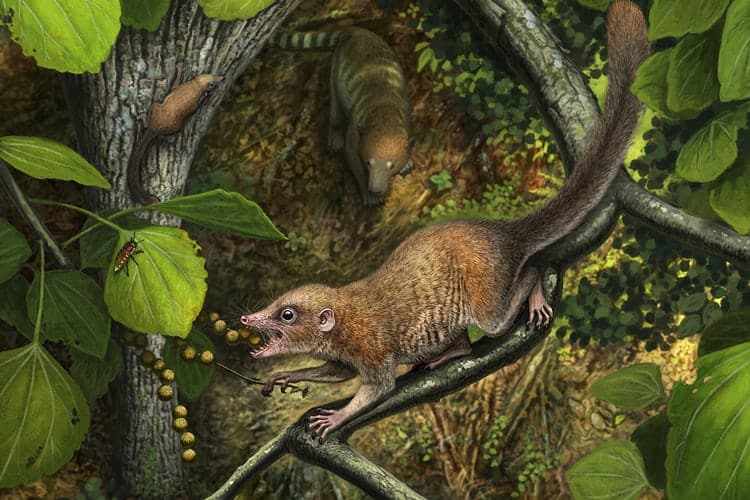
Our earliest primate ancestors rapidly spread after dinosaur extinction

Our earliest primate ancestors rapidly spread after dinosaur extinction

The small, furry ancestors of all primates — a group that includes humans and other apes — were already taking to the trees a mere 100,000 years after the mass extinction that wiped out the dinosaurs and most other terrestrial animals, according to a new analysis of fossil teeth in the collections of the University of California Museum of Paleontology (UCMP).

The analysis showed that the teeth are the earliest-known fossil evidence of any primate, dating from about 65.9 million years ago — 105,000 to 139,000 years after Cretaceous-Paleogene boundary 66 million years ago that signaled the end of the dinosaur era, except for the dinosaurs’ descendants, the birds.

The teeth and upper and lower jawbones, from a genus of mammals known as Purgatorius — the oldest genus in a group of now extinct early primates called plesiadapiforms — were collected over the past two decades from the Hell Creek region of northeastern Montana, south and east of Fort Peck Reservoir. The area is known for its T. rex and Triceratops fossils, but also for some of the earliest fossil mammals.

Based on the age of the fossils, the research team estimates that the ancestor of all primates — a group that also includes today’s lemurs and monkeys — likely emerged by the Late Cretaceous and lived alongside large dinosaurs.

Our earliest primate ancestors rapidly spread after dinosaur extinction

High resolution CT scans of an assortment of fossilized teeth and jaw bones of Purgatorius from UCMP’s collection. (Image courtesy of Gregory Wilson Mantilla and Stephen Chester)

“It’s mind-blowing to think of our earliest archaic primate ancestors — they were some of the first mammals to diversify in this new post-mass extinction world — taking advantage of the fruits and insects up in the forest canopy,” said Gregory Wilson Mantilla, a former UC Berkeley Ph.D. candidate who is now professor of biology at the University of Washington (UW) and curator of vertebrate paleontology at the university’s Burke Museum in Seattle.

Wilson Mantilla co-led the study with Stephen Chester of Brooklyn College and the City University of New York. The fossils were dated by a team led by Paul Renne, a UC Berkeley professor-in-residence of earth and planetary science and director of the Berkeley Geochronology Center.

Purgatorius, named after the Purgatory Hills in Montana, is known only from North American fossils. Its teeth suggest that it ate specialized diets of insects and fruits that varied across species.

According to Wilson Mantilla, the new discovery is central to understanding primate ancestry and paints a picture of how life on land recovered after the Cretaceous–Paleogene extinction event that preceded the rise of mammals. Specifically, within 1 million years of their arrival in northeastern Montana, plesiadapiforms outstripped archaic ungulates — the ancestors of hoofed animals, like deer — in abundance, and dominated a key ecological niche: tree-dwelling mammals with an omnivorous and/or fruit-eating diet.

The findings of the 10-member team appear today in the journal Royal Society Open Science.

The fossils were collected during annual trips to the Hell Creek area initiated by the late William Clemens, an expert on the mammals of the 86-million-year-long Mesozoic Era, which ended with the mass extinction.

Our earliest primate ancestors rapidly spread after dinosaur extinction

Co-authors Gregory Wilson Mantilla (left) and the late William Clemens search for Purgatorius fossils in the Hell Creek area of northeastern Montana. (Photo courtesy of Lauren DeBey)

“This work is another example of how much we are learning from these badlands in Montana,” Renne said. “Not only is this place the richest source of information about the last dinosaurs on Earth and how they vanished, but now we’re learning about the distant ancestry of primates. It’s a great illustration of the power of research integrating fieldwork with detailed laboratory analysis.

“This study underscores the importance of UCMP’s fossil collections and exemplary curation as a resource to the scientific community.”

The fossils include two species of Purgatorius: Purgatorius janisae and a new species described by the team and named Purgatorius mckeeveri. Three of the teeth found have distinct features compared to any previously-known Purgatorius species and led to the description of the new species.

The new species, Purgatorius mckeeveri, is named after Frank McKeever, who was among the first residents of the area where the fossils were discovered, and also the family of John and Cathy McKeever, who have since supported the fieldwork where the oldest specimen of this new species was discovered.

“This was a really cool study to be a part of, particularly because it provides further evidence that the earliest primates originated before the extinction of non-avian dinosaurs,” said co-author and UW graduate student Brody Hovatter. “They became highly abundant within a million years after that extinction.”

“This discovery is exciting because it represents the oldest dated occurrence of archaic primates in the fossil record,” he added. “It adds to our understanding of how the earliest primates separated themselves from their competitors following the demise of the dinosaurs.”

In addition to Wilson Mantilla, Chester, Hovatter, Renne and Clemens, the team included Jason Moore and Wade Mans of the University of New Mexico; two of Renne’s former Ph.D. students, Courtney Sprain, now at the University of Florida, and William Mitchell, now at Minnesota IT Services; Brody Hovatter of UW; and Roland Mundil of the Berkeley Geochronology Center.


from ScienceBlog.com https://ift.tt/2NGvVsd

Basic cell health systems wear down in Huntington’s disease, analysis shows

Basic cell health systems wear down in Huntington’s disease, analysis shows

A new computational approach for analyzing complex datasets shows that as disease progresses, neurons and astrocytes lose the ability to maintain homeostasis.

Using an innovative computational approach to analyze vast brain cell gene expression datasets, researchers at MIT and Sorbonne Université have found that Huntington’s disease may progress to advanced stages more because of a degradation of the cells’ health maintenance systems than because of increased damage from the disease pathology itself.

The analysis yielded a trove of specific gene networks governing molecular pathways that disease researchers may now be able to target to better sustain brain cell health amid the devastating neurodegenerative disorder, says co-senior author Myriam Heiman, associate professor in MIT’s Department of Brain and Cognitive Sciences and an investigator at The Picower Institute for Learning and Memory. Christian Neri of the Sorbonne’s Centre National de la Recherche Scientifique is the co-senior and co-corresponding author of the study published in eLife.

“If we can maintain the expression of these compensatory mechanisms, it may be a more effective therapeutic strategy than just trying to affect one gene at a time,” says Heiman, who is also a member of the Broad Institute of MIT and Harvard.

In the study, the team led by co-corresponding author Lucile Megret created a process called “Geomic” to integrate two large sets of data from Heiman’s lab and one more from University of California at Los Angeles researcher William Yang. Each dataset highlighted different aspects of the disease, such as its effect on gene expression over time, how those effects varied by cell type, and the fate of those cells as gene expression varied.

Geomic created plots of the data that mapped differences pertaining to 4,300 genes along dimensions such as mouse age, the extent of Huntington’s-causing mutation, and cell type (certain neurons and astrocytes in a region of the brain called the striatum are especially vulnerable in Huntington’s). The plots took the form of geometric shapes, like crumpled pieces of paper, whose deformations could be computationally compared to identify genes whose expression changed most consequentially amid the disease. The researchers could then look into how abnormal expression of those genes could affect cellular health and function.

Big breakdowns

The Geomic analysis highlighted a clear pattern. Over time, the cells’ responses to the disease pathology — linked to toxic expansions in a protein called Huntingtin — largely continued intact, but certain highly vulnerable cells lost their ability to sustain gene expression needed for some basic systems that sustain cell health and function. These systems initially leapt into action to compensate for the disease but eventually lost steam.

One of the biggest such breakdowns in an especially vulnerable cell type, Drd-1 expressing neurons, was maintaining the health of energy-producing components called mitochondria. Last year, Heiman’s lab published a study in Neuron showing that in some Huntington’s-afflicted neurons, RNA leaks out of mitochondria provoking a misguided and immune response that leads to cell death. The new findings affirm a key role for mitochondrial integrity and implicate key genes such as Ndufb10, whose diminished expression may undermine the cell’s network of genes supporting the system.

The Geomic approach also highlighted an especially dramatic decline in the Drd-1 neurons and in astrocytes of expression of multiple genes in pathways that govern endosome regulation, an essential process for determining where proteins go and when they are degraded within the cells. Here, too, key genes like Rab8b and Rab7 emerged as culprits within broader gene networks.

The researchers went on to validate some of their top findings by confirming that key alterations of gene expression were also present in post-mortem samples of brain tissue from human Huntington’s patients.

While mitochondrial integrity and endosome regulation are two particularly strong examples, Heiman says, the study lists many others. The Geomic source code and all the data and visualizations it yielded are publicly accessible on a website produced by the authors.

“We’ve created a database of future targets to probe,” Heiman says.

Neri adds: “This database sets a precise basis for studying how to properly reinstate brain cell compensation in Huntington’s disease, and possibly in other neurodegenerative diseases that share common compensatory mechanisms with Huntington’s disease.”

Key among these could be regulators of genetic transcription in these affected pathways, Heiman says.

“One promising future direction is that among the genes that we implicate in these network effects, some of these are transcription factors,” she says. “They may be key targets to bring back the compensatory responses that decline.”

A new way to study disease

While the researchers first applied Geomic’s method of “shape deformation analysis” to Huntington’s disease, it will likely be of equal utility for studying any neurodegenerative disease like Alzheimer’s or Parkinson’s, or even other brain diseases, the authors says.

“This is a new approach to study systems-level changes, rather than just focusing on a particular pathway or a particular gene,” Heiman says. “I think this is a really nice proof of principle and hopefully we can apply this type of methodology to the study of other genomic data from other disease studies.”

In addition to Heiman, Neri, and Megret, the paper’s other authors are Barbara Gris, Satish Nair, Jasmin Cevost, Mary Wertz, Jeff Aaronson, Jim Rosinski, Thomas Vogt, and Hilary Wilkinson.

The Sorbonne Université, the CHDI Foundation, and the National Institutes of Health supported the research. Heiman’s lab is also supported by the JPB Foundation.


from ScienceBlog.com https://ift.tt/3dMAdZB

VIDEO: On the Line: Watching Nanoparticles Get in Shape

VIDEO: On the Line: Watching Nanoparticles Get in Shape

Imaging of the same spot shows that cracks eventually self-heal, an important trademark that maintains the integrity of structured liquids. Real-time video of 70 nm nanoparticles (red) and 500 nanometer nanoparticles (green) captured via laser scanning confocal microscopy at the Molecular Foundry. (Credit: Paul Ashby and Tom Russell/Berkeley Lab and Science Advances)

Liquid structures – liquid droplets that maintain a specific shape – are useful for a variety of applications, from food processing to cosmetics, medicine, and even petroleum extraction, but researchers have yet to tap into these exciting new materials’ full potential because not much is known about how they form.

Now, a research team led by Berkeley Lab has captured real-time high-resolution videos of liquid structures taking shape as nanoparticle surfactants (NPSs) – soap-like particles just billionths of a meter in size – jam tightly together, side by side, to form a solid-like layer at the interface between oil and water.

Their findings, recently featured on the cover of Science Advances, could help researchers better optimize liquid structures to advance new biomedical applications such as reconfigurable microfluidics for drug discovery and all-liquid robotics for targeted cancer drug delivery, among others.

In experiments led by co-author Paul Ashby, a staff scientist in Berkeley Lab’s Molecular Foundry and Materials Sciences Division, and Yu Chai, a former postdoctoral researcher in the Ashby group who is now an assistant professor at The City University of Hong Kong, the researchers used a special imaging technique called atomic force microscopy (AFM) to take the first-ever real-time movies of the NPSs crowding together and getting jammed at the oil-water interface, a critical step in locking a liquid into a specific shape.

The researchers’ movies unveiled a portrait of the NPS interface with unprecedented detail, including the size of each NPS, whether the interface was composed of one or multiple layers, and how much time elapsed, down to the second, for each NPS to attach to and settle into the interface.

The spectacular AFM images also showed the angle at which an NPS “sits” at the interface – an unexpected result. “We were surprised by how rough the interfaces are,” Ashby said. “We had always drawn illustrations of a uniform interface with nanoparticles attached at the same contact angle – but in our current study, we found there is actually a lot of variation.”

Most nanoscale imaging tools can only investigate immobile samples that are either dry or frozen. Over the past couple of decades, Ashby has focused his research on developing unique AFM capabilities that allow the user to control the probe tip so it gently interacts with fast-moving samples, such as the NPSs of the current study, without touching the underlying liquid – a challenging feat.

“Imaging a liquid structure at the nanoscale, and watching the nanoparticles move around in liquid in real time using an AFM probe – that wouldn’t be possible without Paul’s extensive expertise,” said co-author Thomas Russell, a visiting faculty scientist and professor of polymer science and engineering from the University of Massachusetts who leads the Adaptive Interfacial Assemblies Towards Structuring Liquids program in Berkeley Lab’s Materials Sciences Division. “These kinds of capabilities aren’t available anywhere else except at the Molecular Foundry.”

The researchers next plan to study the effect of self-propelling particles in NPS liquid structures.

Ashby and Russell co-led the study. Researchers from Berkeley Lab; UC Berkeley; The City University of Hong Kong; Hong Kong Polytechnic University; Soochow University and Beijing University of Chemical Technology, China; and Tohoku University, Japan, contributed to the work.

The Molecular Foundry is a DOE Office of Science user facility at Berkeley Lab.

This work was supported by the U.S. Department of Energy Office of Science.


from ScienceBlog.com https://ift.tt/3dQLvw2

50th Edition of World Science Awards 2026 to Celebrate Global Research and Innovation in London

  50th Edition of World Science Awards 2026 to Celebrate Global Research and Innovation in London The 50th Edition of World Science Awards ...