Friday, October 2, 2020

Zombie Fires

Zombie Fires

Buried beneath the snow line,
these smouldering corpses
begin to glow.
Forgotten fires,
whose reanimated embers
burn brightly
across the tundra;
frozen bodies recoiling
at the heat
of their undying embrace.

Thawed to life by
distant warming
these undead hordes now
straddle horizons;
crimson fingers
flickering over
blue-veined memories,
as they dance
impossibly beyond
the water’s edge.

Nervously
we shift our gaze
towards a restless earth,
as unwanted resurrections
blaze across the landscape.

Zombie Fires
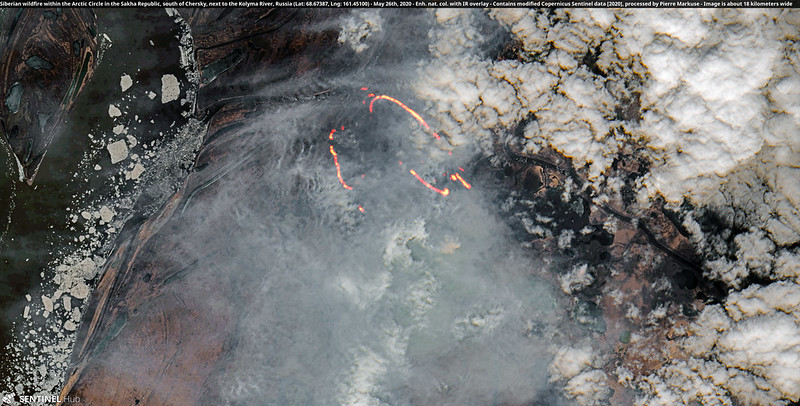
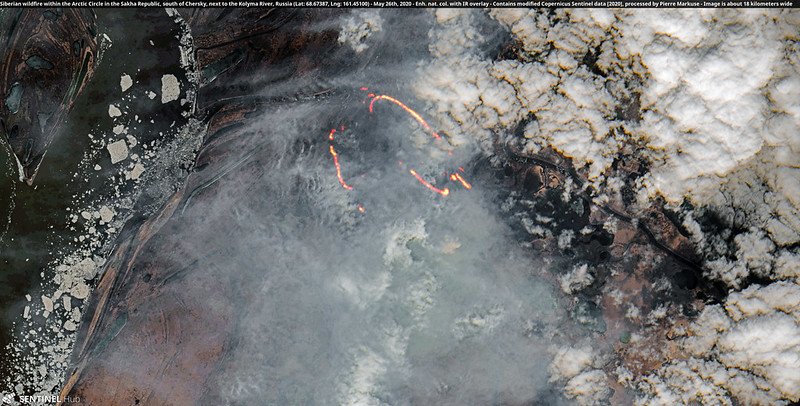
A Siberian wildfire within the Arctic Circle in the Sakha Republic, south of Chersky, next to the Kolyma River, Russia. Taken on the 26th May 2020 (Image Credit: Pierre Markuse).

This poem is inspired by new research, which has found that the ways in which Arctic wildfires burn are potentially changing, with strong consequences for the global climate.

The 2020 Arctic wildfire season began two months early and was unprecedented in scope; in addition to the increase in severity and occurrence, two new features for the way in which these fires burn have also being identified. The first is what is known as holdover, or zombie, fires. These fires occur when fire from a previous growing season smoulders in carbon-rich peat underground over the winter, re-igniting on the surface several months (or even years) later, when the weather begins to warm. The second feature that has been observed is the occurrence of fire in what were previously thought to be fire-resistant landscapes. As the Arctic tundra becomes hotter and drier due to global warming, vegetation types such as sedges, grass, and moss, that are not typically thought of as fuels, start to catch fire. Even wet landscapes like bogs, fens, and marshes are also becoming vulnerable to burning in the changing climate.

More than half of the fires detected in Siberia this year were north of the Arctic Circle, occurring on permafrost that has a high percentage of ground ice. This type of permafrost contains enormous amounts of carbon, and global climate models currently do not account for their rapid thawing and subsequent release of greenhouse gases. At the local level, the rapid thawing of this permafrost would result in subsidence, floods, and landslides. Understanding these new fire regimes is therefore essential in order to better understand the impact that they will have on both the local and global level. However, while satellite imagery could potentially help to map the extent and timing of these new surface fires, measurements made on the ground are still needed to help calibrate any observations that are made by satellites. As such, addressing the gaps in our current understanding will require critical input from Indigenous and local communities, as well as collaboration across many different scientific disciplines.


from ScienceBlog.com https://thepoetryofscience.scienceblog.com/1511/zombie-fires/?utm_source=rss&utm_medium=rss&utm_campaign=zombie-fires

Thursday, October 1, 2020

The DS Daily: Day 4 – Truth and Trust

The fourth day of the Digital Science Global Showcase 2020 looked more closely at truth, trust, and transparency in research.

Want to catch up on what you missed? No problem!

Download the DS Daily below, and don’t forget that you can still sign up for our Showcase here:

REGISTER FOR THE DIGITAL SCIENCE GLOBAL SHOWCASE 2020

CATCH UP ON PREVIOUS DS DAILIES

The post The DS Daily: Day 4 – Truth and Trust appeared first on Digital Science.


from Digital Science https://ift.tt/3jsKRoE

The Men who Speak for Science

The Men who Speak for Science

The scientific community has something that American corporations and politicians want. It’s not technology or research. It’s not understanding or policy guidance. It’s the people’s confidence.

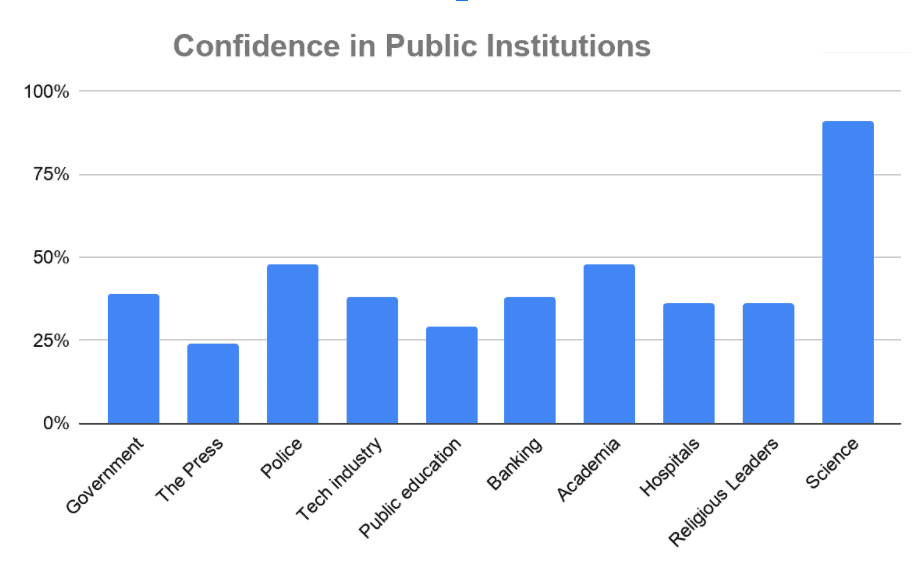
In recent decades, every institution in America has suffered decline in public confidence. The press, the Federal government, religious institutions, banking, corporations, even academia confidence levels are all in the 30-40% range. But public confidence in science is still over 90%.

Sources: GallupGallupGallupPew

It follows that if you want to market a product or win an election, claiming that “science is on my side” is a powerful selling point. If you want to halt human colonization of the global ecosphere or move people out of their cars into public transportation, the backing of science is natural and maybe even honest. If you have more sinister goalsshutting down democracy, dividing a nation so it is politically dysfunctional, destroying small businesses and handing their markets to multinational giantsthen claiming the imprimatur of science is probably the only way to con hundreds of millions of people into a program so profoundly contrary to their interests.

Look around. You see responsible citizens and good neighbors cooperating to curtail the spread of a deadly virus. But if you blink and look again, you may see the widest, fastest, most successful mass deception in the history of the world.

They’ve come so far because they have money and government and the press on their side. But they could not have captured so many minds without the support of a few people who claim to speak for science. Of course, Bill Gates and Anthony Fauci and Neil Ferguson are not representatives of a scientific consensus. But, curiously, they have not been laughed off the stage. The scientific community has not come together, 8-million strong, with a public statement that “These men do not speak for science.” And years of anemic public education has taught the populace to accept a scientific world view, rather than to trust their own evidence-based thinking.

We the People will not pull out of this nightmare on our own. The public will continue sleepwalking into medical martial law without a strong and credible counter-narrative. There is a powerful need for We the Scientists to come together and override the mountebanks who have hijacked the mantle of science.

It’s not news that science is subject to political and financial influence. Examples from the past must start with the pharma industry as the most egregious offender; and also FDA diet recommendations, health effects of cell phones, suppression of energy technologies, past suppression of data about asbestos and tobacco and lead.

But never before 2020 have so few people with so little scientific credential claimed to speak for the scientific community as a whole; and never has the public been asked to modify our daily lives and sacrifice our livelihoods on such a scale.

Anecdotal Evidence

Biological weapons are an abomination. No government or research institute has even tried to convince the public that biowarfare research is a good idea, because it would so obviously stir more opposition than support.

After WW II, Nazi bioweapons programs were transplanted to the US, thanks to Operation Paperclip. The story is told in horrifying detail by Stephen Kinzer.

In the wake of international treaties and acts of Congress to outlaw bioweapons research, the US project was re-branded as pandemic preparation and transferred to civilian laboratories. The ruse was that in order to prepare for the next killer pathogen that may soon emerge from the wild, we must create laboratory-modified viruses so we can develop vaccines and treatments for them. The obvious flaw in this logic has been no obstacle to the bureaucratic momentum behind the project.

In 2005, 700 prominent scientists protested to the NIH, calling attention to the masquerade of biological warfare as public health [NYTimes]. Our largest and most prestigious association of scientists, AAAS issued a strong editorial denouncing biowarfare research. Though they did not succeed in halting the program, they created a public relations nightmare for NIH, and after Obama’s election, the NIH program was indeed curtailed, and had to be moved (temporarily) offshore.

The situation is very different in 2020. In April, Newsweek helped alert the public that Dr Fauci’s own NIAID was sponsoring gain-of-function research in Wuhan, China, that modified bat Coronaviruses so they could infect humans. President Trump got wind of this, and ordered that  gain-of-function research at NIAID be immediately defunded. I’m confident that scientists as well as the public were overwhelmingly supportive of this sensible, belated gesture.

But that was not the response of record. In short order, a prominent group of (geriatric? bamboozled?) scientists was reported to protest the move. 77 Nobel Laureates Denounce Trump Officials For Pulling Coronavirus Research Grant. And last month, AAAS produced editorials in support of continuing this insanely dangerous program. Even in a year as bizarre as 2020, I never expected to be siding with Donald Trump against the institutions of science. I read and reread the article in Science before I was forced to conclude that Trump was wearing the white hat.

In the same issue, there was a second editorial denouncing Trump for “politicization of science” by permitting research to go forward with plasma from recovered COVID patients as treatment for present patients. This approach to treatment is logical, it has historic precedent, and by all means it should be tested. The only reason I can imagine for suppressing convalescent plasma is that, if it works, it obviates the need for a vaccine, and NIH as well as private investors have billions of dollars sunk in vaccines. I would not dare to make such a charge if I had not seen an even more blatant example of the same phenomenon in the suppression of chloroquine [refrefrefref].I shouldn’t have to say this, but please don’t interpret my position here as any kind of general support for Donald Trump. I believe he is as corrupt and ignorant a president as I have known in my lifetimethough GWBush gives him a run for his money. One of the unfathomable turns of politics this year is that so many Democrats have been so enraged by Trump’s ascent to power that even when he does the right thing they leap to oppose him. Look at the Democratic response when he announced withdrawal of troops from Afghanistan.

COVID-19 and the Perversion of Science

The political response to COVID, in the US and elsewhere, has been not only contrary to well-supported medical science, but contrary to common sense and contrary to past practice. In every respect, the response has been either ineffective or likely to make the situation worse. We started too late for a quarantine program to be effective; then we failed to protect the most vulnerable and failed to quarantine the sickest patients. In fact, we forced nursing homes to take in COVID patients, triggering a predictable tragedy. Respirators remained the standard of care long after it was reported by front-line doctors that they were killing COVID patients. Healthy, young people are at very low risk for serious complications, and should have been out there earning our herd immunity; instead, they were kept terrified and locked up. The economy and all cultural and religious institutions were closed down, leading to tens of thousands of deaths of despair [video by Glen Greenwald]. Masks and social distancing, the least effective protections, were endlessly promoted while simple, effective protections including vitamin D and zinc were actively disparaged by health authorities. And all the while, the most effective treatment of all, zinc + chloroquine, was criminally suppressed. Now, as deaths from COVID are down by an order of magnitude from their April peak, government and media continue their campaign to terrorize us with a false narrative, while extending lockdowns, school closures, and masking into the indefinite future.

Call for a response by the scientific community

Mosts scientists are curious and open-minded, opinionated but cognizant of others’ opinions, the opposite of polemical. It is not a natural community from which to recruit activists. But the misrepresentation of science in this pandemic has been extreme, and it threatens the future of science and its role in guiding public policy. There have been many scientists who have stood up to counter the COVID narrative. Many more have been censored, their videos taken down from social media. This is a time when we, the scientific community, have been called to come together and call the misleadership of AAAS into account. There is an urgent need for scientists who have been shy about public stands in the past to come forward and speak out.


Over the next week, I will post details of ways in which I have seen science distorted in support of a government and corporate COVID agenda. 


Here are ten messages that are essential pieces of the standard COVID narrative, but which are unfounded in actual science. Stay tuned for a detailed rebuttal of each.

  1. “The origin of the SARS-CoV-2 virus was one of many random events in nature in which a virus jumps from one species to another.”
  2. “Chloroquine kills patients and is too dangerous to use against COVID”
  3. “The Ferguson model warned us of impending danger in time to take action and dodge a bullet.”
  4. “American deaths from COVID: 200,000 and counting”
  5. “New cases of COVID are expanding now in a dangerous Second Wave”
  6. “Masks and social distancing are keeping the virus in check in our communities”
  7. “Dr Fauci and the CDC are guiding our response to COVID according to the same principles of epidemic management that have protected public health in the past.”
  8. “Asymptomatic carriers are an important vector of disease transmission, which must be isolated if we are to stop the spread of COVID”
  9. “The lower death rates now compared to April are due to protective measures such as social distancing, mask-wearing, and limited travel.”
  10. “With enough resources, pharmaceutical scientists can develop a vaccine in a matter of months, and provide reasonable assurance that it is safe.”

END of Part 1


from ScienceBlog.com https://ift.tt/3jpzOwf
COVID virus kills pain, possibly explaining why many unaware they are sick

COVID virus kills pain, possibly explaining why many unaware they are sick

SARS-CoV-2, the virus that causes COVID-19, can relieve pain, according to a new study by University of Arizona Health Sciences researchers.

The finding may explain why nearly half of all people who get COVID-19 experience few or no symptoms, even though they are able to spread the disease, according to the study’s corresponding author Rajesh Khanna, PhD, a professor in the UArizona College of Medicine – Tucson’s Department of Pharmacology.

COVID virus kills pain, possibly explaining why many unaware they are sickRajesh Khanna, PhD. (Photo: Kris Hanning/University of Arizona Health Sciences)“It made a lot of sense to me that perhaps the reason for the unrelenting spread of COVID-19 is that in the early stages, you’re walking around all fine as if nothing is wrong because your pain has been suppressed,” said Dr. Khanna. “You have the virus, but you don’t feel bad because your pain is gone. If we can prove that this pain relief is what is causing COVID-19 to spread further, that’s of enormous value.”

The paper, “SARS-CoV-2 Spike protein co-opts VEGF-A/Neuropilin-1 receptor signaling to induce analgesia,” was published today in PAIN, the journal of the International Association for the Study of Pain.

View an animated video of how SARS-CoV-2 reduces pain, and a video of Dr. Rajesh Khanna explaining how his team identified the phenomenon.

The U.S. Centers for Disease Control and Prevention released updated data Sept. 10 estimating that 50% of COVID-19 transmission occurs prior to the onset of symptoms and 40% of COVID-19 infections are asymptomatic.

“This research raises the possibility that pain, as an early symptom of COVID-19, may be reduced by the SARS-CoV-2 spike protein as it silences the body’s pain signaling pathways,” said UArizona Health Sciences Senior Vice President Michael D. Dake, MD. “University of Arizona Health Sciences researchers at the Comprehensive Pain and Addiction Center are leveraging this unique finding to explore a novel class of therapeutics for pain as we continue to seek new ways to address the opioid epidemic.”

COVID virus kills pain, possibly explaining why many unaware they are sickDoctoral student Lisa Boinon prepares buffers under the watchful eye of Dr. Khanna, her faculty mentor. (Photo: Kris Hanning/University of Arizona Health Sciences)Viruses infect host cells through protein receptors on cell membranes. Early in the pandemic, scientists established that the SARS-CoV-2 spike protein uses the angiotensin-converting enzyme 2 (ACE2) receptor to enter the body. But in June, two papers posted on the preprint server bioRxiv pointed to neuropilin-1 as a second receptor for SARS-CoV-2.

“That caught our eye because for the last 15 years my lab has been studying a complex of proteins and pathways that relate to pain processing that are downstream of neuropilin,” said Dr. Khanna, who is affiliated with the UArizona Health Sciences Comprehensive Pain and Addiction Center and a member of the UArizona BIO5 Institute. “So we stepped back and realized this could mean that maybe the spike protein is involved in some sort of pain processing.”

Many biological pathways signal the body to feel pain. One is through a protein named vascular endothelial growth factor-A (VEGF-A), which plays an essential role in blood vessel growth but also has been linked to diseases such as cancer, rheumatoid arthritis and, most recently, COVID-19.

Like a key in a lock, when VEGF-A binds to the receptor neuropilin, it initiates a cascade of events resulting in the hyperexcitability of neurons, which leads to pain. Dr. Khanna and his research team found that the SARS-CoV-2 spike protein binds to neuropilin in exactly the same location as VEGF-A.

See a 3D rendering of neuropilin with VEGF-A (left), spike protein (middle) and small molecule inhibitor (right) in the binding pocket here.

COVID virus kills pain, possibly explaining why many unaware they are sickKimberley Gomez, PhD, locates cells to record. (Photo: Kris Hanning/University of Arizona Health Sciences)

With that knowledge, they performed a series of experiments in the laboratory and in rodent models to test their hypothesis that the SARS-CoV-2 spike protein acts on the VEGF-A/neuropilin pain pathway. They used VEGF-A as a trigger to induce neuron excitability, which creates pain, then added the SARS-CoV-2 spike protein.

“The spike protein completely reversed the VEGF-induced pain signaling,” Dr. Khanna said. “It didn’t matter if we used very high doses of spike or extremely low doses – it reversed the pain completely.”

Dr. Khanna is teaming up with UArizona Health Sciences immunologists and virologists to continue research into the role of neuropilin in the spread of COVID-19.

In his lab, he will be examining neuropilin as a new target for non-opioid pain relief. During the study, Dr. Khanna tested existing small molecule neuropilin inhibitors developed to suppress tumor growth in certain cancers and found they provided the same pain relief as the SARS-CoV-2 spike protein when binding to neuropilin.

“We are moving forward with designing small molecules against neuropilin, particularly natural compounds, that could be important for pain relief,” Dr. Khanna said. “We have a pandemic, and we have an opioid epidemic. They’re colliding. Our findings have massive implications for both. SARS-CoV-2 is teaching us about viral spread, but COVID-19 has us also looking at neuropilin as a new non-opioid method to fight the opioid epidemic.”

Co-authors on the paper from the Department of Pharmacology are: Aubin Moutal, PhD; Lisa Boinon; Kimberly Gomez, PhDDongzhi Ran, PhDYuan ZhouHarrison Stratton, PhDSong Cai, PhDShizhen LuoKerry Beth Gonzalez; and Samantha Perez-Miller, PhD. Co-authors from the Department of Anesthesiology, with additional affiliations with the Comprehensive Pain and Addiction Center, are Amol Patwardhan, MD, PhD, and Mohab Ibrahim, MD, PhD.

This research was funded by the National Institute of Neurological Disorders and Stroke, a unit of the National Institutes of Health (NIH), under Award No. NS098772; and the National Institute on Drug Abuse, also an NIH unit, under Award No. DA042852.


from ScienceBlog.com https://ift.tt/3cQbmBN

Expert opinion: COVID-19 vaccine rollout unlikely before fall 2021

Expert opinion: COVID-19 vaccine rollout unlikely before fall 2021

Experts working in the field of vaccine development tend to believe that an effective vaccine is not likely to be available for the general public before the fall of 2021. In a paper published recently in the Journal of General Internal Medicine, a McGill-led team published the results of a recent survey of 28 experts working in vaccinology.

The survey was carried out in late June 2020. The majority of those surveyed were mostly Canadian or American academics with an average of 25 years of experience working in the field.

“Experts in our survey offered forecasts on vaccine development that were generally less optimistic than the timeline of early 2021 offered by US public officials. In general they seem to believe that a publicly available vaccine next summer is the best-case scenario with the possibility that it may take until 2022,” said Jonathan Kimmelman, a James McGill professor and the director of the Biomedical Ethics Unit at McGill University and the senior author on the paper.

Many experts also believe that there may be some false starts before an effective vaccine is available. “The experts we surveyed believe that there is a 1 in 3 chance that the vaccine will receive a safety warning label after approval, and a 4 in 10 chance that the first large field study will not report efficacy,” added Patrick Kane, the lead author, who is a decision scientist and postdoctoral fellow at McGill.

Predicting timelines for vaccine development

Experts were asked to make timeline forecasts for three milestones in vaccine development. More specifically, experts were asked for their best, soonest, and latest estimates for when each of the following milestone would occur:

  1. Question– When will a vaccine be available to the general public in the USA and/or Canada?
    Answers
    best guess = September/October 2021 (average)
    soonest = June 2021 (average)
    latest = July 2022 (average)
  2. Question– When will a field study with at least 5000 participants report results?
    Answers
    best guess = March 2021 (average)
    soonest = December 2020 (average)
    latest = July 2021 (average)
  3. Question– when will a vaccine be available to those at highest risk from the virus in the USA and/or Canada?
    Answers
    best guess = March/April 2021 (average)
    soonest = February 2021 (average)
    latest = December 2021 (average)

The researchers believe that this kind of approach, where people are asked to suggest a range of responses provides a more complete picture of the range of expert belief than media quotes from individuals.

Likelihood of setbacks

The study also showed that about 1/3 of those surveyed believe that vaccine development is likely to face may face the following setbacks:

  1. that the first vaccine widely deployed in the USA and/or Canada will receive a boxed warning from the FDA to highlight serious or life-threatening adverse reactions; or
  2. that the first large field trial in the USA and/or Canada will report a null or negative result in terms of efficacy.

“Our study finds that experts are largely in agreement about the timeline for a SARS-CoV-2 vaccine,” says Stephen Broomell, an associate professor at the Dietrich College of Humanities and Social Sciences, at Carnegie Mellon University. “While this does not track with many overly optimistic government projections, it reflects a belief that researchers are indeed on a faster pace to development compared to previous vaccines.”

#########

To read: “Expert Forecasts of COVID-19 Vaccine Development Timelines” by Patrick Bodilly Kane et al in the Journal of General Internal Medicine

DOI: 10.1007/s11606-020-06244-9

Funding: McGill Interdisciplinary Initiative in Infection and Immunity research grant.


from ScienceBlog.com https://ift.tt/34hjqaF

Hubble Watches Exploding Star Fade Into Oblivion

Hubble Watches Exploding Star Fade Into Oblivion

When a star unleashes as much energy in a matter of days as our Sun does in several billion years, you know it’s not going to remain visible for long.

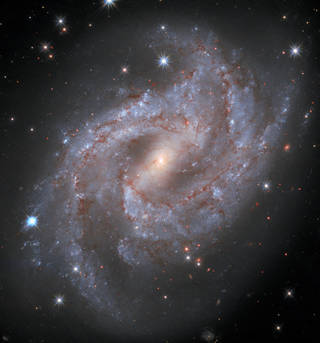
Like intergalactic paparazzi, NASA’s Hubble Space Telescope captured the quick, fading celebrity status of a supernova, the self-detonation of a star. The Hubble snapshots have been assembled into a telling movie of the titanic stellar blast disappearing into oblivion in the spiral galaxy NGC 2525, located 70 million light-years away.

Hubble began observing SN 2018gv in February 2018, after the supernova was first detected by amateur astronomer Koichi Itagaki a few weeks earlier in mid-January. Hubble astronomers were using the supernova as part of a program to precisely measure the expansion rate of the universe — a key value in understanding the physical underpinnings of the cosmos. The supernova serves as a milepost marker to measure galaxy distances, a fundamental value needed for measuring the expansion of space.

In the time-lapse sequence, spanning nearly a year, the supernova first appears as a blazing star located on the galaxy’s outer edge. It initially outshines the brightest stars in the galaxy before fading out of sight.

“No Earthly fireworks display can compete with this supernova, captured in its fading glory by the Hubble Space Telescope,” said Nobel laureate Adam Riess, of the Space Telescope Science Institute (STScI) and Johns Hopkins University in Baltimore, leader of the High-z Supernova Search Team and the Supernovae H0 for the Equation of State (SH0ES) Team to measure the universe’s expansion rate.

The type of supernova seen in this sequence originated from a burned-out star — a white dwarf located in a close binary system — that is accreting material from its companion star. When the white dwarf reaches a critical mass, its core becomes hot enough to ignite nuclear fusion, turning it into a giant atomic bomb. This thermonuclear runaway process tears the dwarf apart. The opulence is short-lived as the fireball fades away.

Because supernovae of this type all peak at the same brightness, they are known as “standard candles,” which act as cosmic tape measures. Knowing the actual brightness of the supernova and observing its brightness in the sky, astronomers can calculate the distances of their host galaxies. This allows astronomers to measure the expansion rate of the universe. Over the past 30 years Hubble has helped dramatically improve the precision of the universe’s expansion rate.

Banner image: Astronomers using NASA’s Hubble Space Telescope captured the quick, fading celebrity status of a supernova, the self-detonation of a star. The Hubble snapshots have been assembled into a telling movie of the titanic stellar blast disappearing into oblivion in the spiral galaxy NGC 2525, located 70 million light-years away. The supernova, named SN 2018gv, appears as a blazing star located on the galaxy’s outer edge. It initially outshines the brightest stars in the galaxy before fading out of sight. The time-lapse video consists of observations taken from February 2018 to February 2019. Credits: NASA, ESA, and A. Riess (STScI/JHU) and the SH0ES team; acknowledgment: M. Zamani (ESA/Hubble)


from ScienceBlog.com https://ift.tt/36q1k9g

Vitamin D Deficiency Leads to Obesity, Stunted Growth in Zebrafish

Vitamin D Deficiency Leads to Obesity, Stunted Growth in Zebrafish

Using a zebrafish model, researchers from North Carolina State University have found that vitamin D deficiency during early development can disrupt the metabolic balance between growth and fat accumulation. The results suggest a linkage between vitamin D and metabolic homeostasis, or equilibrium.

The research team, led by Seth Kullman, professor of biological sciences at NC State, looked at groups of post-juvenile zebrafish on one of three diets: no vitamin D (or vitamin D null), vitamin D enriched and control. The zebrafish spent four months on their particular diet, then the researchers looked at their growth, bone density, triglyceride, lipid, cholesterol and vitamin D levels. They also examined key metabolic pathways associated with fat production, storage and mobilization and growth promotion.

The zebrafish in the vitamin D deficient group were, on average, 50% smaller than those in the other two groups, and they had significantly more fat reserves.

“The vitamin D deficient zebrafish exhibited both hypertrophy and hyperplasia – an increase in both the size and number of fat cells,” Kullman says. “They also had higher triglycerides and cholesterol, which are hallmarks of metabolic imbalance that can lead to cardio-metabolic disease. This, combined with the stunted growth, indicates that vitamin D plays an important role in the ability to channel energy into growth versus into fat storage.”

After the initial testing, the vitamin D deficient zebrafish were given a vitamin D enriched diet for an additional six months, to see if the results could be reversed. While the fish did continue to grow and begin to utilize fat reserves, they never caught up in size with the other cohorts and they retained residual fat deposits.

“This work shows that vitamin D deficiency can influence metabolic health by disrupting the normal balance between growth and fat accumulation,” Kullman says. “Somehow the energy that should be going toward growth is getting shunted into creating fat and lipids, and this occurrence cannot be easily reversed. While we don’t yet understand the mechanism, we are beginning to tease that out.”

Future work will involve looking at the offspring of vitamin D deficient mothers, to determine whether this vitamin deficiency has epigenetic effects that can be passed down.

The research appears in Scientific Reports and is supported by the Environmental Protection Agency (STAR RD-83342002) and the National Institute of Environmental Health Sciences (grants T32 ES07046, P30ES025128, R35ES030443 and P42ES004699). Kullman is corresponding author. Megan Knuth, former NC State Ph.D. student currently at the University of North Carolina Chapel Hill, is first author. Debin Wan and Bruce Hammock, both from the University of California Davis, also contributed to the work.

“Vitamin D deficiency serves as a precursor to stunted growth and central adiposity in zebrafish”

DOI10.1038/s41598-020-72622-2

Authors: Megan M. Knuth, Debabrata Mahapatra, Dereje Jima, Mac Law, Seth W. Kullman, North Carolina State University; Debin Wan, Bruce Hammock, University of California Davis
Published: Online Sept. 29, 2020 in Scientific Reports

Abstract:
Emerging evidence demonstrates the importance of sufficient vitamin D (1α, 25-dihydroxyvitamin D3) levels during early life stage development with deficiencies associated with long-term effects into adulthood. While vitamin D has traditionally been associated with mineral ion homeostasis, accumulating evidence suggests non-calcemic roles for vitamin D including metabolic homeostasis. In this study, we examined the hypothesis that vitamin D deficiency (VDD) during early life stage development precedes metabolic disruption. Three dietary cohorts of zebrafish were placed on engineered diets including a standard laboratory control diet, a vitamin D null diet, and a vitamin D enriched diet. Zebrafish grown on a vitamin D null diet between 2-12 months post fertilization (mpf) exhibited diminished somatic growth and enhanced central adiposity associated with accumulation and enlargement of visceral and subcutaneous adipose depots indicative of both adipocyte hypertrophy and hyperplasia. VDD zebrafish exhibited elevated hepatic triglycerides, attenuated plasma free fatty acids and attenuated lipoprotein lipase activity consistent with hallmarks of dyslipidemia. VDD induced dysregulation of gene networks associated with growth hormone and insulin signaling, including induction of suppressor of cytokine signaling. These findings indicate that early developmental VDD impacts metabolic health by disrupting the balance between somatic growth and adipose accumulation.


from ScienceBlog.com https://ift.tt/33n4rgp

47th Edition of World Science Awards 2026: Celebrating Global Excellence in Research and Innovation

  47th Edition of World Science Awards 2026: Celebrating Global Excellence in Research and Innovation The 47th Edition of the World Science...