Dementia is a growing problem for people as they age, but it often goes undiagnosed. Now investigators at Harvard-affiliated Massachusetts General Hospital (MGH) and Beth Israel Deaconess Medical Center have discovered and validated a marker of dementia that may help clinicians identify patients who have the condition or are at risk of developing it. The findings are published in JAMA NetworkOpen.
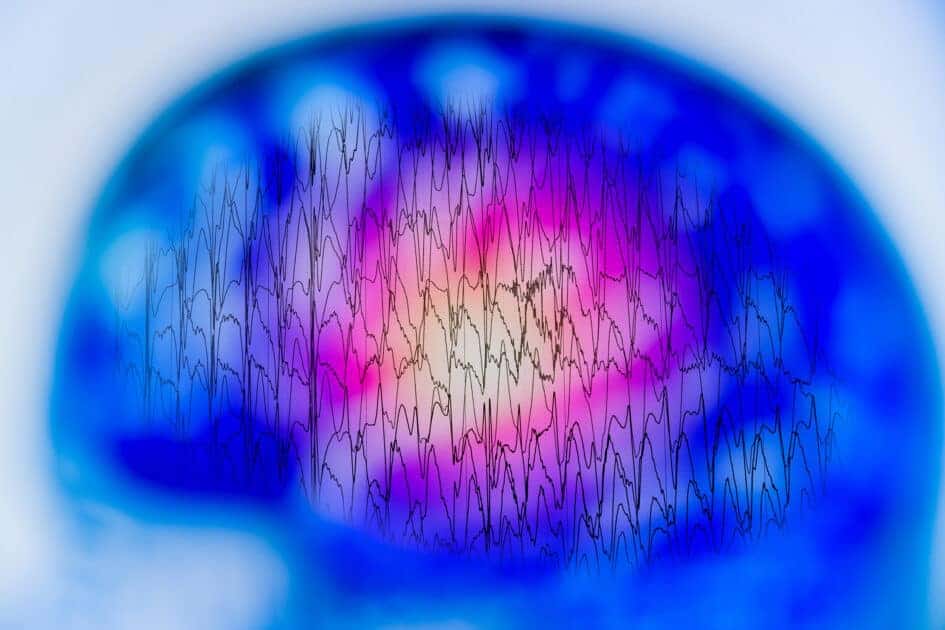
The team recently created the Brain Age Index (BAI), a model that relies on artificial intelligence and a large set of sleep data to estimate the difference between a person’s chronological age and the biological age of their brain when computed through electrical measurements (with an electroencephalogram, or EEG) during sleep. A higher BAI signifies deviation from normal brain aging, which could reflect the presence and severity of dementia.
“The model computes the difference between a person’s chronological age and how old their brain activity during sleep ‘looks,’ to provide an indication of whether a person’s brain is aging faster than is normal,” said senior author M. Brandon Westover, investigator in the Department of Neurology at MGH and director of Data Science at the MGH McCance Center for Brain Health. “This is an important advance, because before now it has only been possible to measure brain age using brain imaging with magnetic resonance imaging, which is much more expensive, not easy to repeat, and impossible to measure at home,” added Elissa Ye, the first author of the study and a member of Westover’s laboratory. She noted that sleep EEG tests are increasingly accessible in non-sleep laboratory environments, using inexpensive technologies such as headbands and dry EEG electrodes.
To test whether high BAI values obtained through EEG measurements may be indicative of dementia, the researchers computed values for 5,144 sleep tests in 88 individuals with dementia, 44 with mild cognitive impairment, 1,075 with cognitive symptoms but no diagnosis of impairment, and 2,336 without dementia. BAI values rose across the groups as cognitive impairment increased, and patients with dementia had an average value of about four years older than those without dementia. BAI values also correlated with neuropsychiatric scores from standard cognitive assessments conducted by clinicians before or after the sleep study.
“Because quite feasible to obtain multiple nights of EEG, even at home, we expect that measuring BAI will one day become a routine part of primary care, as important as measuring blood pressure,” said co-senior author Alice D. Lam, an investigator in the Department of Neurology at MGH. “BAI has potential as a screening tool for the presence of underlying neurodegenerative disease and monitoring of disease progression.”
As the globe warms, the atmosphere is becoming more unstable, but the oceans are becoming more stable, according to an international team of climate scientists, who say that the increase in stability is greater than predicted and a stable ocean will absorb less carbon and be less productive.
Stable conditions in the atmosphere favor fair weather. However, when the ocean is stable, the layers of the ocean do not mix. Cooler, oxygenated water from beneath does not rise up and deliver oxygen and nutrients to waters near the surface, and warm surface water does not absorb carbon dioxide and bury it at depth.
“The same process, global warming, is both making the atmosphere less stable and the oceans more stable,” said Michael Mann, distinguished professor of atmospheric sciences and director of the Earth System Science Center at Penn State. “Water near the ocean’s surface is warming faster than the water below. That makes the oceans become more stable.”
Just as hot air rises, as is seen in the formation of towering clouds, hot water rises as well because it is less dense than cold water. If the hottest water is on top, vertical mixing in the oceans slows. Also, melting ice from various glaciers introduces fresh water into the upper layers of the oceans. Fresh water is less dense than salt water and so it tends to remain on the surface as well. Both elevated temperature and salinity cause greater ocean stratification and less ocean mixing.
“The ability of the oceans to bury heat from the atmosphere and mitigate global warming is made more difficult when the ocean becomes more stratified and there is less mixing,” said Mann. “Less downward mixing of warming waters means the ocean surface warms even faster, leading, for example, to more powerful hurricanes. Global climate models underestimate these trends.”
Mann and his team are not the first to investigate the impact of a warming climate on ocean stratification, but they are looking at the problem in a different way. The team has gone deeper into the ocean than previous research and they have a more sophisticated method of dealing with gaps in the data. They report their results today (Sept. 29) in Nature Climate Change.
“Other researchers filled in gaps in the data with long-term averages,” said Mann. “That tends to suppress any trends that are present. We used an ocean model to fill in the gaps, allowing the physics of the model to determine the most likely values of the missing data points.”
According to Mann, this is a more dynamic approach.
“Using the more sophisticated physics-based method, we find that ocean stability is increasing faster than we thought before and faster than models predict, with worrying potential consequences,” he said.
Other researchers on this project were Guancheng Li, Lijing Cheng and Jiang Zhu, International Center for Climate and Environment Sciences, Institute of Atmospheric Physics, Chinese Academy of Sciences, Beijing, Center for Ocean Mega-Science, Qingdao and University of Chinese Academy of Science, Beijing; Kevin E Trenberth, National Center for Atmospheric Research; and John P. Abraham, School of Engineering, University of St. Thomas, St. Paul, Minnesota.
The Chinese Academy of Sciences, National Key R&D Program of China, National Center for Atmospheric Research and the U.S. National Science Foundation supported this research.
It saved lives in past epidemics of lung-damaging viruses. Now, the life-support option known as ECMO appears to be doing the same for many of the critically ill COVID-19 patients who receive it, according to an international study led by a University of Michigan researcher.
The 1,035 patients in the study faced a staggeringly high risk of death, as ventilators and other care failed to support their lungs. But after they were placed on ECMO—extracorporeal membrane oxygenation—their actual death rate was less than 40%. That’s similar to the rate for patients treated with ECMO in past outbreaks of lung-damaging viruses and other severe forms of viral pneumonia.
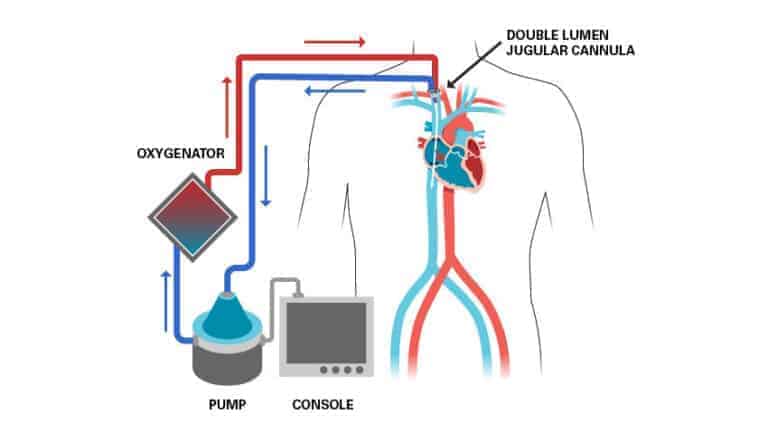
The new study published in The Lancet provides strong support for the use of ECMO in appropriate patients as the pandemic rages worldwide. It may help more hospitals that have ECMO capability understand which of their COVID-19 patients might benefit from the technique, which channels blood out of the body and into a circuit of equipment that adds oxygen directly to the blood before pumping it back into regular circulation.
Still, the international team of authors cautions that patients who show signs of needing advanced life support should receive it at hospitals with experienced ECMO teams, and that hospitals shouldn’t try to add ECMO capability mid-pandemic.
Global cooperation to achieve results
The study was made possible by a rapidly created international registry that has given critical care experts near real-time data on the use of ECMO in COVID-19 patients since early in the year.
Hosted by the Extracorporeal Life Support Organization (ELSO), the registry includes data submitted by the 213 hospitals on four continents whose patients were included in the new analysis. The study includes data on patients age 16 or older who were started on ECMO between January 16 and May 1, and follows them until death, discharge from the hospital, or August 5, whichever occurred first.
“These results from hospitals experienced in providing ECMO are similar to past reports of ECMO-supported patients, with other forms of acute respiratory distress syndrome or viral pneumonia,” says co-lead author Ryan Barbaro of Michigan Medicine, U-M’s academic medical center. “These results support recommendations to consider ECMO in COVID-19 if the ventilator is failing. We hope these findings help hospitals make decisions about this resource-intensive option.”
Co-lead author Graeme MacLaren of the National University Health System in Singapore said most centers in the study did not need to use ECMO for COVID-19 very often.
“By bringing data from over 200 international centers together into the same study, ELSO has deepened our knowledge about the use of ECMO for COVID-19 in a way that would be impossible for individual centers to learn on their own,” he said.
Insights into patient outcomes
Seventy percent of the patients in the study were transferred to the hospital where they received ECMO. Half of these were actually started on ECMO—likely by the receiving hospital’s team—before they were transferred. This reinforces the importance of communication between ECMO-capable hospitals and non-ECMO hospitals that might have COVID-19 patients who could benefit from ECMO.
The new study could also help identify which patients will benefit most if they are placed on ECMO.
“Our findings also show that mortality risk rises significantly with patient age, and that those who are immunocompromised, have acute kidney injuries, worse ventilator outcomes or COVID-19-related cardiac arrests are less likely to survive,” said Barbaro, who chairs ELSO’s COVID-19 registry committee and provides ECMO care as a pediatric intensive care physician at U-M’s C.S. Mott Children’s Hospital.
“Those who need ECMO to replace cardiac function as well as lung function also did worse. All of this knowledge can help centers and families understand what patients might face if they are placed on ECMO.”
Co-senior author Daniel Brodie of New York Presbyterian Hospital said the lack of reliable information early in the pandemic hampered the research team’s ability to understand the role of ECMO for COVID-19.
“The results of this large-scale international registry study, while hardly definitive evidence, provide a real-world understanding of the potential for ECMO to save lives in a highly selected population of COVID-19 patients,” said Brodie, who shares senior authorship with Roberto Lorusso of the Maastricht University Medical Center in the Netherlands and Alain Combes of Sorbonne University in Paris.
A robust statistical approach
Because the ELSO database does not track what happens to patients once they are discharged to home, other hospitals and long-term acute care or rehabilitation facilities, the study used a statistical approach based on in-hospital mortality up to 90 days after the patient was put on ECMO. This also allowed the team to account for the 67 patients who were still in the hospital as of August 5, whether they were still on ECMO, in the ICU or in step-down units.
The study tracked the outcomes for more than 1,000 patients for 90 days after they were placed on ECMO life support.
Philip Boonstra of the U-M School of Public Health, helped design the study using a “competing risk” approach, based on his experience handling the statistical design and analysis of long-term data from clinical trials for cancer.
“We used 90-day in-hospital mortality because this is the highest-risk period and because it allows us to use the information we have to the fullest, even if we don’t know the final outcome for every patient,” he said.
Having data through August, when only a small number of the patients in the study remained in the hospital, was important—though data are missing on a small number of patients. And even though patients who were discharged to their homes or a rehabilitation facility will likely have a long recovery ahead after the intensive level of care involved in ECMO, they are likely to survive based on past data. However, the fate of those who went to LTAC facilities, which provide long-term care at a near-ICU level, is less certain.
More about the study and next steps
More than half of the patients in the study were treated in hospitals in the United States and Canada, including Michigan Medicine’s own hospitals. U-M’s Robert Bartlett, emeritus professor of surgery and a co-author of the new paper, is considered a key figure in the development of ECMO, including the first use in adults in the 1980s. He led the development of the initial guidance for the use of ECMO in COVID-19.
“ECMO is the final step in the algorithm for managing life-threatening lung failure in advanced ICUs,” Bartlett said. “Now we know it is effective in COVID-19.”
As of Aug. 5, 380 of the patients in the study had died in the hospital, more than 80% of them within 24 hours of a proactive decision to discontinue ECMO care because of a poor prognosis. Of the remaining patients, 57% had gone home or to a rehabilitation center (311 patients) or had been discharged to another hospital or a long-term acute care center (277 patients). The rest were still in the hospital but had reached 90 days after the start of ECMO.
The new study adds to the information used to create the ECMO COVID-19 guidelines published by ELSO, which is in part based on past randomized controlled trials of ECMO’s use in ARDS.
Barbaro and others are studying the longer-term effects of ECMO care for any patient; he leads a team that has recently received a National Institutes of Health grant for a long-term study of children who have survived after treatment with ECMO.
Meanwhile, the ELSO registry continues to track the care of patients placed on ECMO because of COVID-19. Christine Stead, chief executive officer of ELSO, credits the rapid pivot and intense teamwork among ECMO centers and their staff for the strength of the new paper.
“We started with a WeChat dialogue with teams in China, who were able to share knowledge and help their counterparts in Japan be ready for the spread to their country,” she said. “We asked all the centers that take part in ELSO to change their practice, and begin entering data about patients as soon as they were placed on ECMO, rather than waiting until they were discharged from the hospital. This has allowed us to achieve something that will help hospitals make more informed decisions, based on meaningful data, as the pandemic continues.”
If you’ve eaten vegan burgers that taste like meat or used synthetic collagen in your beauty routine – both products that are “grown” in the lab – then you’ve benefited from synthetic biology. It’s a field rife with potential, as it allows scientists to design biological systems to specification, such as engineering a microbe to produce a cancer-fighting agent. Yet conventional methods of bioengineering are slow and laborious, with trial and error being the main approach.
Now scientists at the Department of Energy’s Lawrence Berkeley National Laboratory (Berkeley Lab) have developed a new tool that adapts machine learning algorithms to the needs of synthetic biology to guide development systematically. The innovation means scientists will not have to spend years developing a meticulous understanding of each part of a cell and what it does in order to manipulate it; instead, with a limited set of training data, the algorithms are able to predict how changes in a cell’s DNA or biochemistry will affect its behavior, then make recommendations for the next engineering cycle along with probabilistic predictions for attaining the desired goal.
“The possibilities are revolutionary,” said Hector Garcia Martin, a researcher in Berkeley Lab’s Biological Systems and Engineering (BSE) Division who led the research. “Right now, bioengineering is a very slow process. It took 150 person-years to create the anti-malarial drug, artemisinin. If you’re able to create new cells to specification in a couple weeks or months instead of years, you could really revolutionize what you can do with bioengineering.”
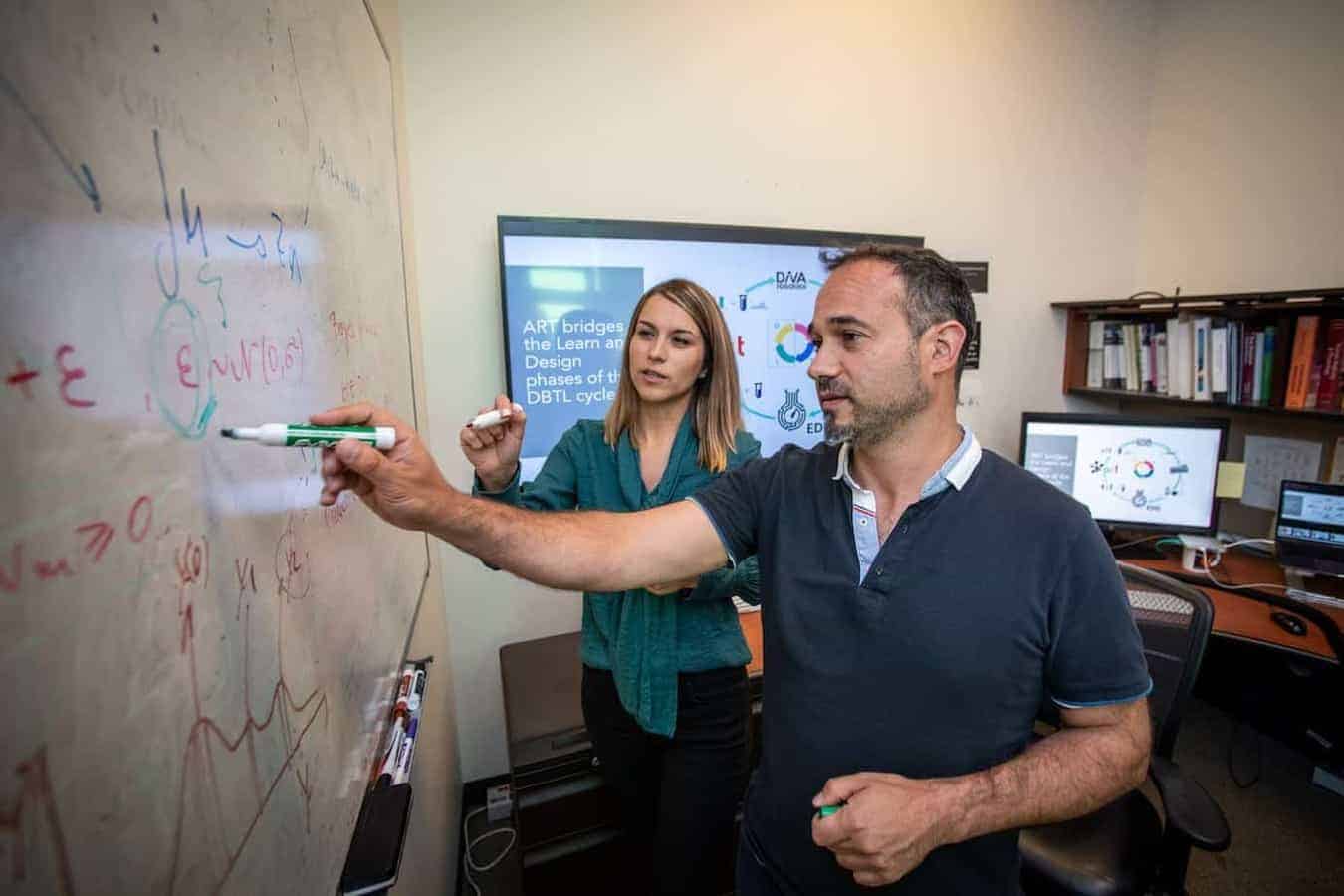
Working with BSE data scientist Tijana Radivojevic and an international group of researchers, the team developed and demonstrated a patent-pending algorithm called the Automated Recommendation Tool (ART), described in a pair of papers recently published in the journal Nature Communications. Machine learning allows computers to make predictions after “learning” from substantial amounts of available “training” data.
In “ART: A machine learning Automated Recommendation Tool for synthetic biology,” led by Radivojevic, the researchers presented the algorithm, which is tailored to the particularities of the synthetic biology field: small training data sets, the need to quantify uncertainty, and recursive cycles. The tool’s capabilities were demonstrated with simulated and historical data from previous metabolic engineering projects, such as improving the production of renewable biofuels.
In “Combining mechanistic and machine learning models for predictive engineering and optimization of tryptophan metabolism,” the team used ART to guide the metabolic engineering process to increase the production of tryptophan, an amino acid with various uses, by a species of yeast called Saccharomyces cerevisiae, or baker’s yeast. The project was led by Jie Zhang and Soren Petersen of the Novo Nordisk Foundation Center for Biosustainability at the Technical University of Denmark, in collaboration with scientists at Berkeley Lab and Teselagen, a San Francisco-based startup company.
To conduct the experiment, they selected five genes, each controlled by different gene promoters and other mechanisms within the cell and representing, in total, nearly 8,000 potential combinations of biological pathways. The researchers in Denmark then obtained experimental data on 250 of those pathways, representing just 3% of all possible combinations, and that data were used to train the algorithm. In other words, ART learned what output (amino acid production) is associated with what input (gene expression).
Then, using statistical inference, the tool was able to extrapolate how each of the remaining 7,000-plus combinations would affect tryptophan production. The design it ultimately recommended increased tryptophan production by 106% over the state-of-the-art reference strain and by 17% over the best designs used for training the model.
“This is a clear demonstration that bioengineering led by machine learning is feasible, and disruptive if scalable. We did it for five genes, but we believe it could be done for the full genome,” said Garcia Martin, who is a member of the Agile BioFoundry and also the Director of the Quantitative Metabolic Modeling team at the Joint BioEnergy Institute (JBEI), a DOE Bioenergy Research Center; both supported a portion of this work. “This is just the beginning. With this, we’ve shown that there’s an alternative way of doing metabolic engineering. Algorithms can automatically perform the routine parts of research while you devote your time to the more creative parts of the scientific endeavor: deciding on the important questions, designing the experiments, and consolidating the obtained knowledge.”
More data needed
The researchers say they were surprised by how little data was needed to obtain results. Yet to truly realize synthetic biology’s potential, they say the algorithms will need to be trained with much more data. Garcia Martin describes synthetic biology as being only in its infancy – the equivalent of where the Industrial Revolution was in the 1790s. “It’s only by investing in automation and high-throughput technologies that you’ll be able to leverage the data needed to really revolutionize bioengineering,” he said.
Radivojevic added: “We provided the methodology and a demonstration on a small dataset; potential applications might be revolutionary given access to large amounts of data.”
The unique capabilities of national labs
Besides the dearth of experimental data, Garcia Martin says the other limitation is human capital – or machine learning experts. Given the explosion of data in our world today, many fields and companies are competing for a limited number of experts in machine learning and artificial intelligence.
Garcia Martin notes that knowledge of biology is not an absolute prerequisite, if surrounded by the team environment provided by the national labs. Radivojevic, for example, has a doctorate in applied mathematics and no background in biology. “In two years here, she was able to productively collaborate with our multidisciplinary team of biologists, engineers, and computer scientists and make a difference in the synthetic biology field,” he said. “In the traditional ways of doing metabolic engineering, she would have had to spend five or six years just learning the needed biological knowledge before even starting her own independent experiments.”
“The national labs provide the environment where specialization and standardization can prosper and combine in the large multidisciplinary teams that are their hallmark,” Garcia Martin said.
Synthetic biology has the potential to make significant impacts in almost every sector: food, medicine, agriculture, climate, energy, and materials. The global synthetic biology market is currently estimated at around $4 billion and has been forecast to grow to more than $20 billion by 2025, according to various market reports.
“If we could automate metabolic engineering, we could strive for more audacious goals. We could engineer microbiomes for therapeutic or bioremediation purposes. We could engineer microbiomes in our gut to produce drugs to treat autism, for example, or microbiomes in the environment that convert waste to biofuels,” Garcia Martin said. “The combination of machine learning and CRISPR-based gene editing enables much more efficient convergence to desired specifications.”
This research is part of the Agile BioFoundry and JBEI, supported by the Department of Energy, and also received support from the Novo Nordisk Foundation and the European Commission. ART is available for licensing on GitHub.
In the search for clean energy alternatives to fossil fuels, one promising solution relies on photoelectrochemical (PEC) cells – water-splitting, artificial-photosynthesis devices that turn sunlight and water into solar fuels such as hydrogen.
In just a decade, researchers in the field have achieved great progress in the development of PEC systems made of light-absorbing gold nanoparticles – tiny spheres just billionths of a meter in diameter – attached to a semiconductor film of titanium dioxide nanoparticles (TiO2 NP). But despite these advancements, researchers still struggle to make a device that can produce solar fuels on a commercial scale.
Now, a team of scientists led by the Department of Energy’s Lawrence Berkeley National Laboratory (Berkeley Lab) has gained important new insight into electrons’ role in the harvesting of light in gold/TiO2 NP PEC systems. The scientists say that their study, recently published in the Journal of Physical Chemistry Letters, can help researchers develop more efficient material combinations for the design of high-performance solar fuels devices.
Co-authors Monika Blum, Guiji Liu, Oliver Gessner, and Francesca Toma of Berkeley Lab. (Credit: Marilyn Sargent/Berkeley Lab)
“By quantifying how electrons do their work on the nanoscale and in real time, our study can help to explain why some water-splitting PEC devices did not work as well as hoped,” said senior author Oliver Gessner, a senior scientist in Berkeley Lab’s Chemical Sciences Division.
And by tracing the movement of electrons in these complex systems with chemical specificity and picosecond (trillionths of a second) time resolution, the research team members believe they have developed a new tool that can more accurately calculate the solar fuels conversion efficiency of future devices.
Electron-hole pairs: A productive pairing comes to light
Researchers studying water-splitting PEC systems have been interested in gold nanoparticles’ superior light absorption due to their “plasmonic resonance” – the ability of electrons in gold nanoparticles to move in sync with the electric field of sunlight.
“The trick is to transfer electrons between two different types of materials – from the light-absorbing gold nanoparticles to the titanium-dioxide semiconductor,” Gessner explained.
Illustration of a PEC model system with 20-nanometer gold nanoparticles attached to titanium dioxide.(Credit: Berkeley Lab)
When electrons are transferred from the gold nanoparticles into the titanium dioxide semiconductor, they leave behind “holes.” The combination of an electron injected into titanium dioxide and the hole the electron left behind is called an electron-hole pair. “And we know that electron-hole pairs are critical ingredients to enabling the chemical reaction for the production of solar fuels,” he added.
But if you want to know how well a plasmonic PEC device is working, you need to learn how many electrons moved from the gold nanoparticles to the semiconductor, how many electron-hole pairs are formed, and how long these electron-hole pairs last before the electron returns to a hole in the gold nanoparticle. “The longer the electrons are separated from the holes in the gold nanoparticles – that is, the longer the lifetime of the electron-hole pairs – the more time you have for the chemical reaction for fuels production to take place,” Gessner explained.
To answer these questions, Gessner and his team used a technique called “picosecond time-resolved X-ray photoelectron spectroscopy (TRXPS)” at Berkeley Lab’s Advanced Light Source (ALS) to count how many electrons transfer between the gold nanoparticles and the titanium-dioxide film, and to measure how long the electrons stay in the other material. Gessner said his team is the first to apply the X-ray technique for studying this transfer of electrons in plasmonic systems such as the nanoparticles and the film. “This information is crucial to develop more efficient material combinations.”
An electronic ‘count’-down with TRXPS
Using TRXPS at the ALS, the team shone pulses of laser light to excite electrons in 20-nanometer (20 billionths of a meter) gold nanoparticles (AuNP) attached to a semiconducting film made of nanoporous titanium dioxide (TiO2).
The team then used short X-ray pulses to measure how many of these electrons “traveled” from the AuNP to the TiO2 to form electron-hole pairs, and then back “home” to the holes in the AuNP.
“When you want to take a picture of someone moving very fast, you do it with a short flash of light – for our study, we used short flashes of X-ray light,” Gessner said. “And our camera is the photoelectron spectrometer that takes short ‘snapshots’ at a time resolution of 70 picoseconds.”
The TRXPS measurement revealed a few surprises: They observed two electrons transfer from gold to titanium dioxide – a far smaller number than they had expected based on previous studies. They also learned that only one in 1,000 photons (particles of light) generated an electron-hole pair, and that it takes just a billionth of a second for an electron to recombine with a hole in the gold nanoparticle.
Altogether, these findings and methods described in the current study could help researchers better estimate the optimal time needed to trigger solar fuels production at the nanoscale.
“Although X-ray photoelectron spectroscopy is a common technique used at universities and research institutions around the world, the way we expanded it for time-resolved studies and used it here is very unique and can only be done at Berkeley Lab’s Advanced Light Source,” said Monika Blum, a co-author of the study and research scientist at the ALS.
“Monika’s and Oliver’s unique use of TRXPS made it possible to identify how many electrons on gold are activated to become charge carriers – and to locate and track their movement throughout the surface region of a nanomaterial – with unprecedented chemical specificity and picosecond time resolution,” said co-author Francesca Toma, a staff scientist at the Joint Center for Artificial Photosynthesis (JCAP) in Berkeley Lab’s Chemical Sciences Division. “These findings will be key to gaining a better understanding of how plasmonic materials can advance solar fuels.”
The team next plans to push their measurements to even faster time scales with a free-electron laser, and to capture even finer nanoscale snapshots of electrons at work in a PEC device when water is added to the mix.
Co-authors with Berkeley Lab’s Gessner, Blum, and Toma include lead author Mario Borgwardt, Guiji Liu, Johannes Mahl, Friedrich Roth, Lukas Wenthaus, Felix Brauße, and Klaus Schwarsburg.
Researchers from the Institute of Experimental Physics, TU Bergakademie Freiberg; Deutsches Electronen Synchrotron/DESY; and the Institute for Solar Fuels, Helmholtz-Zentrum Berlin für Materialien und Energie GmbH, Germany, also contributed to the study.
This work was supported by the DOE Office of Science.
The Advanced Light Source is a DOE Office of Science user facility located at Berkeley Lab.
The Joint Center for Artificial Photosynthesis (JCAP) is a DOE Energy Innovation Hub supported through the Office of Science of the U.S. Department of Energy. The Liquid Sunlight Alliance (LiSA), a solar-fuels Hub led by Caltech in partnership with Berkeley Lab, will continue to build on JCAP’s work to advance solar fuels.
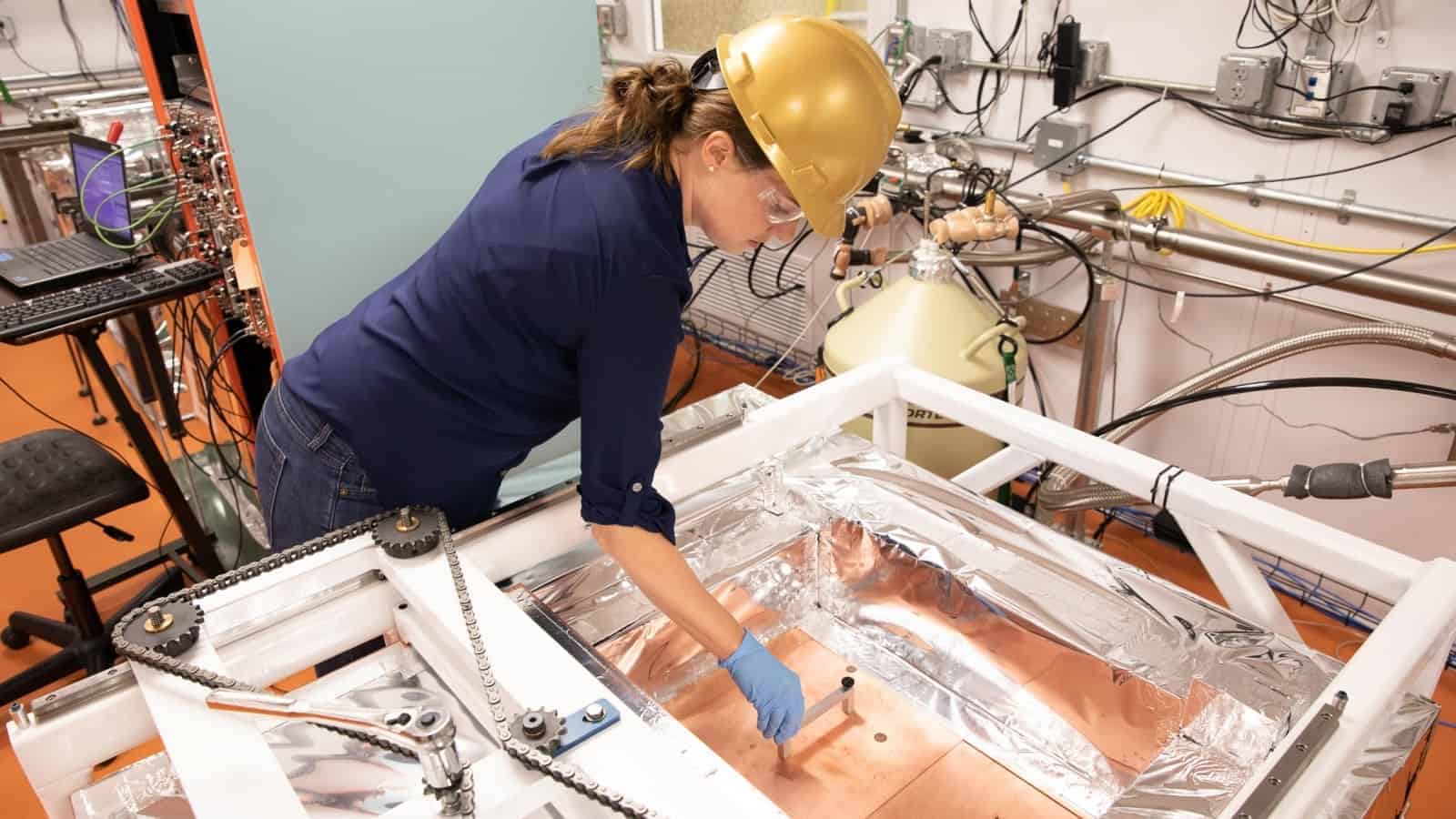
Brianna Mount, assistant professor of physics at Black Hills State University, at work in the Black Hills State University Underground Campus (BHUC) at Sanford Lab, where components of the LUX-ZEPLIN experiment were tested to learn the background radioactivity of the materials. (Credit: Matthew Kapust/Sanford Lab)
Note: This article has been adapted from the original article published by Sanford Underground Research Facility earlier this month. Read the original article.
The subatomic world just got a lot quieter for the LUX-ZEPLIN (LZ) dark matter experiment.
Currently being assembled on the 4850 Level, 4,850 feet below the surface at the Sanford Underground Research Facility (Sanford Lab), LZ will search for theoretical dark matter particles known as WIMPs, or weakly interacting massive particles.
In a paper accepted for publication in the European Physics Journal, the LZ collaboration shares the results of more than 1,200 assays – tests that describe the levels of radioactive decay of the LZ detector components – with the scientific community. These results also effectively create a library of resources for future experiments.
“This effort dramatically increases our ability to seek out dark matter signals in our detector,” said Kevin Lesko, spokesperson for the LZ collaboration and lead for the effort to achieve a low radioactive background for the LZ experiment.
“The whole experiment participated in this effort; everyone understood the importance of achieving a very low background level and a strong background model,” he added. Lesko is also a senior scientist at the Department of Energy’s Lawrence Berkeley National Laboratory (Berkeley Lab), the lead institution for the LZ project, which is supported by DOE’s Office of Science.
A constant barrage of cosmic rays from our sun showers the Earth, reverberating through matter. Atoms decay and reconfigure. Protons pop free from one nucleus only to be picked up by another. Electrons, stripped from their orbit, are sent ricocheting through surrounding matter. And though we normally think of radiation in the context of X-ray machines and nuclear power sources, everything – from bananas to skin cells to dust – contributes to a constant hum of background radiation in our world.
Most of us are oblivious to this ongoing racket. Particle physicists are not.
Experiments searching for extremely rare particle interactions (like interactions with dark matter particles) are most bothered by this noise. When they tune their experiments to eavesdrop on the particle world, they get a deafening cacophony that obscures the very signal they want to hear. Physicists call this effect background.
Turning down the volume
Before looking for dark matter, LZ physicists needed to turn down the background volume.
First, LZ researchers constructed the experiment’s inner detector inside a class-1000 clean room, requiring everyone to wear a full body clean suit before entering. This prevented dust, a source of radioactive decay, from accumulating on the detector. During months of assembly, less than one gram of dust accumulated on the surface of the 5,000 pound, 9-foot-tall inner detector after remedial cleaning.
LZ’s central detector, pictured here during assembly, is located inside a large water tank on the 4850 Level of Sanford Lab. LZ will search for theoretical dark matter particles known as WIMPs. (Credit: Nick Hubbard/Sanford Lab)
Next, the detector was transported nearly a mile underground to the 4850 Level of Sanford Lab. There, the rock overburden shields the experiment from the sun’s cosmic rays. In the underground cavern, they inserted the detector inside a water tank that will be filled with more than 200 tons of deionized water. This liquid shield will absorb radiation emanating from the cavern’s rock or other experiment support systems.
But what about the detector itself? How could researchers be sure the materials used to build the detector wouldn’t create backgrounds of their own?
Testing every component
“Early on, we decided we wanted the backgrounds in the experiment to be dominated by nature – by things we can’t eradicate, like neutrinos – not by the materials we were using to build the detector,” Lesko said.
The collaboration’s recent paper is the result of efforts to assay, or test, nearly every component that went into the detector.
“We required every subsystem to send in samples for testing,” Lesko said. “At this point, we’ve assayed every nut, every screw, every washer, every component. We either have a characteristic assay of the raw materials, or of the finished component.”
Of the 1,200 assays in the publication, 969 assays used high-purity germanium (HP Ge) to examine the radiopurity of components. Roughly 70% of the HP Ge assays were completed by the BHUC on the 4850 Level of Sanford Lab. Working one sample at a time, researchers placed LZ’s components inside detectors for weeks at a time, quietly listening to and recording the noise they produced.
“In the past five years, the majority of the samples counted at the BHUC have been for the LZ experiment,” said Brianna Mount, director of the BHUC. “This paper is the culmination of that effort, and it demonstrates what the BHUC is capable of doing for the scientific community.”
Using this process, researchers learned that some materials were 10 to 100 times more radioactive than others. This helped researchers make informed decisions when selecting materials. In some cases, they even worked with manufacturers to redesign components to have lower backgrounds. Finally, researchers tallied the collective backgrounds of all the components to better understand how much interference they can expect to see when they turn on the detector.
“This effort gives us a very strong prediction of the limits of the radioactive components as we try to decipher dark matter signals from backgrounds,” Lesko said.
The second day of the Digital Science Global Showcase 2020 was all about collaboration, and even included the surprise launch of Dimensions’ partnership with Google BigQuery!
Intrigued by what you missed, or want to relive it again? No problem!
Download the DS Daily below, and don’t forget that you can still sign up for our Showcase here:









.png)